FW
Lenzing's 2023 annual sustainability report revealed
In a pioneering move within the textile industry, the Lenzing Group has unveiled its inaugural combined annual and sustainability report for the 2023 financial year. This publication underscores Lenzing's steadfast commitment to social and environmental responsibility, marking a significant stride towards reshaping the textile and nonwovens sectors.
Titled "Ready to Join?", the report serves as an impassioned call to action, urging stakeholders to collaborate in revitalizing industries and fostering positive change. Stephan Sielaff, CEO of Lenzing, emphasizes the company's relentless pursuit of sustainability, advocating for collective efforts and equitable policies to drive industry-wide transformation.
Central to Lenzing's sustainability agenda is its ambition to achieve net-zero emissions, a goal supported by substantial investments exceeding €200 million in upgrading production facilities in China and Indonesia. These enhancements not only bolster capacity for eco-friendly specialty fibers but also achieve notable reductions in emissions, marking a strategic milestone for the company.
In tandem with emission cuts, Lenzing has made substantial strides in its sustainability targets, notably slashing absolute greenhouse gas emissions by 19 per cent and sulfur emissions by 58 per cent. Bolstering its climate commitments, Lenzing aligns its targets with the Paris Agreement, earning recognition from the Science Based Targets Initiative.
Perhaps it is Lenzing's distinction as the first producer of regenerated cellulosic fibers with a scientifically endorsed net-zero target. By 2030, the company aims to substantially reduce emissions across its operations and value chain, setting a new benchmark for environmental stewardship.
Lenzing's vision extends beyond emission reductions to championing a circular economy model. Collaborating with partners like Sodra, the company is pioneering textile recycling solutions, underpinned by innovative technologies such as refibra. These efforts not only address textile waste but also redefine product development standards in the industry.
The accolades earned by Lenzing in 2023, including top ratings from CDP, EcoVadis, and MSCI, underscore its leadership in sustainability. Moreover, its proactive stance towards EU directives like the Green Deal demonstrates a commitment to shaping regulatory landscapes and combating greenwashing.
Incorporating core elements of European sustainability standards, Lenzing's comprehensive reporting signifies a paradigm shift towards transparency and accountability. Audited to international standards, this report cements Lenzing's position as a trailblazer in sustainable practices within the textile industry.
Lenzing's inaugural sustainability report not only highlights its achievements but also sets a bold precedent for industry peers, emphasizing the indispensable role of sustainability in shaping a more resilient and responsible future.
Global stars flock to Moscow Fashion Week for rising talent
Moscow Fashion Week has once again transformed Russia's capital into a radiant hub of global fashion, attracting renowned figures from the cinema world in Italy, China, and Turkey, alongside a diverse array of designers representing ten different countries.
Italian icon Ornella Muti and daughter Shine on runway

Italian screen legend Ornella Muti graced the event with her presence, accompanied by her daughter, Naike Rivelli, who is carving her own path as an actress and singer. Rivelli captivated onlookers in a sheer, opulent gown by Moscow's MaisonESVE, leaving an indelible mark on attendees. Their exploration of Pepfer's bag collection further emphasized the week's international allure as they departed with treasures in tow, showcasing the event's ability to captivate even the most discerning of Italian celebrities.
Lily Ji: Bridging cultures with traditional Chinese attire

Hollywood actress Lily Ji, known for her role in "Pacific Rim: Uprising," embarked on a personal mission to bridge cultural divides by adorning herself in traditional Chinese attire. Her choice of attire, including a thousand-year-old Song Dynasty dress and a Ming Dynasty gown, served as silent ambassadors of China's rich artistic legacy. Ji's presence added star quality to the showcases of native designers, with particular resonance found in Gapanovich's homage to Russian traditions.
Turkish actress Gizem Karaca embraces Russian creativity

Turkish actress Gizem Karaca, celebrated for her roles in "The Magnificent Century," "Sapphire," and "Black Love," expressed admiration for the innovative designs showcased at Moscow Fashion Week, particularly those of Beena, a brand inspired by the moon's ethereal glow. Karaca's support extended beyond her homeland as she cheered on Turkish designer Emre Erdemoglu and indulged in exquisite Russian ensembles at a special showcase by Russian brand Masterpeace. Enchanted by the collection, Karaca left the showroom adorned in new additions, highlighting the event's ability to foster cross-cultural exchange and appreciation.
Celebrating cultural diversity and emerging trends
Over the span of seven days, Moscow Fashion Week once again asserted its position as a global stage for the showcase of cultural diversity, emerging trends, and the boundless potential of fashion to unite realms far beyond the confines of the runway. From the familial support of Italian icon Ornella Muti and her daughter Naike Rivelli to Lily Ji's cultural ambassadorship through traditional Chinese attire and Gizem Karaca's embrace of Russian creativity, the event epitomized the convergence of global influences in the world of fashion.
Moscow Fashion Week continues to serve as a beacon of creativity and cultural exchange, drawing together luminaries from across the globe to celebrate the transformative power of fashion. As the event evolves, its significance as a platform for showcasing diversity, fostering collaboration, and inspiring innovation remains unwavering, solidifying its place as a cornerstone of the global fashion calendar.
VIATT 2024: A resounding success, positioning Vietnam as a textile powerhouse
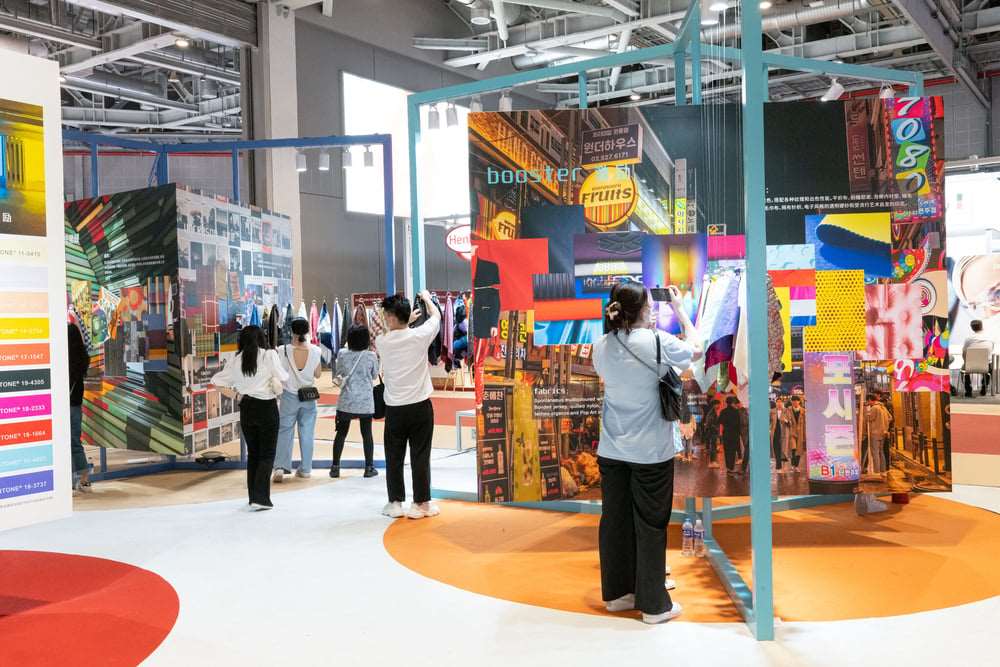
The inaugural edition of the Vietnam International Trade Fair for Apparel, Textiles and Textile Technologies (VIATT) concluded on March 1, 2024, in Ho Chi Minh City. Organized by Messe Frankfurt (HK) Ltd and the Vietnam Trade Promotion Agency (VIETRADE), VIATT successfully established itself as a key platform for the entire textile value chain in Asia.
Exceeding expectations with strong exhibitor and visitor participation
The 3-day event attracted a remarkable 17,262 visits from 55 countries, exceeding expectations. 409 exhibitors from 17 countries showcased the latest trends and innovations across apparel fabrics, yarns and fibers, garments, home textiles, technical textiles and nonwovens, textile processing, and printing technology.
Industry leaders share optimism for Vietnam's textile future
Phan Thi Thang, Deputy Minister of Industry and Trade, Vietnam, emphasized VIATT's role in "creating favourable conditions for international businesses" and integrating Vietnam into global textile production chains. Detlef Braun, Member of the Executive Board, Messe Frankfurt GmbH, underscored Vietnam's potential as a "rising hotspot" and pledged to work closely with partners to strengthen the Vietnamese textile industry's global competitiveness.
A showcase of sustainability
The VIATT Fashion Show, themed "Sustainable Fashion, Around the World", mirrored Vietnam's growing focus on sustainable practices. Technological and Higher Education Institute of Hong Kong (THEi)and Thai Industrial Hemp Trade Association (TiHTA) showcased their sustainable collections, reflecting the global demand for eco-friendly textiles.
Positive exhibitors’ feedback
Exhibitors were impressed by the quality of visitors and the potential of the Vietnamese market. "VIATT has given us a good idea... I can see a lot of serious buyers... We will surely join the next edition", says M Usman Arshad, CMO, Kintex Group/Abdullah Textile, Pakistan. "We've seen a lot of the production volume migrating to Vietnam... We're very excited to support that growth., adds on the similar lines Joe Zhou, General Manager, Idole Trading Co Ltd, China. "Vietnam has a large textile industry... This show is a very good idea...", Paul Nguyen, Sales Director, Mainland Southeast Asia, Apparel Solutions, Avery Dennison, Hong Kong
Buyers find sourcing opportunities
Buyers were pleased with the diverse range of exhibitors from Southeast Asia, China, Europe, and beyond, "We are a 100%-for-export sourcing company... We have just arrived, but we have visited a few booths and are seeing what we like.", said Marco Corrado, Director of Sales, Textyle Asia PteLtd, Vietnam. Adding to this "We came to the first edition of VIATT to explore the wide range of suppliers...", sharing her opinion, Sara Pelizzoli, Marketing Manager, Hung Yen Knitting & Dyeing, Vietnam
Knowledge sharing drives industry growth
VIATT offered a platform for knowledge sharing through seminars on Design & Trends, Market Strategies, Textile & Nonwoven Technologies, and Sustainability. Industry leaders provided valuable insights to help attendees stay ahead in the competitive market.
Looking Ahead: VIATT 2025
With its successful debut, VIATT has positioned itself as a vital trade fair for the Vietnamese textile industry. The next edition is scheduled for February 26-28, 2025, and is expected to attract even greater participation. VIATT 2024 has undoubtedly laid the foundation for Vietnam's continued growth as a major player in the global textile market.
Moscow Fashion Week & Lakme Fashion Week spark cultural exchange

Following the conclusion of Moscow Fashion Week, all eyes now turn to Mumbai as Lakmé Fashion Week (LFW) gears up for its prestigious event from March 13 to 17. Making waves in the fashion world, the renowned Russian brand Measure is set to unveil its collection at LFW, marking its debut in India on March 16. With roots in Dagestan, Russia, Measure's unique approach to Modest fashion blends tradition with modernity, promising a showcase of depth and texture.
Indian fashion flourishes in Moscow
From March 1 to 8, Indian fashion commanded attention at Moscow Fashion Week, captivating audiences in the Russian capital. Esteemed Indian brands like Geisha Designs and NBC brand showcased their talents, marking a significant milestone in the burgeoning fashion relations between India and Russia. This collaboration spurred by an agreement between the Fashion Design Council of India (FDCI) and Moscow Fashion Week, forged during the BRICS+ Fashion Summit in December 2023.
Geisha Designs: A fusion of opulence and tradition
Geisha Designs stole the spotlight with an opulent collection at Moscow Fashion Week, infusing traditional Indian elements with contemporary flair. The brand's skillful blend of asymmetrical silhouettes and modern fabrics resonated deeply with the Russian audience, capturing the essence of Indian opulence. Paras Bairolya, the creative force behind Geisha Designs, expressed optimism for future collaborations, highlighting a shared passion for artisanal craftsmanship between India and Russia.
NBC brand: Modern elegance with a Russian twist
NBC brand made a statement with its striking collection characterized by bold aesthetics and modern silhouettes. With a palette of greys and blacks, the brand showcased intricate drapery and three-dimensional embroidery, offering a fresh take on traditional Indian design. Designer Nitin Bal Chauhan praised the enthusiasm of the Russian audience for fashion, emphasizing their fearless expression of style.
Russian brands impress with whimsy and eco-focus
Russian brands like Bitte_Ruhe, Paseshnic, Ermi, and Sergey Sysoev captivated audiences with their diverse offerings at Moscow Fashion Week. From whimsical motifs to eco-conscious designs, these brands showcased a fusion of creativity and sustainability. Many designers embraced eco-friendly practices, aligning with the global trend towards environmentally conscious fashion.
Celebrating Craftsmanship at Moscow Fashion Week
Renowned Russian brands such as Loom by Rodina, Alena Akhmadullina, and Masterpeace showcased meticulous craftsmanship and high-quality pieces, garnering praise from international guests. The event underscored its international appeal and cultural exchange, with participation from countries worldwide.
Moscow Fashion Week: A Premier global stage
With participants from over 50 countries, including India, Moscow Fashion Week solidifies its status as a premier international event in the fashion calendar. As a platform celebrating diversity and innovation, it continues to push boundaries and set new standards in the global fashion landscape.
As the fashion world eagerly anticipates the debut of Measure at Lakmé Fashion Week and reflects on the success of Indian designers at Moscow Fashion Week, the exchange of creative ideas and cultural influences continues to shape the global fashion scene. With collaboration and celebration at its core, events like Moscow Fashion Week bridge the gap between nations, fostering a spirit of unity and creativity in the world of fashion.
Fashion Forum podcast by BFC launches fifth season
The British Fashion Council kicks off its fifth series of the Fashion Forum podcast with a sleek new makeover, delving into pivotal topics shaping the creative landscape. Promising insight and collaboration, the podcast aims to unite creatives while amplifying the BFC network.
In its debut episode, Martine Rose, acclaimed founder of a leading menswear brand, joins forces with Lauren Cochrane, renowned freelance writer. Together, they dissect the essence of modern design and spotlight emerging UK fashion talents.
Scheduled for monthly release, the 12-episode series boasts an impressive lineup featuring industry luminaries such as Campbell Addy, Kirsty McGregor and many more. Each episode promises diverse perspectives, addressing crucial industry issues like textile innovation, cultural diversity, and the impact of social media.
Since its inception in 2020, the Fashion Forum podcast has hosted over 70 industry insiders, including Bianca Saunders and Susie Lau. With a renewed focus on mentorship and discourse, the podcast continues to shape the future of fashion by fostering dialogue and collaboration.
ACIMIT: Italian textile tech boosting trade ties in India
Italian textile technology is poised to fortify its partnership with India's textile industry through a new promotional initiative set to enhance trade relations. Scheduled from April 9 to 12 in New Delhi and Mumbai, 11 leading Italian textile machinery manufacturers will participate in technological symposia organized by the Italian Trade Agency and backed by the Ministry of Foreign Affairs and International Cooperation. This initiative aims to provide a platform for Italian companies to exhibit their cutting-edge technologies to a curated audience of Indian textile entrepreneurs.
India's textile sector holds significant economic weight, contributing over 2 per cent to the GDP and securing its position as one of the world's largest exporters of textile and apparel items. Notably, India stands as the third-largest foreign market for the Italian textile machinery industry.
Marco Salvade, president of Association of Italian Textile Machinery (ACIMIT), highlights India's evolving textile landscape, emphasizing the growing demand for technical and innovative textiles in sectors such as geotextiles and medical applications. Salvade underscores the role of these symposia in showcasing Italian manufacturers' expertise, particularly in sustainability and digitalization of production processes.
In 2022, India imported Italian textile machinery worth approximately €200 million. Although the value exhibited a slight decline in the first nine months of 2023 compared to the previous year, projections for the current year remain optimistic.
Salvade emphasizes that these technology symposia are integral to a longstanding promotional program by ITA and ACIMIT aimed at strengthening trade ties between Italy and India in the textile sector. He also acknowledges the pioneering role of the first Italian textile technology training center established at DKTE’S Textile & Engineering Institute Ichalkaranji.
Participating Italian companies, all members of ACIMIT, include Autefa, Cubotex, Danitech, Lafer, Mcs, Monti-Mac, Reggiani Macchine, Salvade, Savio, Sicam, and Testa.
Latest printing technologies by ColorJet on display at FESPA Global Print Expo 2024
A global leader in digital inkjet printing technology, ColorJet will unveil its newest advancements at FESPA Global Print Expo 2024, the premier European exhibition for printing technologies. The event runs from March 19-22, 2024, in Amsterdam, Netherlands.
ColorJet will showcase the upgraded Earth Series - Earth 32i, a revolutionary solution for sustainable textile printing. This advanced model eliminates the need for additional pre and post-treatment equipment, significantly reducing water and energy consumption. It boasts enhanced features like turbocharged functionality and nozzle pumping for peak performance, variable drop printing for customised ink droplet sizes, printing precision and improved safety standards for a secure printing experience.
ColorJet will also present its UV range of products including the Vulcan Hybrid X 2-in-1 powerhouse designed for diverse printing needs. This high-speed, 2-m printer functions seamlessly as both a flatbed and roll-to-roll printer, handling various substrates like ACP, foam, and vinyl.
Another of the products to be showcased by ColorJet includes the Verve Mini, a compact and affordable flatbed LED UV printer ideal for expanding businesses.
Besides, FESPA attendees can experience live demonstrations of ColorJet's printing solutions and gain valuable insights from the company’s jet team at Booth Number D20 in Hall 01. The team will address issues related to optimising printing processes, achieving vibrant colors, and staying ahead in the digital printing industry.
Introduce new textile policy on urgent basis, urges SGCCI
In a recent meeting with the state government officials, several representatives of the Southern Gujarat Chamber of Commerce and Industry (SGCCI), urged for a swift introduction of a new textile policy for the state.
Ashish Gujarati, Former President, SGCCI, and industry expert Ajoy Bhattacharya, emphasised on the need for proactive measures to maintain Gujarat's textile edge. They called for continued support through subsidies and incentives, including a 30 per cent capital subsidy, 7 per cent interest subsidy, and power subsidies.
A key concern was the lapse of the previous textile policy on December 31, 2023. Stakeholders requested a new policy with no gap, ideally starting from January 1, 2024.Surat, a major Man Made Fiber (MMF) hub, advocated for the inclusion of MMF development incentives in the new policy.
With Lok Sabha elections approaching, stakeholders urged a swift announcement of the new textile policy. Government officials reassured the industry of their commitment to a timely policy that recognises textiles' importance to Gujarat's economy.
India-Bangladesh Rupee Trade: Slow start amidst dollar dominance
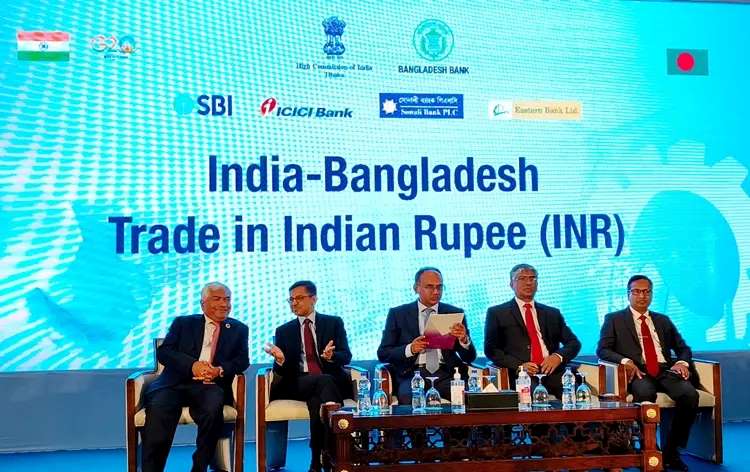
While India and Bangladesh launched rupee-based trade in June 2023 to reduce dependence on the US dollar, the initiative faces an uphill battle. With a turnover of just $0.46 million in nearly seven months, the program suffers from several challenges.
Current challenges
Dollar dominance: The global dominance of the US dollar for international trade settlements remains a major obstacle. Businesses are accustomed to dollar-denominated transactions, making them wary of the complexities and uncertainties associated with a new system.
LC complexities: The process of issuing and managing Letter of Credit (LC) for rupee-based transactions is still being established, leading to delays and complexities for businesses.
Exchange rate volatility: Fluctuations in the exchange rate between the rupee and taka introduce an element of risk for both exporters and importers, deterring them from adopting the new system. These factors, along with businesses' reluctance to embrace the new system due to initial hiccups with LCs, have contributed to the slow uptake.
Can rupee trade boost textile and apparel business?
Despite the current challenges, stakeholders believe in the initiative's potential, particularly for the crucial textile and apparel sector in both countries. However, India's perspective differs.
Bangladesh's dollar dilemma: Bangladesh struggles with dollar scarcity, making exploring alternatives like the rupee attractive from an import cost perspective. This could potentially lead to increased imports of raw materials like fibers, yarns, fabrics, and chemicals from India.
India's focus on raw material exports: For India, this initiative might hold greater significance for raw material exports to Bangladesh, which is more valuable than finished textile imports. It is important to note that India's primary interest in the rupee trade initiative lies in expanding its exports of raw materials like fibers, yarns, fabrics, and chemicals to Bangladesh. By settling payments in rupees, India can lessen its reliance on the US dollar, which is crucial for managing its foreign exchange reserves. Facilitating trade in local currencies can strengthen economic ties between India and Bangladesh, fostering a more integrated regional market.
Success can be achieved through reduced transaction costs to begin with. Eliminating the need for currency conversion can lead to cost savings for businesses, making them more competitive. Also, faster trade settlement as Rupee-based transactions can potentially streamline the settlement process compared to dollar-based transactions, leading to quicker access to funds.
The bottomline is despite the current challenges, stakeholders remain optimistic about the initiative's potential. Addressing operational hurdles, such as simplifying LC procedures and mitigating exchange rate volatility, is crucial for broader adoption. Additionally, exploring the possibility of using Bangladeshi Taka in bilateral trade, alongside the rupee, could help address the trade imbalance between the two nations. This initiative, while facing initial hurdles, holds promise for fostering regional economic integration and potentially benefiting the textile and apparel sector in the long run. However, overcoming existing challenges and exploring further development opportunities will be critical for its success.
Moscow Fashion Week 2024 concluded: United global fashion forces

This March, Moscow emerged as the epicenter of the fashion universe as it played host to the highly anticipated Moscow Fashion Week (MFW) 2024. The event, showcasing the creative brilliance of over 120 designers from around the world, proved to be more than just a display of style; it represented a convergence of global talents and emerging markets, solidifying Moscow's position as a burgeoning fashion capital.
A global stage for fashion innovation
With an eclectic lineup that transcended borders, MFW featured designers not only from Russia but also from diverse countries such as Brazil, Indonesia, China, India, Turkey, South Africa, Costa Rica, Ethiopia, and Egypt. This diverse amalgamation underscored Moscow's growing reputation as an international launchpad for rising designers. Moreover, the event provided a vital platform for international labels to unveil their latest creations and forge essential business connections across continents, with coverage extending to over 50 countries, including key markets in Europe and America.
Iconic venues and celebrity presence
The allure of MFW was amplified by its prestigious venues - the historic 'Manege' exhibition hall, nestled amidst landmarks like the Kremlin and Red Square, and the striking international Russia Expo at VDNH. The event commenced with a star-studded gathering, drawing media attention and the who's who of the fashion industry. Notable personalities such as Italian film icon Ornella Muti and Chinese actress Lily Ji graced the front rows, adding to the glamour of the occasion.
Innovative designs and cultural fusion
Russian designers showcased a blend of tradition and innovation, with brands like Ermi infusing ancient costume designs with modern textiles. Meanwhile, emerging labels like Bitte_Ruhe explored unique aesthetics, diving into the realm of mermaid-inspired fashion. The inclusivity of MFW was evident as the brand Kuzina received acclaim for featuring models with Down syndrome, reflecting the event's commitment to diversity. International contributions, such as the Indonesian brand Irmasari Joedawinata's collection inspired by mystic ocean shores, further enriched the cultural tapestry of the week.
A global phenomenon
Drawing over 70,000 attendees and garnering 5 million online viewers each season, MFW continues to serve as an unparalleled platform for designers aiming to captivate a global audience. Beyond the runway presentations, the event offered a professional showroom attracting numerous boutiques, a diverse program of lectures and masterclasses, and even a festival celebrating fashion in film.
A celebration of cultural diversity
Each year, Moscow Fashion Week not only strengthens its international stature but also celebrates the vibrant tapestry of Russian and global cultures. By embracing diversity and innovation, MFW cements its place as an essential fixture on the international fashion calendar, perpetuating the spirit of creativity and inclusivity in the ever-evolving world of fashion.