Yarn, fabrics, made-up articles imports rise 20 per cent in December
Ministry of Commerce and Industry records show that import of yarn, fabrics and made-up articles in December 2017 went up by 20 per cent as against the corresponding month of ’16, however, apparel exports fell by 0.3 per cent between April and Dec. 2017 and 8 per cent in December. Sanjay Jain, Chairman, Confederation of Indian Textile Industry, was concerned over the issue as export data of Bangladesh showed India imported garments worth $111.3 million during July-December 2017 from Bangladesh, which was 66 per cent higher when compared to the same period of previous year. Imports of knitted apparel from Bangladesh were valued at $20.6 million in July-December 2016 and rose to $36.5 million between July-December last year. Despite the fact that total export of textile and apparel rose 2 per cent between April and December 2017 over the first nine months of 2016-17, apparel exports dropped by 0.3 per cent during the same period and 8 per cent in December.
A top garment exporter blamed the decline in exports to the revision of duty drawback rates, “Once an international buyer enters into a contract with an Indian supplier, the rates are fixed and might only go down in the future, however, cotton and yarn prices are going up in the domestic market. Further, the government has reduced the duty drawback rates. After GST, we do not know yet what refund we will get on duties paid on exports.”
Jain is of the view there is a need to impose safeguards such as Rules of Origin, Yarn Forward and Fabric Forward rules on nations such as Bangladesh and Sri Lanka that had free trade agreements with India and China. “Garment manufacturers in India have to pay duty on imported fabrics, while Bangladesh can import fabric from China duty-free, convert it into garments, and sell to India duty-free,” he said in a statement.
Wool prices on rise as woollen footwear boost demand for the natural fibre
The wool market has been fighting a losing battle following downward spiralling of demand post infiltration of high-tech fabrics in the outerwear market for many years. In fact, Australia, growers have increasingly chosen to use their land more profitably. A new light on the horizon has risen hopes Australian wool ‘manufacturers’ as new markets have emerged from nascent cocoon that has helped enhance —Australian Wool Innovation (AWI), the marketing arm for wool growers — consumer use of wool. New styles such as Adidas AGs Ultra Boost, Allbirds and athleisure lines have helped wool footwear grow in women’s fashion footwear category in Fall 2018. Bayton, Dr. Scholl’s, Seychelles and Timberland are some of the other brands adding wool uppers to their fashion collection.
AWIs monthly ‘Market Intelligence Report’ notes, “Demand has been driving the wool market. More consumers across the world are looking for wool and not just in cooler months. The advent of merino wool as a superior fibre worn next to skin for leisure and for sport has seen steady growth in recent years. Global companies such as Adidas, Nike and New Balance all use merino wool in their ranges now and this is trend can also be seen in outdoor companies such as Mountain Designs and The North Face over the past decade.”
AWI assessed wool continues to defend its traditional markets in men’s suiting and women’s fashion, “a market where wool had lost significant ground in recent decades.” Increased affluence in traditional markets such as China and growing demand for wool in athleisure wear together with limited supply to create a “perfect storm” for wool, says AWI, which represents 24,000 growers in the country that supplies roughly 90 per cent of the world’s apparel wool.
Texworld USA Launches ‘Explore the Floor’
A new feature at this edition of Texworld USA is the ‘Explore the Floor’ series which features tours for participants to walk the show floor with industry experts. The aim of these tours is to permit participants to gain knowledge of different exhibitors that are relevant to what they need and be able to ask questions in an open format.
Texworld USA, which is being held from January 22 to 24, simultaneously with Apparel Sourcing USA at the Jacob K Javits Convention Center in New York, also offers three days of seminars and speaker line ups on trending industry topics including sustainability, Spring/Summer 2019 colour, fabric trends, and more. ‘Textile Talks’ returns with three days of discussions organised by StartUp Fashion and Lenzing Fibers Inc. Texworld USA’s trend showcase will take place for the Winter 2018 season. It is created by Texworld USA Art Directors Louis Gerin and Gregory Lamaud.
Highlights from the Texworld USA seminars include a session ‘Fashion 101: How to Start a Fashion Line,’ by Mercedes Gonzalez, Founder and Director of Global Purchasing Companies. A seminar dedicated to ‘Supply Chain Traceability & Transparency + Explore’ will be held by Jeff Wilson, Senior Business Development Manager of sustainability at NSF International. Other speakers will be Edward Hertzman, Founder and Chief Executive of Sourcing Journal; Leonardo Bonanni, Founder and Chief Executive of Sourcemap; and Megan Meiklejohn, Sustainable Materials and Transparency Manager for Eileen Fisher Inc. ‘Spring/Summer ’19 Trends for Women’s & Junior Markets’ will be presented by Trend Council. The importance of a circular economy for the future of fashion will also be discussed.
Bangladesh’s RMG sector facing tough times
Siddiqur Rahman, President-Bangladesh Garment Manufacturers and Exporters Association (BGMEA), says the RMG sector in Bangladesh is facing a hard time but the picture will change soon and the situation will improve gradually. Rising production costs, lower prices from buyers and decreasing international demand have resulted in the readymade garment sector not being able to meet expected growth targets. BGMEA says the cost of production has increased nearly 18 per cent since the last two years.
During this period, the prices of two markets in Europe and the US fell by around 7 per cent. Last year, clothing prices in the EU fell by 4.77 per cent, and in the US, 3.71 per cent. A recent study by the World Trade Organisation (WTO) reports global apparel consumption has slowed down in the last two years. The global market for garment products came down to $444 billion in 2016, from $450 billion in 2015, while consumption in the US decreased by 5.23 per cent.
Although consumption and prices are on the decline, Bangladesh is seeing an increase in the cost of production, for which the mid-range entrepreneurs are just able to sustain operations, smaller players are beginning to shut down operations. Industry insiders say the cost of electricity increased around 15 per cent, gas price 7.44 per cent last year and the cost of clearing and forwarding (C & F) has risen about 40 per cent.
Numerous apparel traders have appealed to the government to improve transportation facilities, including improvement of sea port facilities to reduce production costs. They claim they often lose export orders from buyers as they cannot supply on time due to transportation issues. Sources within the BGMEA reveal they have cancelled membership of 550 factories due to lack of regular production after 2013. Besides, some 500 factory owners listed with the BGMEA or BKMEA have shut down their factories for not being able to keep pace with income and expenditure.
Lamb Knitting Machine celebrates 150 years
Lamb Knitting Machine, a knitting machinery manufacturer based in Chicopee, MA, is celebrating 150 years of making knitting machines this month. The company says, “A reputation for manufacturing dependable machines, providing timely and effective service to the customer and staying in tune with the needs of customer have been keys to the company’s success. Lamb is only one of two companies that still manufactures knitting machines in the US and is one of the few in the world that is focused on knitting machines to produce materials ranging in size from .050” diameter to 4-inches wide. The experience gained through the years in designing and manufacturing these types of machines and the dedication to producing a quality product has resulted in the world-wide reputation Lamb machines have for dependability,” it added.
In 1893, the company merged with A.G. Spaulding and changed its name to Lamb Manufacturing Company. In the 1870’s Lamb also manufactured the Tuttle Sock Knitter, a hand-cranked machine that was used in many homes to knit socks and caps. A limited number of the original Tuttle machines are still in use today by home knitters and hobbyists. To celebrate its anniversary, the company began manufacturing a limited number of the re-designed version of the Tuttle Sock Knitter: The Lamb LT150.
The current owners, Andrew & William Giokas joined Lamb in the 1970’s. In addition to modernising the manufacturing process, they have developed the new Lamb knitting machines. Up to 1970, Lamb machines were primarily used to knit materials for the apparel and home furnishing industries using cotton, polyester and other man-made traditional yarns. Then, applications for small diameter circular knits were created that used wire, fiberglass and other new type of fibres. Lamb modified its machines so that these new fibres could be knit productively. Products knit on Lamb machines can be found in automobiles, furnaces, household appliances and in other industrial products.
In the past 10 years, new applications for small diameter circular knits have been created. Small diameter knits are now used not only in medical devices such as catheters but to knit items that are implanted into the body, such as stents and arterial grafts. These knits range in size from 1mm to 18mm and use cylinders with needle densities ranging from 30 to 65 needles per inch. Lamb has coupled its experience in manufacturing small diameter knitting machines and researching new manufacturing techniques to develop the machines required to knit these materials.
Grasim Industries gets green nod for Rs 2,560 cr expansion project
Grasim Industries has received permission for expanding production of manmade fibre VSF at Bharuch, Gujarat that would entail an investment of Rs 2,560 crore. Grasim will undertake the proposed expansion within the existing plant premise spread over 222.63 hectare area at Vilayat. The company has four VSF (Viscose Staple Fibre) plants in India, of which two are located in Gujarat, one each in Kharach and Vilayat in Bharuch district.
In a letter issued to the Grasim Industries, the Union environment ministry has stated that it has given the environment clearance to the company's proposal on expansion of Vilayat unit subject to compliance of certain conditions. The company's proposal is to increase the production capacity of VSF from 1,27,750 tonnes per annum (TPA) to Rs 2,55,500 TPA. It also wants to set up a production facility of Solvent Spun Cellulosic Fibre with a capacity of 36,500 TPA.
The project cost is estimated at Rs 2,560 crore and will create about 2,500 jobs, according to the letter. In its proposal, the Aditya Birla Group firm has mentioned the proposed expansion in VSF production capacity will cater the increased demand of manmade fibres in the country. VSF will have better growth due to perfect fit for the higher growing categories in apparel retail segments like women and kids wear.
Garmentech, Gapexpo 2018 to begin in Dhaka this Wednesday
A four-day trade show on garment accessories and packaging industries will begin in Dhaka from Wednesday. Bangladesh Garments Accessories and Packaging Manufacturers and Exporters Association (BGAPMEA) in association with ASK Trade and Exhibitions and Zakaria Trade and Fair International will organise the ninth edition of the show Gapexpo 2018 at International Convention City Bashundhara.
Nearly 450 exhibitors from 24 countries, will showcase their apparel manufacturing technology, yarn and fabrics and garment accessories and packaging, printing technology and machinery. Finance Minister AMA Muhith will inaugurate the fair in presence of National Board of Revenue's Chairman Md Mosharraf Hossain Bhuiyan.
Two other events Garmentech Bangladesh 2018, an apparel machinery and allied products tradeshow, and the ninth edition of the International Yarn and Fabrics Sourcing Fair—will also start at the same venue and at the same time. Commerce Minister Tofail Ahmed will hand over export trophies given by the association, in the fourth day of the fair.
Digital textile printing market to grow 18 per cent by 2021
The digital textile printing market is expected to grow at an impressive CAGR of over 18 per cent internationally till 2021. International Expo Consults (IEC), part of Falak Holding, has identified textile printing, digital signage and LED as the sectors to watch out for in 2018.
Sign & Graphic Imaging Dubai 2018 (SGI Dubai 2018), the Middle East’s largest printing, signage and graphic industry show, which held from January 14 to 16, caters to the needs of exhibitors and visitors in the LED and textile printing industries besides signage, outdoor media, screen and digital printing industries.
Sharif Rahman, CEO, International Expo Consults, organiser of SGI Dubai 2018, expounds, “Some of the highlighted areas at the show to be considered are heat transfer technology, décor printing, digital textile printing, fabric printing and wall graphic, among others.” Regarding the textile and clothing market, Europe, the Middle East and Africa (EMEA) has a dominating position worldwide and thus gathers the largest share in the global digital textile printing market.
UAEs textile market is the second largest trading market, after oil, and is expected to further grow from 2017-21 due to the lower cost of raw materials. The high speed growth in textile market is expected to grow the digital textile printing market in the five-year period, the statement added.
The SGI Dubai 2018 show hosted several events during the three-days including ‘Knowledge Series’ – a panel discussion involving some of the biggest names in the regional market; ‘Wall of Fame’ – competition for the most creative artwork of 2017 and ‘Masters of Wrap’ – a car wrapping competition in collaboration with Avery Dennison and Strings International. The event welcomed over 300 global exhibitors from across 35 countries around the world. Thousands of people from over 70 countries have already visited the show, it stated.
Global recycling industry in the doldrums with China banning recyclable trash
For years China was the world's top destination for recyclable trash, but a ban on certain imports has left the world speeding up the process to find new dumping grounds for growing piles of garbage. The decision was announced in July and came into force on January 1. This gives companies from abroad just six months to look for options. In China, some recycling companies have had to lay off staff or shut down due to the lost business.
The ban stops imports of 24 categories of solid waste, including certain types of plastics, paper and textiles. The environment ministry said to the World Trade Organization, "Large amounts of dirty... or even hazardous wastes are mixed in the solid waste that can be used as raw materials. This polluted China's environment seriously."
Latest government figures record that in 2015 alone, China bought 49.6 million tonnes of rubbish. The EU exports half of its collected and sorted plastics, 85 per cent of which goes to China. Ireland alone exported 95 per cent of its plastic waste to China in 2016. The same year, the US shipped over 16 million tonnes of scrap to China valued at over $5.2 billion.
Arnaud Brunet, head of the Bureau of International Recycling is despondent, the ban has been like an "earthquake" for countries dependent on China. "It has put our industry under stress since China is simply the largest market in the world" for recycled materials, noting that he expected exports of certain materials to drop by around 40 per cent. Brunet estimates global plastic exports to China could drop from 7.4 million tonnes in 2016 to 1.5 million tonnes in 2018, while paper exports is expected to fall nearly a quarter. Some are now looking at emerging markets elsewhere such as India, Pakistan or Southeast Asia but it could be more expensive than shipping waste to China.
Sri Lankan apparel industry suppliers exhibition to be held in May
The Sri Lankan Apparel Industry Suppliers Exhibition (AISEX) will be held from May 10 to 12 at the Sirimavo Bandaranaike Memorial Exhibition Centre, BMICH premises. Organised and managed by Lanka Exhibition and Conference Services in collaboration with the Sri Lanka Apparel Institute (SLAI), it aims to bring together suppliers and service organisations in the apparel industry and make it a platform where future development of the industry will help it become a major sourcing hub for the apparel segment by 2020. Held every two years, AISEX 2018, the eighth edition of the exhibition will bring together a range of players focused on the development of the industry. Reinvigorated by GSP Plus, the apparel industry is ready to take full advantage of the benefits permitted under the scheme.
Sri Lanka Apparel Institute Chairman Professor Lakdas Fernando explained, this is a benefit that is time stamped. As the country develops and reaches a higher per capita income, we will lose this opportunity. The time is now to make full use of what is given to the country. Sri Lanka has the potential of converting to a major supplier’s hub for the industry, with the added advantage and given its reputation of manufacturing high quality garments in the region, this is positive benefit that needed to be marketed and taken full advantage of, Fernando says.
AISEX will focus on a wide range of textile machinery, accessories and services worldwide and will provide manufacturers of all sizes a methodology to expand existing manufacturing methods and possibilities of increasing production volumes through state of the art innovative technology.
The South Asian apparel market is the second largest in Asia, after China. AISEX will also focus on generating new opportunities closer to home for small scale local designers and manufactures an open door to enter the market regional and international market. AISEX 2018 will provide the ideal platform for corporations to communicate amongst apparel related bodies in the region.
More...
India’s apparel sector holds tremendous employment potential
"Apparel sector has the potential to create highest jobs that any other sector can employ. For example, RIL reports $110 billion in assets and 250,000 employees across its various ventures. It employs five workers for each $2.2 million in assets. Shahi Exports, India’s largest apparel exporter, has assets worth $185 million and employs 106,000 workers in its apparel factories. It employs 1,260 workers for every $2.2 million in assets. In the same investment, Shahi Exports creates 252 times the jobs that RIL does. This is the power of textile industry we are talking about."

Apparel sector has the potential to create highest jobs that any other sector can employ. For example, RIL reports $110 billion in assets and 250,000 employees across its various ventures. It employs five workers for each $2.2 million in assets. Shahi Exports, India’s largest apparel exporter, has assets worth $185 million and employs 106,000 workers in its apparel factories. It employs 1,260 workers for every $2.2 million in assets. In the same investment, Shahi Exports creates 252 times the jobs that RIL does. This is the power of textile industry we are talking about.
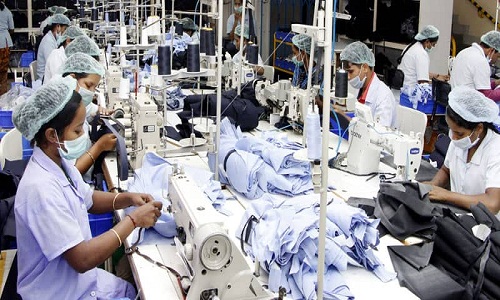
Talking about the business potential, in 2015, the apparel export market was $465 billion. India exported $18 billion compared to China’s $175 billion. High wages are now forcing China to withdraw from this market. From $187 billion in 2014, its apparel exports have fallen to $158 billion in 2016. India should now just focus on taking on China’s place to gain major share.
What is desired?
The reason for stagnant performance is partly due to the policies which reserved apparel for production by small-scale enterprises. These enterprises were too small and their product quality too low to succeed big in the export markets. Since 1973, India’s investment policy confined large firms and big industrialists to investing exclusively in a set of listed ‘core’ industries, which were all highly capital intensive. Owing to this, big industrialists started looking at apparels sector as a not so profitable proposition. Though post liberalization in 1991, small-scale industries reservation was withdrawn, investment in apparel still remained off radar.
The need is to encourage global apparel firms exiting China to relocate in India, instead of Bangladesh and Vietnam. These firms bring in technology and management know-how to operate on large scale having access to global markets. The country needs to create greater labour market flexibilities. There has to be a better balance between the interests of those who already have formal sector jobs, and those who seek them. Firms choose to stay small, operate informally and, thus, escape costly labour regulations.
Exports, especially in the apparel industry, have extremely tight just-in-time delivery schedules. This necessitates the rapid movement of imported inputs into the country and of export products out of the country. In order to achieve the same, trade facilitation needs to be given emphasis. Turnaround time of ships at ports needs to be brought down to a few hours as in Hong Kong and Singapore. Coastal Employment Zones (CEZs) offer a convenient avenue to bringing about these changes expeditiously within limited geographical areas.
To make the industry more competitive, indirect taxes paid by apparel exporters, including those on products outside the goods and services tax (GST) net, such as petrol, be expeditiously reimbursed in full. All competing countries follow this practice and the World Trade Organisation rules permit it as well. The exchange rate has been an extremely sensitive concern for apparel exporters due to low profit margins on which they operate. Foreign investment and remittance inflows, which chase rupees, make them expensive. The Reserve Bank of India (RBI) needs to manage foreign exchange inflows such that the rupee does not appreciate unduly.
Raise in Pakistan exports key to addressing economic imbalances
Federal Tax Ombudsman (FTO) Mushtaq Ahmad Sukhera has said increasing exports is the only viable solution to address the economic imbalance. Addressing the businessmen of the Value-Added Sector at Pakistan Hosiery Manufacturers and Exporters Association (PHMA) House on Friday, he assessed that widening trade and current account deficit and lowering exports were bad for the economy.
“Instead of taking measures to improve exports, the sovereignty has been mortgaged,” he said, while explaining the issuance of sukuk bonds and foreign loans.
Some time back annual exports had risen to $25 billion, which later declined to $20 billion, he said, and assessed, “If exports increased to $30 billion instead, the country had no need to go for foreign loans.”
The FTO said the government should quickly resolve the problems faced by exporters.
He noted the volatile exchange rates and said it would be difficult for the industry to determine prices for exporting goods.
He was dismayed over the low tax-to-GDP ratio and said our neighbouring economies have much better rates. He said India’s ratio was around 18 to 20 per cent of the GDP. Even Bangladesh and Sri Lanka have better ratio than Pakistan, he decried.
The FTO said there was a trust gap between the Federal Board of Revenue (FBR) and taxpayers. “The tax machinery has created trust deficit and people do not want to come into the tax net,” he evaluated.
The FBR should change its priorities and pursue potential taxpayers, instead of harassing existing ones. “Once an audit notice is issued, a taxpayer faces problems,” he explained.
The Ombudsman asked the FBR to change its attitude. “The FBR should change audit parameters and instead of harassing the genuine taxpayers, the priority should be identifying suspicious transactions,” he suggested.
Strong rupee, demon. & GST continue to haunt the economy
The currency and continuing disruptions due to demonetisation and GST remain to haunt the economy despite some contrary beliefs that a strong rupee is good for the economy as it makes imports cheaper.
While India’s exports grew by 11.2 per cent, imports rose in April-November 2017, recording a growth of 22.4 per cent in FY17, however, on the other hand, imports were almost steady and grew by just 0.9 per cent.
Hardening crude oil prices resulted in imports growing at a faster rate than in FY17; for two earlier years, oil imports contracted in value terms. While oil imports rose by $11.7 billion in April-November, overall imports grew by $54.5 billion.
If one exempts gold and oil, it shows that, for the April-November period, FY18 imports grew by a phenomenal 29.8 per cent; in contrast, during FY17, non-oil non-gold imports rose a marginal 1.4 per cent.
Since consumer demand hasn’t grown in the first eight months of FY18, one can assume that increased imports have largely replaced domestic supplies, either because local supply chains continue to be hit and/or because, with the rupee continuing to strengthen, imports have become 5 to 6 per cent cheaper.
In FY17, the rupee was more stable (66.2 to the dollar) on January 3, 2016; 68.14 on January 2, 2017; and 63.69 on January 1, 2018. With the current account deficit currently looking troubling and estimates show it at over 2 per cent of the GDP for FY18, this is definitely a cause of concern for the government. This is where issues like India’s high interest rates come in since they make India more attractive for foreign debt money.
The same supply-chain problems, along with the rupee, are clearly affecting India’s exports. Crisil noted that while India’s exports grew be 9.5 per cent in April to October 2017, Vietnam’s exports rose by 23.8 per cent, South Korea’s by 18.5 per cent, Indonesia’s by 17.8 per cent in the same period, however, at 7.4 per cent, China’s exports grew slower than India’s but the base is so much higher.
Budget 2018 reeling under dwindling exports, AEPC seeks several relief
The apparel export body has made around 8-10 demands ahead of the Budget 2018. Reeling from a continued fall in export growth and marginal refunds on the goods and services tax (GST), the Apparel Export Promotion Council (AEPC) has written to the government, seeking 12-15 types of relief. They want the duty drawback and the refund of state levies (ROSL) to be restored to pre-GST levels, and also exemptions from the new indirect tax for exporters.
Growth of apparel exports has clocked a negative 39 per cent, 11 per cent and 8 per cent, respectively, in October, November and December last year, according to H K L Magu, chairman, AEPC.
In the run-up to the Union Budget, the export body has sought incentives from the government, to boost exports. It wants the duty drawback on cotton apparels to be restored to pre-GST rates of 7.5 per cent and the ROSL of 3.5 per cent. They also want to be exempted from 18 per cent GST for air freight.
The duty drawback fell to 2 per cent after the GST roll-out last year, ROSL to 1.5 per cent on cotton apparels, and 2.5 per cent and 1.5 per cent, respectively, on different man-made apparels.
Till September, when the previous rates were applicable, apparel exports grew in double-digits. However, October onwards, exports began taking a hit.