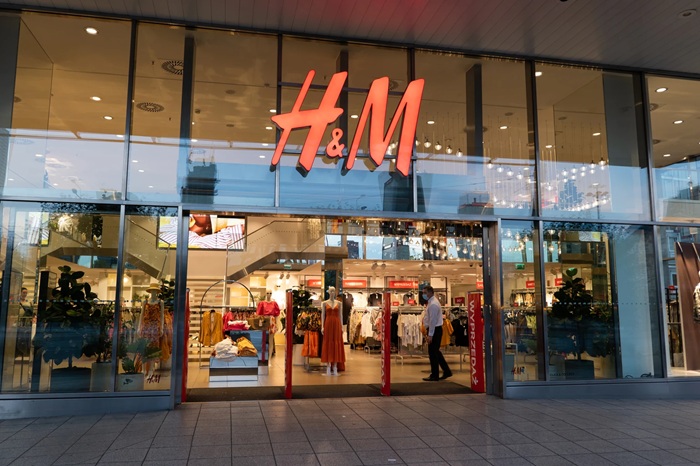
H&M Group’s latest quarter signals a decisive shift in global fast fashion: scale is no longer the primary reason for success. In a quarter marked by cautious consumer demand, store rationalisation and currency headwinds, the Swedish retailer delivered a sharp earnings recovery by prioritising cost control, inventory productivity and better full-price sell-through.
For the first quarter ended February 2026, H&M reported a 26 per cent year-on-year rise in operating profit to SEK 1.51 billion, even as sales in local currencies slipped 1 per cent and its store network remained around 4 per cent smaller than a year ago. Gross margin grew 160 basis points to 50.7 per cent, supported by lower markdown costs and stronger buying discipline. The numbers reinforce a reset underway under CEO Daniel Ervér: H&M is increasingly choosing margin quality over topline aggression.
Stock discipline in focus The clearest evidence of this shift lies in inventory. H&M reduced stock-in-trade by 16 per cent during the quarter to SEK 34.6 billion, bringing inventory to 15.6 per cent of rolling 12-month sales versus 17.4 per cent a year earlier. For a retailer long pressured by excess stock and promotional dependency, this is more than balance-sheet housekeeping it is a direct margin lever.
Lower inventory has sharply reduced forced discounting, enabling the company to improve realised pricing without leaning on aggressive markdowns to clear seasonal merchandise. In effect, inventory hygiene is now acting as a profit engine. The margin growth to 50.7 per cent validates this approach. It suggests consumers are responding better to a tighter, more curated product mix, allowing H&M to protect price architecture in a segment increasingly disrupted by ultra-fast fashion discounting.
Store pruning, not store expansion
The bigger message is that H&M’s recovery is being built on a smaller operational footprint. With the store base down around 4 per cent year-on-year, management is signalling a clear preference for productivity-led retail over indiscriminate expansion. Underperforming locations are being phased out, while capital is being redirected toward premium flagships, stronger digital integration and higher-traffic hubs.
This is a shift from the legacy fast-fashion playbook that once rewarded store count growth as the dominant valuation metric. Instead, H&M is rebuilding around relevance per square foot. That becomes especially critical as the company faces pressure from both ends of the market, Shein’s ultra-low-cost model at the entry level and Zara’s increasingly premiumised fashion positioning at the aspirational end.
Speed and agility the new growth engine
The supply chain is emerging as the structural backbone of the turnaround. Management has doubled down on shorter decision cycles, closer supplier coordination and higher in-season buying flexibility. CEO Daniel Ervér has emphasised faster decision-making paths and a simplified operating structure that allows product choices to move closer to real-time customer demand. This matters because fashion risk today is no longer just trend risk, it is timing risk.
By increasing the share of inventory bought in season, H&M is reducing the forecasting errors that traditionally lead to margin-dilutive discounting. The strategy also improves responsiveness to local demand shifts, climate variation and rapidly changing social-media-driven trends. In effect, speed is now as important as style.
Table: The margin reset by the numbers
|
Metric |
Q1 FY26 |
What it signals |
|
Operating Profit |
SEK 1.51 bn (+26%) |
Strong cost control despite weak demand |
|
Gross Margin |
50.7% (+160 bps) |
Lower markdowns, better realised pricing |
|
Inventory |
-16% YoY |
Improved stock turns and capital efficiency |
|
Store Base |
4% lower |
Shift to high-productivity retail hubs |
The table underscores the central investment thesis around H&M’s recovery: profit is improving faster than revenue momentum. Operating profit growth of 26 per cent on negative local-currency sales indicates the company is extracting more earnings from every unit of inventory, every square foot of retail space and every sourcing cycle. This is the kind of below-the-revenue-line improvement equity markets tend to reward, provided it proves durable.
The real test is brand heat, not just better math
Yet the quarter also leaves investors with an unresolved question: can operational excellence alone reignite sustainable growth? While March sales are expected to rise 1 per cent in local currencies, the broader topline remains soft, reflecting cautious consumption and persistent competitive pressure. That makes the next phase of the H&M story less about cost discipline and more about desirability.
A leaner inventory base and tighter supply chain can protect margins, but long-term valuation expansion will depend on whether consumers see a tangible step-up in fashion relevance, quality and brand aspiration. For now, H&M appears comfortable trading sales volume for pricing integrity and return ratios. In a market once obsessed with store growth and SKU velocity, the retailer is making a different bet: fewer products, fewer stores, but stronger economics. The quarter suggests that bet is beginning to work.