Vietnam to build product chains to improve competitiveness
Vietnam plans to build product chains to increase the value of the goods and cut out middle men to improve competitiveness. The country has witnessed strong exports in both scale and production. The total export turnover of the country reached $214 billion in 2017, a 21.2 per cent year-on-year increase. Exports this year are also expected to increase as the government has implemented commitments for international integration, reducing import-export taxes.
Government efforts have provided a favorable business environment and aided export activities. Total import-export turnover in the first seven months of this year rose by 12.7 per cent from the same period last year to reach $264.3 billion. Of which, export turnover was $133.6 billion.
Exports continued to maintain high growth of 15.3 per cent in the period, meeting 56.5 per cent of the year’s targets. In addition, the country’s exports depended on foreign directed investment (FDI) enterprises, which accounted for 70 per cent of total turnover.
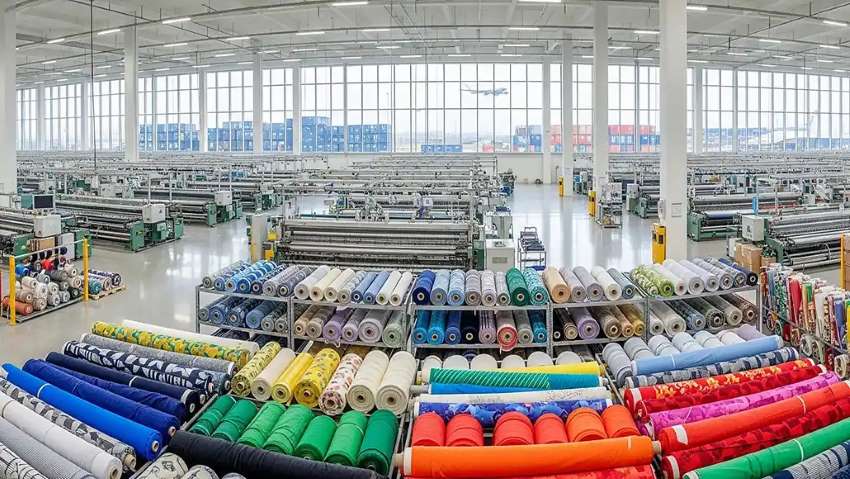
However, the sector has mainly performed cutting and sewing in the global garment and textile supply chain. Vietnamese garment and textile firms have participated in simple outsourcing and lack the ability to provide packaging, resulting in low added value. The garment and textile industry has also relied on imported materials. The local companies had to import up to 86 per cent of cloth for production and exports.
Vietnam’s export turnover up 21 per cent
Vietnam’s export turnover has increased 21.2 per cent year-on-year. Commitments for international integration have been implemented, helping reduce import-export taxes. Favorable business environment had aided export activities. Total import-export turnover in the first seven months of this year rose 12.7 per cent from the same period last year. Exports continued to maintain a high growth of 15.3 per cent in the period, meeting 56.5 per cent of the year’s targets.
The country’s garment export turnover makes up four per cent of the world’s total turnover. However, the sector has mainly performed cutting and sewing in the global garment and textile supply chain. Vietnamese garment and textile firms have participated in simple outsourcing and lack the ability to provide packaging, resulting in low added value.
The garment and textile industry has also relied on imported materials. It has to import up to 86 per cent of cloth for production and exports. Vietnam’s exports depended on foreign directed investment enterprises, which account for 70 per cent of total turnover. This is because Vietnam does not have an export value chain. Most Vietnamese firms are small-scale and can’t afford to invest in material areas and modern processing and packaging equipment.
Turkey apparel exports up seven per cent
For the first half of 2018, Turkey’s apparel and clothing exports increased 7.7 per cent compared to the same period of 2017. From January to June 2018, the share of clothing and apparel exports in Turkey’s total exports was 10.8 per cent. The figure was 11.1 per cent in the same period of 2015; 12.3 per cent in the January-June period of 2016, and 10.7 per cent in the January-June period of 2017.
In ready-to-wear garment exports Germany led followed by Spain and the UK. Exports to Germany increased 7.2 per cent while to Spain it increased 26.8 per cent. Exports to the UK increased 1.9 per cent. The Netherlands came in fourth place and France ranked fifth.
The most exported product group in the first six months of 2018 was knitted garments. Exports of knit garments increased by 6.3 per cent compared to the same period of the previous year. The second largest group – woven apparel goods and accessories – increased 9.7 per cent. Exports of other readymade goods, including home textile products, rose 7.6 per cent.
In the first six months of 2018, unit prices for apparel and apparel sector exports increased 3.2 per cent compared to the same period of the previous year.
Lenzing revenue declines 6.4 per cent in 2018
Lenzing’s revenue in the first half of fiscal 2018 declined 6.4 per cent compared to the first half of the previous year to €1,075.4 million. The decrease was due to less favourable currency exchange rates. EBITDA decreased by 28.1 per cent to €194.8 million, especially due to price increases for key raw materials and higher energy prices. The EBITDA margin fell from 23.6 per cent in the first half of 2017 to 18.1 per cent in the first half of 2018. EBIT declined by 37 per cent to €128.7 million, leading to a lower EBIT margin of 12 per cent (H1 2017: 17.8 per cent).
Net profit for the reported period dropped 39.3 per cent from €150.3 million in the previous year to a total of €91.3 million. Earnings per share equaled €3.44 (H1 2017: €5.55). The Lenzing Group t is very well positioned in the market environment with its corporate strategy score TEN and will continue its consistent focus on growth with specialty fibres.
Indonesia, US to boost textile and apparel trade
Indonesia and the United States will strengthen trade relations. They have agreed to develop a road map to realize increased trade. The two countries will further enhance bilateral relations by building strategic partnerships amid the current dynamics of global trade. The arrangement will involve the private sector of the two countries.
In particular textile and textile products businesses have agreed to increase trade. The proposed target is 50 billion dollars. The total value of Indonesia's trade with the US reached $25.9 billion in 2017. Of this, Indonesia’s exports was $17.79 billion and imports amounted to $8.12 billion. Thus Indonesia’s trade balance against the US surplus was $9.67 billion. Indonesia is committed to making textile and garment industry a top export priority.
One of the points of cooperation in the field of textile and textile products is the opening of market access for both countries. The US will export cotton to Indonesia as raw material for textile products. And Indonesia will increase exports of textile products to the US. The assumption is that the US can export more cotton to Indonesia if the latter exports more garments and textile products to the US.
India invests in Vietnam’s denim sector
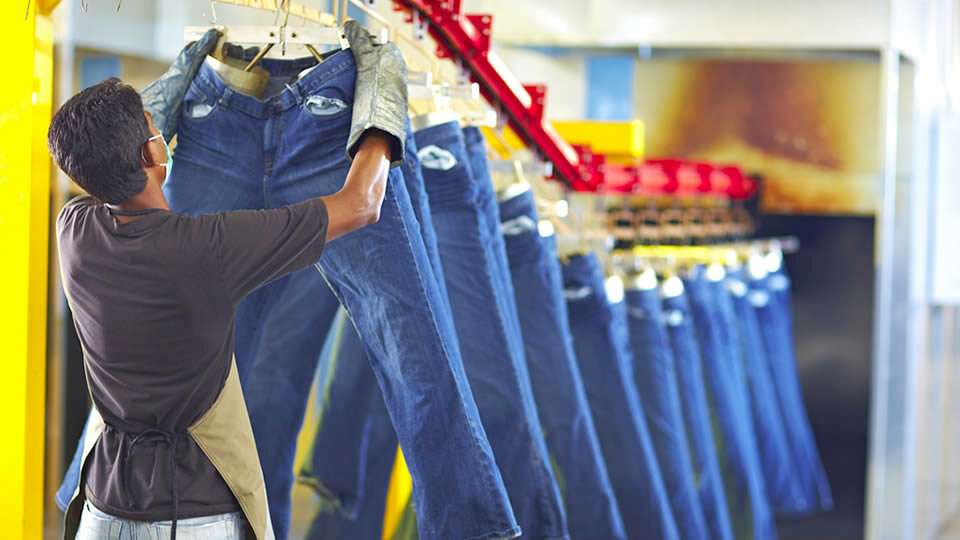
Vietnam is emerging as a denim fabric manufacturing center. Indian fabric investors are showing interest as they search for potential suppliers of denim fabric. Denim goods account for 20 per cent of the textile sector’s export revenue in Vietnam. Although the sector is facing bottlenecks in its supply chain, denim fabric production is a strong point of local producers with a localisation ratio of about 60 per cent, spurred by heavy investments in production lines and technologies.
The impressive growth of Vietnamese garments and textiles in recent years has persuaded the choosiest customers worldwide, including Indian firms. The Vietnamese garment and textile sector with its enhanced production capacities is a magnet for foreign investors. Indian companies are looking to collaborate with Vietnamese partners in producing denim fabric. Many are planning to move their plants from China as more benefits are expected when having production facilities in Vietnam, including larger order volumes and skillful workers.
Currently, India has invested $814 million in 176 projects in Vietnam, ranking 28 out of 126 countries and territories having investment in the country. Last year, India’s garment and textile exports to Vietnam increased 44 per cent year on year.
Bangladesh to hike export incentives to new markets
Bangladesh will raise cash incentives for readymade garment exporters from three to four per cent for markets other than the US, Canada, and the European Union. New export markets, also called non-traditional markets, contributed 15.26 per cent to Bangladesh’s total apparel exports in the last fiscal year. The European Union contributed 64.12 per cent, the US 17.48 per cent, and Canada 3.15 per cent.
Non-traditional export markets for Bangladesh’s garment sector include: China, Russia, Japan, India, South Africa, Australia, Turkey, Brazil, Chile, Mexico, South Korea, Malaysia, and New Zealand. And among these Japan, China, and India are potential markets for Bangladesh. In financial year 2017-18, Bangladesh’s earnings from exporting apparel products to non-traditional markets rose 9.92 per cent.
As a new market, Japan is showing a lot of potential for Bangladeshi apparel goods. In the last fiscal, garment exports to Japan from Bangladesh rose 13.73 per cent compared to the previous year’s earnings. In fiscal ’18 Bangladesh’s readymade garment exports to India rose 115 per cent compared to the previous year.
The search for new markets has been prompted by the realization that increasing production by itself cannot increase export earnings and that markets would have to be diversified.
India: Experts slam hike in import duty on textile products
The government has doubled import duty on more than 300 textile products for the second time this month, which, Animesh Saxena, Managing Director, Neetee Clothing and Executive Member, Apparel Exporters and Manufactures Association believes, does not auger well for the garment export industry. He believes restricting our fabric basket to cotton is stagnating export growth.
India has doubled import tax from existing 10 per cent to 20 per cent to boost the ailing textile sector, promote local manufacturing and create employment opportunities. This hike will help India's domestic industry, which employs nearly 10.5 crore people and has been facing stiff competition from cheaper imports.
This is for the second time that the government has increased import duty. Last month, the government had doubled import duty on over 50 textile products including jackets, suits and carpets to 20 per cent. However, the 20 per cent duty will not be applicable to products sourced from Bangladesh, Vietnam and Cambodia countries due to the FTA.
China is still top apparel exporter to the US, India’s shipments drop
China’s June apparel exports to the US fell 0.83 per cent in volume. But the country is still the top supplier to the US. Vietnam, the number two apparel supplier to the US, saw apparel shipments rise 6.6 per cent in value and 2.6 per cent in volume. Among other major suppliers, apparel imports from Bangladesh rose 9.9 per cent in value while unit volume was up 1.2 per cent. Cambodia’s shipments increased 8.4 per cent in value and up 4.5 per cent in volume.
Among the top 10apparel and textile suppliers that posted year-on-year decline in import volume, India’s shipments to the US dropped 3.2 per cent, Mexico’s dipped one per cent and Indonesia’s shipments decreased 11.2 per cent. Among the top ten countries which recorded volume increase in apparel exports to the US were South Korea with a 26 per cent hike, Vietnam with a 6.3 per cent increase and Cambodia with a 5.6 per cent gain. Other countries in the group posting increases were Pakistan up 2.7 per cent, Bangladesh up 0.5 per cent and Canada with a 0.2 per cent growth.
US exports of apparel and textiles rose 4.33 per cent in value, with growth in key destinations such as Mexico, Canada, El Salvador, the Dominican Republic, Nicaragua and Guatemala.
Canada records 4.67 per cent growth in apparel imports in H1 2018
Witnessing a surge during in the first half of 2018, Canada posted a 4.67 per cent growth value-wise of apparel imports from January to June. Overall import was recorded at $4,359.33 million in the period as against $4164.73 million import value in the corresponding period last year.
China remained the focus of Canadian apparel imports during the period, as the country exported goods worth $1,549.46 million growing marginally by 0.14 per cent yearly. On the other hand, Bangladesh shipped $537.50 million worth of apparels, a 2 per cent growth Y-o-Y. Cambodia marked an impressive growth of 12.7 per cent as it exported apparels worth $397.43 million to the Canadian market. In knitted segment, Cambodia stood 2nd after China and exported $285.96 million worth, registering 9.6 per cent yearly growth.
Vietnam upped its exports from $340.78 million from the same period in 2017 to $390.60 million this year, rising by 14.62 per cent. India increased its apparel exports by 3.97 per cent in the first six months to Canada and shipped apparels worth $172.82 million. The growth helped India book 5th spot among top exporters.
More...
Student protest and transport strikes hit apparel industry
According to the leaders of the Bangladesh Garment Manufacturers and Exporters Association (BGMEA), the recent student protests demanding safe roads, and the subsequent transport strikes across the country, has hit the apparel industry very hard.
As per the view of Mainuddin Ahmed, Vice-President, BGMEA, the strike disrupted civil life and export-import activities of the country. The apparel sector was worst hit by the strike as the export-import goods could not be transported. The imported goods could not be unloaded from the maritime port. Export items also did not reach the port on time for shipment. As a result, productivity at the factory was hampered to a great extent.
Ahmed further informed that five vessels left Chittagong Port on August 5 without carrying 1168 export box containers. BGMEA plans to issue a circular asking entrepreneurs how much loss they incurred in this regard.
Adidas revenue up 12 per cent in Q2
For Q2, revenues for Adidas brand increased 12 per cent. While revenues in the wholesale channel increased at a high-single-digit rate, direct-to-consumer sales rose at a double-digit rate with strong support from e-commerce, where revenues grew 26 per cent in the quarter. Adidas remains firmly on track to achieve its set targets for the full year 2018 and long-term until 2020.
The company’s gross margin increased 2.2 percentage points to 52.3 per cent. This development was driven by an improved pricing and channel mix, reflecting the company’s focus on the quality of its top-line growth. Royalty and commission income increased 10 per cent. Other operating expenses increased nine per cent. As a percentage of sales, other operating expenses were up 1.8 percentage points to 43 per cent. This increase was mainly driven by significantly higher marketing expenditure, which grew 14 per cent.
As a percentage of sales, marketing expenditure increased 1.2 percentage points to 13.5 per cent. In addition, operating overhead costs increased seven per cent as a percentage of sales to 29.5 per cent as the company continues to invest into further improving the scalability of its business. Inventories declined six per cent. Operating working capital increased one per cent at the end of June 2018.
Denim continues to flourish globally backed by innovation and styles
"Amid athleisure’s growing preference, the world’s most famous attire – denim is witnessing lacklustre growth since the last two years. But what can bring zing back is the products newness. In a report, ‘Spotlight on Jeans: Denim Bounces Back’, Lorna Hennelly, fashion & beauty analyst, Euromonitor, says consumer demand for leggings is slowing, giving rise to a rebound in rigid, retro-style denim. The resurgence in demand is driven by millennials and grows in line with the industry-wide revival of ’90s-style fashion and nostalgic Americana, after over a decade of ultra-stretch skinny jeans saturating the market. In an effort to compete against athleisure, jeans manufacturers are innovating and adapting to evolving consumer needs."
 Amid athleisure’s growing preference, the world’s most famous attire – denim is witnessing lacklustre growth since the last two years. But what can bring zing back is the products newness. In a report, ‘Spotlight on Jeans: Denim Bounces Back’, Lorna Hennelly, fashion & beauty analyst, Euromonitor, says consumer demand for leggings is slowing, giving rise to a rebound in rigid, retro-style denim. The resurgence in demand is driven by millennials and grows in line with the industry-wide revival of ’90s-style fashion and nostalgic Americana, after over a decade of ultra-stretch skinny jeans saturating the market. In an effort to compete against athleisure, jeans manufacturers are innovating and adapting to evolving consumer needs.
Similarly, Cotton Incorporated Lifestyle Monitor Survey suggested in the US, almost six out of 10 consumers (59 per cent) ‘love or enjoy’ wearing denim. Nearly two thirds (61 per cent) say they wear denim jeans or shorts at least three times a week. American women are even more likely than men to wear denim so often (63 per cent versus 57 per cent). According to Prescient & Strategic (P&S) Intelligence, North America is the world’s largest denim market, contributing more than 30 per cent revenue to the global market in 2016.
Growth channels
Statista research reveals sales are being encouraged by expanding urban populations, increase in the number of white-collar employees, changes in perceptions about ‘executive wear’ and the resulting acceptance of jeans as business casual attire for men. Affinity for denim is highest in Colombia (82 per cent), Germany (81 per cent), Turkey (72per cent), Mexico (71 per cent), and Great Britain (68 per cent). The two most heavily populated countries in the world, India and China, have come to appreciate denim jeans more than ever. The number of people in these Asian countries who love or enjoy wearing denim has grown significantly between 2003 and 2018, from 22 per cent to 53 per cent in India, and from 39 per cent to 65 in China, states the Global Lifestyle Monitor Survey.
Monitor research shows on average, men and women in the US own six pairs of denim jeans. In contrast, consumers in denim-loving Colombia own nine pairs; followed by Mexico (eight pairs); Germany (seven pairs), Italy and Turkey (both six pairs); Great Britain and Thailand (both five pairs); China (four pairs); and Japan and India (three pairs). P&S Intelligence says jeans have been the largest contributor to global denim market, and they are expected to drive future sales as well. The availability of numerous styles in jeans, such as: skinny, stretch, ultra-low-rise, mid- and high-rise denims, boyfriend, straight/cigarette jeans, flared, wide-legged, capri, cropped, and cuffed jeans, provides multiple options for buyers to choose according to their preference. Globally, consumers want quality denim that wears well because they are usually wearing it out in public. The Global Monitor finds denim is worn to run errands (48 per cent), to work (35 per cent), to go out for dinner (33 per cent), to be stylish or fashionable (28 per cent), and to look and feel good in your outfit (27 per cent).
Your denim in future
It’s going to be packed with embellishments, destroyed and bleached denim going forward. Oversized denim will see a rise, although younger designers and emerging brands will use overly exaggerated silhouettes and more street-style looks. Spring/Summer 2019 will also see a strong usage of raw denim. According to Hennelly, the novelty of athleisure is wearing off, and consumers are looking to their fashion favorite for newness in their wardrobes. Consumer demand for leggings is slowing, giving rise to a rebound in rigid, retro-style denim. The resurgence in demand is driven by millennials and grows in line with the industry-wide revival of ’90s-style fashion and nostalgic Americana, after over a decade of ultra-stretch skinny jeans saturating the market.
Vietnam keen on enhancing trade with India
Cooperation between the garment and textile sector will be one of the priorities in Vietnam and India’s efforts to raise bilateral trade value. Both have prioritized development and cooperation with the aim of enhancing bilateral trade and building a supply chain for the textile sector.
In 2017, India’s apparel exports to Vietnam surged 44 per cent. To enhance trade cooperation, India intends to export apparel fabrics worth one billion dollars to Vietnam. Despite being one of the five largest apparel exporters in the world, Vietnam also imports the highest amount of garments and textile materials in the world.
And India owns a strong fiber and yarn production industry that is able to produce almost all kinds of fabrics and supporting materials available in the market, making it one of the three largest textile products providers in the world. India is strong in producing and exporting textile products from synthetic yarn, being used widely in the global garment industry.
While Vietnam will gain from India with regard to latest technology, textile materials and products, India too can expand its market. Vietnam applauds the quality of Indian fabric.