Textile Ministry urged to resolve NTC worker’s payment issues
Trade union representatives from Coimbatore have urged the Union textile minister Smriti Irani to resolve the payment issues faced by National Textile Corporation (NTC) mill workers. The seven NTC mills in Tamil Nadu employ around 1,400 regular workers. On May 31, 2018, the four-year wage agreement of these workers had expired. NTC workers recently sent a wage hike demand to its Southern Region office seeking a 50 per cent increase in basic wages and finalising the employment of workers who had worked for 480 days. It also sought Rs. 421 a day for casual workers.
The management had neither invited them for proper talks nor arrived at a solution, forcing the workers to hold demand meetings and wear demand cards to the mills. On August 7, a group of trade union leaders met the Union textile minister and sought her intervention. The minister assured them that necessary steps would be taken.
India: Suryalakshmi Cotton Mills Q1 net sales rise
Net sales of Suryalakshmi Cotton Mills during the three month period ended June 30, 2018, was Rs 183.60 crores as compared to Rs 174.95 crores during the three month period ended June 30, 2017. Net profit, was Rs 0.54 crores as against Rs 0.52 crores for the three month period ended June 30, 2017.
Suryalakshmi has a denim fabric manufacturing capacity of 40 million meters a year. The company has launched new variants from the Amravati spinning unit to be used in manufacturing high-end denim fabrics. It has a capacity of 25,000 spindles for the manufacture of high quality value added and fancy yarns like stretch, slub and Elitwist yarns.
Suryalakshmi Cotton is one of India’s leading integrated premium yarn-to-denim-to-garment manufacturing companies. It has become the Original Denim Manufacturer to leading global and domestic brands with a dominant market share in the premium denim sector.
With cutting-edge designs, the latest spinning technology and end-to-end manufacturing plants, Suryalakshmi creates the finest yarns, premium denims and garments for leading private labels, fashion brands and retail chains in 31 countries across the globe.
Bangladesh RMG plagued by shipment delays and late document presentation
As per a survey by the Bangladesh Institute of Bank Management (BIBM), shipment delays and late presentation of documents to Bangladesh's authorities are among the most critical challenges faced by the country's garment sector. The survey revealed around 66 per cent of exports could not be delivered on time while late presentation of documents, which poses a money laundering risk, occurred 53 per cent of the time. The main culprit was inadequate knowledge of domestic and international regulations.
The survey also dealt with the increasing amount of overdue export bills: 48 per cent against letters of credit (LCs) and 53 per cent against contracts. The bills increased sevenfold to $119.63 million last year from $16.23 million the year before. Around 42 per cent of export proceeds were found to have been non-repatriated against contracts.
BIBM study revealed the findings of the “Trade Facilitations in RMG by Banks: Risks and Mitigation Techniques” survey at a workshop.
Philippines garment exports to rise 10 per cent
The Philippines expects garment and textile exports to increase 10 to 20 per cent this year. Luxury bags brand Coach is expanding its existing four sourcing groups from the Philippines.
The US accounts for 67 per cent of the Philippines’ apparel exports including leather goods. In addition, the US also accounts for 27 per cent of the country’s textile, fiber and fabric exports.
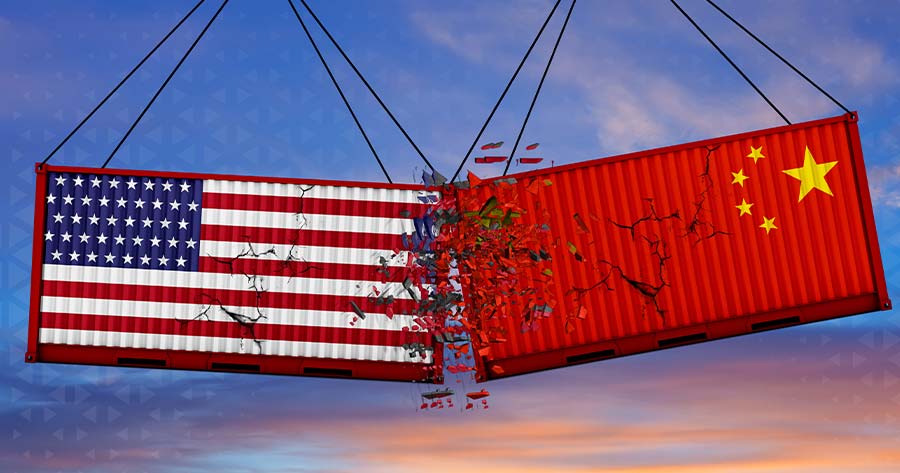
What’s also helping Philippines is that some orders are being shifted from China to the Philippines to avoid the high tariffs imposed by the US on Chinese goods, including garments and textiles. One of the major hurdles Philippine exporters face is the Rules of Origin in Europe because even as the country enjoys EU GSP Plus, its textiles and fabrics are sourced elsewhere and are therefore slapped with higher taxes. EU GSP Plus, however, is expected to lead to more garment and textile investments in the country.
In addition, least developed countries enjoy zero duty when they export to the US as against the Philippines, which faces a 33 per cent duty on its garments, making Philippine garments more expensive than those from other countries.
Blouses from the Philippines have a tax of 12 per cent going to the US. Suits and blazers are at 33 per cent. The same products from LDC countries face zero duty.
India: Orissa raises handloom target, aims to for higher output
Orissa aims to produce 25 per cent more textile and handloom products than last year. While 16 districts are producing textile and handloom products, 34,086 looms out of 40,164 are active. Since only 21,760 looms were operating last year, 3,000 more looms will be activated to achieve the target for the year.
Producing zones are: Boudh, Bargarh, Cuttack, Athagarh, Khurda, Sonepur, Nayagarh, Koraput, among others. Last year none of the zones made 100 per cent achievements except Baripada while Bargarh and Balasore zones achieved more than 90 per cent of their target. Athagarh, Khurda, Patnagarh, Dhenkanal, Sundargarh, Kalahandi and Koraput could produce less than 60 per cent of the target.
Of the 90.55 lakh sq mt target set last year, achievement was nearly 71.54 per cent. The number of working looms came down from 22,824 to 21,760. Several welfare schemes have been formulated for socio-economic development of weavers. Strategies will be formulated to strengthen the production system and provide regular employment to weavers working under the cooperative fold.
Boudh zone has been asked to activate 400 looms and Athagarh, Bargarh and Sonepur zones have been directed to operate 300 looms more to help achieve the overall target.
Ludhiana traders not getting refunds; demand transfer of GST numbers
Ludhiana businessmen, at a recent meeting of with Yogendra Garg, Additional Director General (ADG), GST, demanded that their GST numbers be transferred to the central GST Commissionerate from state taxation department as they are not getting refunds. The meeting was attended by several other high officials of both central and state taxation departments including Ashutosh Baranwal, Central GST Commissioner, Ludhiana and Pawan Garg, Deputy Excise and Taxation Commissioner, State Taxation Department.
The meeting was conducted at the GST commissionerate Rishi Nagar. Its main motive was to know the problems being faced by the textile industry and reasons for delay in processing of GST refunds. Bobby Jindal, President, Punjab Dyers Association informed that they were being apprised by ADG that the GST refunds are being expedited on timely basis and the assesses registered with the centre’s GST commissionerate are getting their refunds on time and there are no refunds pending.
Hong Kong fashion event CENTRESTAGE in September
Centre Stage will be held in Hong Kong from September 5 to 8. This is Asia's premier fashion event and provides an ideal launch and promotion platform for Asian and international fashion brands and designer labels.
Building on the legacy of previous editions, the 2018 event will host over 220 sought-after brands from around the world, and feature some 40 spectacular events. Seminars will bring a star-studded line-up of international style masters and industry experts to share their perspectives on industry trends and the future of fashion.
Anupreet Bhui, Senior Editor of Global Street Style at WGSN will discuss what is next for the fashion industry and offer her expert advice. She will explore key items, colors and macro trends that will determine the mood, feel and socio-cultural movements for the season ahead. The style guru will also address the rising influence of street wear among Gen Z (the generation born since the millennium) consumers and share her thoughts on how the trend will continue to evolve.
Fashion designer Martine Rose will share anecdotes from her career. Leading academics, key industry players, decision makers and leaders from various disciplines and geographical locations will exchange insights on how to make the fashion industry more sustainable.
Indian nylon fabric makers oppose duty hike on nylon yarn
India may apply anti-dumping duties on Vietnamese nylon filament yarn for five years. This move follows complaints from domestic textile enterprises about cheap imports of such yarn from Vietnam.
However, manufacturers of nylon fabric in India have opposed the anti-dumping duty on nylon yarn, saying it will allow Indian yarn makers to monopolize prices. They say yarns and fibers, including nylon filament yarn made in Vietnam and the EU, are 20 per cent cheaper than the ones made by domestic firms. And just five or six nylon yarn manufacturers in the country are in favor of duties but the thousands of weavers and workers who are attached to the industry are not in its favour. A final decision on this matter is yet to be taken.
India’s nylon filament yarn production increased 2.4 per cent. This makes up just three per cent of total filament yarn production in India. In the second quarter, nylon filament yarn production increased by 1.7 per cent year-on-year, down from 8.8 per cent in the first quarter of the 2017 calendar year. Indian imports of nylon filament yarn increased to 13,799 tons from October 2015 until March 2017, as opposed to 7,201 tons from 2013 to 2014.
Fashion Summit HK 2018 to focus on circular economy
Fashion Summit HK 2018, set to be Asia’s largest sustainable fashion conference, will focus on the theme of ‘Circular Economy’. It will provide a platform for participants to exchange insights, connect companies with different perspectives in order to catalyse industry collaboration and raise public understanding on the role of global fashion industry in sustainable development.
In addition to hundreds of attendees, the second installment of the annual summit will host over 50 international policymakers, fashion leaders and representatives from academic and non-profit organisations who will discuss sustainable fashion through a variety of platforms including roundtables, keynote speeches, and panel discussions.
The summit is being organised collectively by seven organisations including: Clothing Industry Training Authority; the Office of the Honourable Felix Chung Kwok-pan, member of the Legislative Council (Textile and Garment Sector); Hong Kong Design Institute; The Hong Kong Research Institute of Textiles and Apparel; Redress; Sustainable Fashion Business Consortium; and WWF-HK.
Speakers include industry stalwarts like: Jill Dumain of Bluesign Technologies, Christina Raab from the ZDHC (Zero Discharge of Hazardous Chemicals), Katrin Ley of Fashion for Good and co-founder of Fashion Revolution Orsola de Castro.
Backdoor entry of Chinese textiles worries India
China is exporting textiles to India through Bangladesh, undermining India’s efforts to support local manufacturers. Textile raw material from China comes to India via Bangladesh, which has a free-trade agreement with India. Duty free fabric from China goes to Bangladesh, gets converted and lands into India at zero duty.
Trade bodies, which expect textile imports from Bangladesh to rise further, want India to introduce a rule of origin for duty free imports. Competition from China is forcing some businesses, such as polyester production facilities, to run idle, leading to job losses.
Import of clothing accessories and apparel from Bangladesh -- the world's second largest exporter of readymade garments -- rose over 43 per cent during the year ended March 2018. And almost 50 per cent of the garments were made with Chinese fiber.
This development is ironic considering that India until recently had been a net exporter of textile products to China. India, Bangladesh and Sri Lanka are among the signatories of the South Asian Free Trade Agreement (SAFTA) that created a free trade zone in the South Asian region. Under this, only those goods should be exempt from custom duty whose raw material is also manufactured by one of the SAFTA countries. And China clearly isn’t.
More...
Australian Wool EMI rises by 18 cents
The Australian Wool Exchange Eastern Market Indicator (EMI) rose 18 cents per pound last to close at $14.81, following a three-week seasonal break in sales, amid a drought that’s hindering supply. The price-rise is being led by Merino fleece and skirtings. European countries top the list of buyers for Merino fleece types of wool.
The strong support for these wool from both Italian operators and forward sellers eventually forced Chinese buyers to accept prices are not likely to fall further and they need to join in to secure immediate supply requirements. According to AWI weekly market summary, foreign exchange rates of the US dollar versus the Chinese yuan continues to be the major influence in a much of the negative sentiment around the wool price emanating out of China.
As AWI states, the rate has seen the value of the dollar appreciate by almost 10 percent against the yuan in just a few months. At the same time, the exchange rate of the US dollar versus the Australian dollar has remained stable, trading in the 0.736 to 0.747 range for two months. AWI adds that continued price strength will help alleviate drought affected growers feeding costs to help ensure future wool production.
Accord and Alliance departure could impact Bangladesh apparel industry
Alliance for Bangladesh Worker Safety is set to leave Bangladesh by the end of the year. And so would the European buyers’ platform Accord on Fire and Building Safety in Bangladesh. These global buyers’ bodies were formed in the wake of the tragic Rana Plaza incident, to carry out inspection and remediation of apparel manufacturing units in the Bangladesh readymade garment sector.
However, more than 180 European brands have reportedly warned that if Accord is shut down, leaving workers in unsafe working conditions, they might reconsider their sourcing decisions. Accord would like to continue till the work of remediation which started in May 2013 is completed and a sustainable and adequate national regulatory structure is implemented to regulate workplace safety in the Bangladeshi garment industry.
The industry in Bangladesh does not think the exit of the buyers’ bodies would have any business implications. The view is Bangladesh has already achieved a good workplace environment through team work, a positive attitude, and huge investments and that if some factories still lack in achieving those goals, that will be corrected. This is at a time when the readymade garment industry in the country is standing at the cusp of the next phase of growth.
Microfibers, both natural and synthetic emerge top global pollutants
"These fibers, made from polyester or other popular synthetics, often linger in the environment, just like plastic packaging that coats so many of the world’s beaches. They also bond to chemical pollutants in the environment, such as DDT and PCB. Additionally, the fact that the textiles from which they are shed are often treated with waterproofing agents, stain- or fire-resistant chemicals or synthetic dyes, proves them to be harmful to organisms that ingest them. In fact, we consciously or unconsciously consume microfibers through our food and drink. As recently published studies indicate some microfibers floating in the air could be settling in our lungs. Clothing retailers, textile companies, environmental nonprofits and others around the world are striving hard to understand the problem and craft solutions."
 Apparels, produced from natural fibers, have for a long time, been linked to environmental ills, such as water and air pollution, not to mention use of land, water and pesticides. However, recent research has indicated that apparel made wholly or partially from synthetic textiles also produce a type of microplastic known as microfibers, which shed during normal use and laundering.
These fibers, made from polyester or other popular synthetics, often linger in the environment, just like plastic packaging that coats so many of the world’s beaches. They also bond to chemical pollutants in the environment, such as DDT and PCB. Additionally, the fact that the textiles from which they are shed are often treated with waterproofing agents, stain- or fire-resistant chemicals or synthetic dyes, proves them to be harmful to organisms that ingest them. In fact, we consciously or unconsciously consume microfibers through our food and drink. As recently published studies indicate some microfibers floating in the air could be settling in our lungs. Clothing retailers, textile companies, environmental nonprofits and others around the world are striving hard to understand the problem and craft solutions.
Disturbing revelations
In 2004, a team of researchers led by Richard Thompson from the University of Plymouth in the UK documented and quantified the occurrence of microplastics in marine environment. This operation also involved collecting sediments from around 20 coastal sites in the UK. As a part of the study, published in Science, researchers also collected surface water samples and compared the microfiber contents from samples taken decades prior. They observed an increase in fibrous synthetic material over time that corresponded with the uptick in synthetic fiber production since the 1970s.
One of Thompson’s graduate students, Mark Anthony Browne, conducted a study that looked at the sources of both the fibre and microfibers in coastal areas. He collected samples of beach sediment from around the world. He also washed polyester apparel in order to quantify the fibers those items shed into laundry wastewater.
Browne’s 2011 paper based on that research made two disturbing revelations. First, samples taken near wastewater disposal sites had 250 per cent more microplastic than those from reference sites and the type of microplastic fibers in the samples were mainly polymers often used in synthetic apparel, suggesting fibers were eluding filters in wastewater treatment plants and being released with treated effluent. Second, a single polyester fleece jacket could shed as many as 1,900 of these tiny fibers each time it’s washed. Browne, therefore, concluded synthetic apparel is a major source of microfibers in the environment.
Five years later, a Vermont-based nonprofit focused on ocean protection, led a study of microfiber pollution across an entire watershed The Rozalia Project, as the study involved collection of water samples from the mouth of the Hudson River to where it meets the Atlantic in Manhattan. Based in part on Browne’s study, the organisation expected an increase in microfiber content around the treatment plants. However, there was no significant difference in concentration of fibers from the alpine region to agricultural center of New York and the high population areas of Manhattan and New Jersey.
That surprised the group’s director, Rachael Miller, who expected cities to be microfiber hot spots. It suggested fibers might be entering surface waters from the air and from septic system drainfields in rural areas without municipal sewage systems. Another revelation was microfibers spiked at a sample site near a popular trailhead running along a tributary to the Hudson. Miller suspects this to be due the synthetic fabrics that the hikers wore, which shed fibers from clothing as they scramble up the trail.
From sinks to sources
Industry journal Textile World reveals demand for polyester has grown faster in the last 20 years than the demand for wool, cotton and other fibers. By 2030, demand is expected to be 75 per cent of global apparel fiber production or 107 million tonne. All textiles, including carpeting and upholstery, produce microfibers. So do commercial fishing nets. But as apparel is laundered frequently and a huge quantity is purchased, it is the source that researchers and policy makers are focusing on.
Krystle Moody, textile industry consultant says athleisure wear relies heavily on synthetic textiles due to its moisture wicking and durability characteristics, price is the biggest driver behind synthetics use. As Jeffery Silberman, Professor and Chairperson of Textile Development and Marketing with the Fashion Institute of Technology at the State University of New York states a poly-cotton blend is generally far cheaper than cotton but doesn’t look or feel appreciably different to most consumers.
The main culprit for this is recycling. Many brands sell fleece jackets and base layers, for example, made from used PET water bottles. Synthetic textiles made from recycled polymers have less tenacity and yarn strength than those made from virgin polyester.
Fiber-filled planet
A stream of other studies have also found microfibers in effluent from wastewater plants, in the digestive tracts of market fish, throughout riversheds and in air samples. Although most research has focused only on synthetic fibers, natural fibers such as cotton and wool, and semi-synthetics such as rayon should not be totally ignored. Even though they degrade more quickly than polyester, they can be treated with relevant chemicals that can move up the food chain if the fibres are consumed before they degrade.
It’s clear microfibers are everywhere and our clothes are playing a big role. We know microfibers, just like other shapes of microplastics, bond with toxins they encounter in the environment, and lab studies show clear harm to small organisms that ingest them. Still emerging is an understanding of impacts on the wider environment and on human health.
Growing emphasis on Made in US forces companies to look for right capabilities
"While the US President Trump’s pushes for ‘Made in US’ has prompted many domestic companies to reshore their product offerings, problems of logistics still persist. During the recent edition of Texworld USA in New York, companies discussed the pros & cons of Made in America. Event’s moderator Christine Daal, who runs consultancy Fashion Angel Warrior, said quality control, small minimums, speed to market and a more complaint system are all advantages of manufacturing in the US. While costs are higher, the US is also known for energy efficiency, which can help contain some of those costs. Eric Beroff, President, Spoiled Rotton USA Inc, which has a factory in The Bronx, said there are misconceptions that you can make anything here, which just isn’t true."
 While the US President Trump’s pushes for ‘Made in US’ has prompted many domestic companies to reshore their product offerings, problems of logistics still persist. During the recent edition of Texworld USA in New York, companies discussed the pros & cons of Made in America. Event’s moderator Christine Daal, who runs consultancy Fashion Angel Warrior, said quality control, small minimums, speed to market and a more complaint system are all advantages of manufacturing in the US. While costs are higher, the US is also known for energy efficiency, which can help contain some of those costs. Eric Beroff, President, Spoiled Rotton USA Inc, which has a factory in The Bronx, said there are misconceptions that you can make anything here, which just isn’t true.
Eveningwear garments with beading or heavy ornamentation and generally apparel that is overly complicated either can’t be made in the US because the machinery isn’t available or the labour costs would be too high. Beroff points out, labour costs in the US are among the highest in the world, so people have to understand that and take it into consideration when deciding where and what to manufacture. Anthony Lilore, Designer, Restore Clothing, highlighted that people think Americans don’t make anything anymore but that’s not the fact. Having said that, he also stated there are things one shouldn’t make in the US. He felt that it’s just a notion that the US manufacturing is coming back, in reality, it’s not. What has made US manufacturing valid again, according to Lilore, is they can do smaller quantities locally and companies can be closer to the factories, which allows greater due diligence, quality and production control and better speed to market. There are factories in New York and New Jersey that can make almost anything if you’re willing to pay for it and compromise on some design details.
Underlying concerns
Daal added simplicity of design allows them to make goods locally. Companies keen to afford production in the country might have to reconsider what they do with styles, seams, sewing steps, trims and materials in the garment, which each bring the manufacturing cost up. It’s also important to know the capabilities of the factories they are working with. They need to work with different factories that have a specialty. Most domestic factories are not vertical, which means one need to source fabric and trim, and maybe even the cutting.
Laura Dotolo, managing principal, Clutch Bags LLC/Clutch Made, said that US factories should offer more services like sourcing and product development, which her firm does, to entice more production. Helping drive the shift in consumer mindset to one that values quality over quantity, and less consumption over getting things cheap, will make US manufacturing more attractive. Talking about the lead time issue, Beroff said production times in the US are naturally better than the average imported garment, but can still be six to eight weeks from his factory. That’s on new styles. On reorders, time can be reduced considerably.
For startups, it’s important to work with consultants with expertise and connections. They can help prepare a new company or designer to approach a factory with full information to get samples made and costs estimated. Greater emphasis needs to be given on training the factory workers, particularly on advanced machinery. In the same line, NYC Fashion M.A.D.E. (Manufacturers Alliance of Design Educators) supports the teaching of garment manufacturing and technological skills to the fashion community. It provides grants for educational initiatives filling the manufacturing skills gap through classes and workshops.