Urban Outfitters Q1 sales up ten per cent
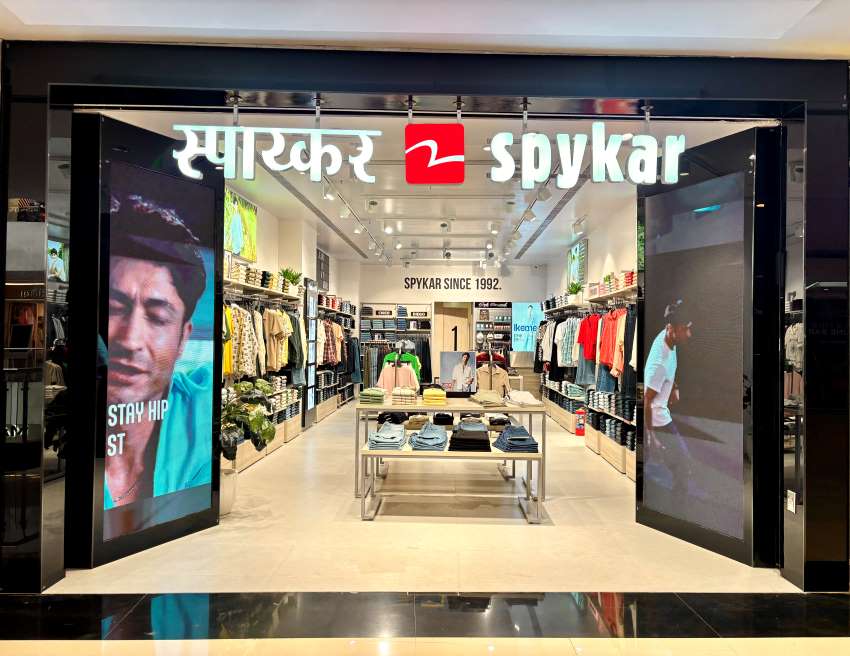
For the first quarter sales at Urban Outfitters rose by ten per cent. This growth was spurred by higher consumer spending, despite a longer than normal winter, as well as easier comparisons versus the same period last year.
It was the first quarter in four years that the company was able to post positive store comps at each of its brands, Free People, Anthropologie, and at its namesake brand.
Substantial growth in the revenue and earnings metrics are expected in the second quarter – sales are expected to grow 12.2 per cent and EPS to increase by a whopping 75 per cent.
The total company markdown rate in the first quarter was the lowest of any quarter in the last ten years. This resulted in higher average unit retail, one of the factors that resulted in positive store comps. A better assortment, higher consumer spending, and disciplined inventory control helped the company keep the discounting low. The company feels there is still scope for a reduction in this metric.
Anthropologie is in the US and UK but the brand is expanding in other countries. Urban Outfitters opened its first freestanding store in Paris in February and a first franchise store in the outskirts of Tel Aviv was launched in April. The company plans to open two additional stores in Europe and facilitate the opening of several additional franchised stores in Israel. Free People intends to open its first two stores in Europe later this year or early next year.
TÜV Rheinland joins ZDHC list
TÜV Rheinland is ZDHC’s latest MRSL (Manufacturing Restricted Substances List) accepted certification standard.
Right from the beginning, Zero Discharge of Hazardous Chemicals (ZDHC) decided not to start its own ZDHC MRSL certification system but to work with existing certifiers to indicate conformance to the ZDHC MRSL. Though many organizations have applied to become ZDHC Accepted Certification Standards there are only ten such organizations.
TÜV Rheinland is a global independent testing, inspection, certifications service provider based in Germany. The group’s 19,900 employees work across 500 locations in 69 countries with the guiding principle to achieve sustained development of safety and quality in order to meet the challenge arising from the interaction between humans, technology and the environment, symbolized by the points of its triangular logo.
Since September 2017, ZDHC has certified ten ZDHC accepted certification standards that can all indicate ZDHC MRSL conformance on different levels.
Receiving ZDHC approval for the MRSL testing program marks a milestone for TÜV Rheinland and for its customers. It opens the door to lucrative yet increasingly regulated markets for both manufacturers and users of chemical formulations in the textile and leather industry, by ensuring dyestuffs, pigments, and auxiliaries are ZDHC MRSL-compliant. This mitigates potential risks and downstream impacts.
US urges China to offer more concessions in trade
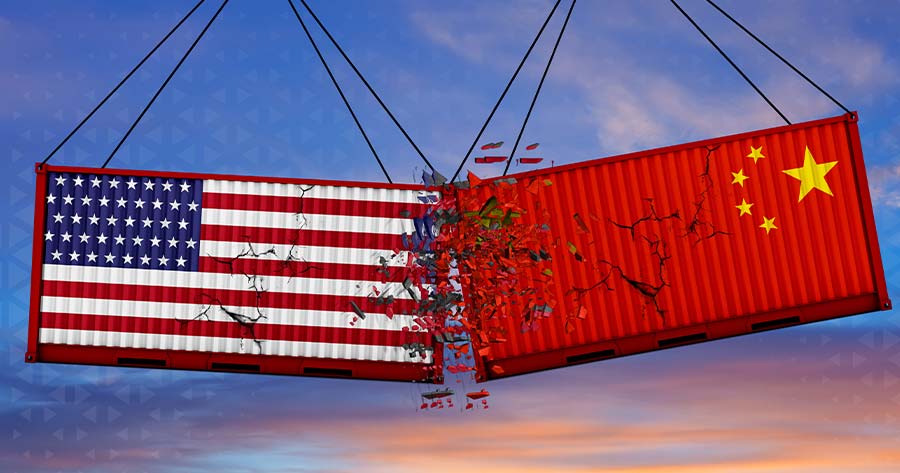
President Donald Trump has urged China to offer more concessions as the two countries prepare for their first major meeting in more than two months to avoid a trade war.
The US has stated that to restart trade negotiations, China must offer a package of measures. The country needs to make an offer that slashes the bilateral trade surplus, lowers import tariffs, provides better protection for intellectual property and stops forced technology transfers, Parker said earlier this month.
The two nations had appeared to have reached a deal in May after Chinese Vice Premier Liu He—President Xi Jinping’s top economic adviser — led a group of officials to Washington. But Trump backed away from the agreement soon afterward, and ever since the two sides have been locked in a standoff as they slapped tariffs on billions of dollars of each other’s goods.
The U.S. plans to impose tariffs on $200 billion of Chinese goods, which China has vowed to retaliate against by levying duties on $60 billion of U.S. goods. The Trump administration already imposed duties on $34 billion of Chinese goods last month, a move that prompted immediate retaliation from Beijing.
Sri Lanka to participate in Apparel Sourcing Paris in September
A total of 6 Sri Lankan apparel manufacturers and 2 designers will participate in Texworld/Apparel Sourcing Paris, which will be held in Paris from September 17-20, 2018.
The 2017 edition of the exhibition recorded a total of 1,660 exhibitors and 14,581 visitors from 108 countries. The visitors included buyers from UK, France, Turkey, Spain, Italy and Germany.
The 2018 edition will display a global range of fashion products from the major manufacturing countries of Bangladesh, China, Cambodia, Korea, India, Indonesia, Sri Lanka, Taiwan, Thailand, Turkey and Pakistan. Sri Lanka will be having its 2nd national pavilion under the banner of Export Development Board of Sri Lanka (EDB) at Texworld/Apparel Sourcing Paris September 2018.
The exhibition will be held alongwith Leather World Paris that will display tannery as well as finished leather goods. These will range from leather garments to accessories such as bags, shoes and other fashion products.
New label printer from Konica
Konica Minolta’s AccurioLabel 190 is a state-of-the-art digital label printing solution.
This printer operates at the optimal intersection of performance, quality, and cost. It uses dry toner electrophotography to deliver outstanding high-quality images and ensures extremely accurate image processing and formation for industrial printing requirements. The print quality is as high as the most high-end digital label printers and is comparable to offset printing.
It also boasts of the highest speed and most stable printing performance in its class with per-minute speeds of 18.9m, 13.5m, and 9.45m, depending on the paper type. It can handle a wide range of media such as ordinary/matte paper, glossy paper, tack paper, synthetic paper, and film with paper thickness of 60-250 micron and maximum input width of 330 mm. All of this makes the AccurioLabel 190 perfect for new-age label printing operations such as small-lot printing, VDP, and barcode printing.
Advanced color adjustment software allows it to deliver consistent, stable, and superior quality output from sample production to actual production.
Through its range of offerings, Konica Minolta aims to deliver best-in-class productivity, profitability, ease-of-use, and cost efficiency to its customers, while enabling them to cater to the ever-evolving print requirements of the digital age.
CMP exports of Myanmar increase by US$ 704 million
According to the Ministry of Commerce, Myanmar earned over US$1.4 million from CMP (cutting, making and packaging) garment export in this fiscal year from April 1 to August 3, registering an increase of US$ 704 million over the same period last year.
The textile sector in Myanmar is witnessing a rapid growth. Local textile investors are running their self-established factories in the country while some of them are in service through cooperation with foreign investors to run the garment factories. Most of these investors are from Japan, China, South Korea and Taiwan businesses.
According to Myanmar Garment Manufacturers Association, the country at present, charges 10 percent of the value of garment export as a fee for services rendered. However, the country has been granted generalised system of preferences (GSP) by EU, which allows vulnerable developing countries to pay fewer or no duties on as an advantage to attract investors from China and neighboring countries.
Although the garment sector has great potential due to the EU’s GSP, bad transportation and labor strikes are challenges for the textile industry, sources said.
India: Centre of Excellence in Coimbatore to develop standards for products
According to Ashwin Chandra, Vice-Chairman, Southern Mills’ Association, Centres of Excellence for Technical Textiles in Coimbatore should try to acquire knowledge and develop standards for products.
Inaugurating a two-day conference on “Industrial Textiles - Products, Applications and Prospects”, organised by the Department of Textile Technology and Automobile Engineering of PSG College of Technology, Chandra revealed that Coimbatore has two Centres of Excellence - one for medical textiles and another for industrial textiles - set up with support from the Central Government. This is the right time to tap opportunities in technical textiles as the Union Government is promoting Make in India and indigenisation.
The centres should try to acquire more knowledge and become experts in their respective fields. They should also involve marketing experts, identify the demand, and work with the textile clusters. Further, at present, there is no centralised information on standards for industrial textiles. The centres should work on testing and standards.
Pak textile exporters disappointed by Polyester price hike
Textile mills using polyester fiber as the basic raw material expressed great dismay over the unsustainable hike in its prices at a recently held meeting of the All Pakistan Textile Mills Association (APTMA). The participants feared that an unprecedented increase in Polyester Fibre (PSF) prices would lead to further closing of yarn manufacturers besides adversely affecting the entire textile export value chain.
Pakistan is already facing shortage of basic textile raw materials cotton and PSF due to the protection and incidentals on the import of PSF (20 percent) and cotton (11 percent). Textile exporters are being forced to cross subsidise PTA and PSF plants whereas exporters are given rebates and draw backs in other countries.
Recently domestic polyester manufacturers increased their prices by over 20 percent, which further crippled the market situation. Many exporters therefore decided to close down their operations for upto 10 days from next week.
Global fiber prices keep rising
Strong consumer demand for apparel, tight raw materials supply and fears of higher tariffs are driving fiber prices up around the world.
In addition, the gaps between price levels in Asia and the west continue to widen. So far in 2018, synthetic fiber prices have risen by more than eight per cent, on top of a 13 per cent spike in 2017. If the current pace persists, we can expect fiber prices to increase in 2018 by even more than they did last year.
In Asia, the world’s largest fiber-producing region, synthetic fiber prices rose by seven per cent in the January-July period, finishing July 19 per cent higher than the same month last year. The summer months in China tend to be a bit quiet for the polyester business, but demand has remained firm this year and inventories low.
In addition to stronger-than-expected demand for autumn/winter apparel, which is shifting toward synthetics thanks to consumer preferences, precautionary orders placed in anticipation of expected tariff increases have caused supply chain distortions and upward pressure on capacity utilization and fiber prices.
Asian synthetic fiber prices remain more than 21 per cent below the world average, down from 20 per cent below as of the end of 2017. European prices are nearly 18 per cent above the global average.
FTA between Ukraine and Israel looks likely
Ukraine and Israel are close to a free trade agreement. The agreement has been under negotiation since 2013.
The Israeli market is already familiar with Ukrainian products. Israel is a market to which Ukrainian products can be delivered via the Black Sea. Ukraine’s agriculture and industrial producers will also benefit from the deal.
Israel is a focus market for Ukrainian businesses since Israel is a market that imports a lot.
The agreement is of great importance to both countries and their international relations. In 2017, exports of goods from Israel to Ukraine amounted to approximately 125 million dollars. After the agreement comes into force, Israeli exports will benefit in such areas as the chemical industry, plastic and rubber products, medical equipment and more.
The agreement is expected to increase bilateral trade by about 15 per cent.
The trade agreement will have an effect not only on trade dynamics but also on foreign direct investment inflows to Ukraine coming from other countries that want to export to Israel. It will provide more opportunities in production cooperation between Ukrainian and Israeli businesses in sectors such as hi-tech, engineering, telecommunications, and processing equipment for the food industry.
Ukraine may allow Israelis to visit Jewish holy shrines in Uman and other Ukrainian cities.
More...
Asian expansion for Fred Segal
US luxury fashion retailer Fred Segal is planning to expand its business in Asia with new stores opening in Taiwan and Malaysia. The expansion plans were announced four years ago. The company is launching the new stores after a period during which several outlets were shuttered. The company is also relaunching its retail ethos in Japan and Los Angeles. The retailer is also planning to launch in India
One of these stores includes the 3,200 sq ft store in Kuala Lumpur which will be set up in the 1 Utama shopping center and include a cafe, retailing a mix of established labels. Another store in Taipei will be a Frierson-branded flagship spanning two floors across over 7, 000 sq ft of retail space. Both locations will open next month. The firm is simultaneously establishing its first presence in Europe with outlets in Switzerland.
Fashion World Tokyo in October
Fashion World Tokyo will be held October 22 to 24, 2018.
The show will gather various kinds of exhibiting products from designers and brands. It is Japan’s largest fashion trade show. Regional municipalities from all over the country will host their own pavilions. So will Japanese fashion sourcing manufacturers and popular fashion garment and textile companies.
The event will be a great opportunity for those who are looking for business partners. It covers the whole fashion supply chain and is becoming the new Asian hub for professionals in the industry.
Since its launch, the show has presented everything from fashion sourcing to brands exhibits. Fashion sourcing including textiles, garments and OEM will be covered under Fashion World Tokyo Factory while brands from the globe will be showcased under Fashion World Tokyo. Altogether 1,030 exhibitors and 25,000 visitors are expected to gather under one roof, looking for new business opportunities.
Fashion World Tokyo has developed various kinds of approaches to make the show fruitful, such as matchmaking services between international exhibitors and domestic visitors, an online appointment platform, and more.
The show is attracting the attention of brands worldwide. Themed areas, such as Country Pavilions, European Collection and American Street, will lend diversity and attract Japanese and Asian buyers.
Fall in Australian wool production likely
Australian wool production is forecast to fall by 5.7 per cent for the 2018-19 season.
The fall reflects an expected reduction in both the number of sheep shorn and average wool cuts per head as a result of the dry seasonal conditions across most of the country.
Ongoing drought conditions have hit output and wool cuts. Drought conditions are affecting most Australian sheep growing regions. NSW is experiencing the highest levels of drought. NSW is the state with the largest wool producing capacity. Parts of neighboring Queensland are also suffering, along with regions in Victoria and South Australia which are also managing extreme dry weather.
Australia produces 90 per cent of the world’s apparel wool.
Adverse seasonal conditions in many sheep producing areas across Australia have resulted in a high turn-off of sheep and lambs. It will also mean lower average fleece weights in several states.
Conditions have worsened in many wool producing regions across Australia.
Wool production is expected to fall in all states, except Tasmania, with the largest reductions expected in NSW (down 8.9 per cent) and South Australia (down six per cent).
How the season progresses over the next couple of months will be very important for overall production levels this season.
Ethiopia fights cotton challenges
Cotton producers in Ethiopia face several challenges. There are 20 ginnery factories in Ethiopia. But most are more than 50 years old and need to be replaced.
Unavailability of land and bank loans is another major challenge for the sector. There are problems related to the supply of seeds, pesticides and other inputs.
Last year Ethiopia produced 60,000 tons of ginned cotton. But demand by domestic textile industries was for 70,000 tons. The balance was covered by imported cotton from India.
The country plans to increase cotton production by 40 per cent in the current fiscal year. Investors are developing cotton plantations in various regions. With this farmers are confident they can satisfy the domestic demand and export the surplus cotton.
The country had banned cotton exports in 2010 hoping to satisfy the demand of the local textile industry. The ban lasted for six years.
After a long debate, Ethiopia recently allowed the import and use of GMO cotton seeds. Two BT cotton seeds from India have been granted permission. However on the whole farmers have reservations on the research conducted on the viability of BT cotton seeds. As a rule cotton growers do not prefer to use BT cotton.