Consumers’ investment in sustainability increases post pandemic: Survey
A new survey by the US Cotton Trust Protocol notes an increase in consumer spending and investment in environmentally friendly practices. As per Sourcing Journal, the survey of decision-makers at 1,000 brands and retailers in the US and UK seeks to determine the impact the pandemic on brands sustainability standards.
The survey shows, 69 per cent brands and retailers believe the pandemic has emphasized the importance of environmentally friendly products, with 61 per cent respondents reporting an increased demand for sustainable products. Around 63 per cent brands and retailers noted positive impact of the pandemic on their proactive investment in sustainability, with the main areas of focus being sourcing sustainably produced raw materials, manufacturing sustainability and reducing impacts of chemicals, water and energy, and safe working environments.
Almost 50 per cent brands and retailers expect consumers to increase their investment in sustainable apparel over the next 12 months. They attribute this to a need for people to get back to normal and increase in their savings during the pandemic.
Cotton sector to recover with higher mill use and vaccination
As per the April 2021 edition of Cotton This Month, the cotton sector is expected to recover with mill use of cotton increasing by 8 per cent in the 2020-21 and vaccines slowly making their way around the globe. However, as per IOAC report, vaccine deployment varies widely from one region to other, with many countries providing no vaccinations at all. In addition, a shift in consumer spending on services is likely to reduce demand for durable goods.
Furthermore, while estimates for global consumption have increased, the estimates for production have declined. This is leading to a decline in stock level proving future support for prices. Finally, no progress has been made since the Phase One trade agreement between the US and China went into effect last year with tensions also between China and Australia.
Phygital Mercedes-Benz Fashion Week to be held from April 20
The phygital edition of Mercedes-Benz Fashion Week Russia is scheduled from April 20-24 at the Museum of Moscow. The shows will take place in Moscow, Kazan, Nizhny Novgorod, St. Petersburg, and Sochi. The program will include live streamed shows by designers from Italy, Spain, France, and other countries.
Over 50 designers will present their collections at this season. Some brands that will showcase their collections are: Selfétude, N. Legenda, Nastya Nekrasova, Ónoma, Sergey Sysoev, Yana Besfamilnaya, Elena Souproun, Hard By Hse Art And Design School, Julia Dalakian, Alena Nega, Lena Karnauhova, Mercedes De Alba, B&D Institute of Business and Design, etc. The event will also present designer Emma Bruschi for the first time on the MBFW Russia schedule. On April 7, names of winning designers will be announced.
The virtual edition of MBFW Russia will be held on a unique digital platform with gamification elements, exclusive materials from designers, as well as content and insights offered by industry experts. At the digital platform, MBFW Russia live streams from anywhere globally will be available. Moreover, interactive online features will offer a dive into the spirit of the event.
Soorty’s new project to pioneer use of organic cotton in denim production
Soorty’s new project, the ‘Soorty Organic Cotton Initiative’ aims to pioneer the use of organic cotton farmed with regenerative practices in denim production. The project aims to reach out to farmers across Balochistan in Pakistan and identify receptive communities which would like to transform their small holdings into exclusively organic farmlands over long term. The project will kick off in Nall in Balochistan’s Khuzdar District.
Soorty has partnered WWF-Pakistan and the Department of Agriculture Extension, Balochistan to carry out its new initiative and will also receive support and input from the Laudes Foundation. Over the coming four years, SOCI aims to bring around 7,000 acres of land under organic cotton cultivation and produce over 17,000 metric tons of Seed Cotton and 6,000 metric tons of Cotton Lint.
By guiding Balochistani farmers to produce organic cotton, Soorty aims to uplift communities and enable them to increase their income. Ameliorating organic farming practices in the region will also help the environment and help to promote sustainably produced denim across the fashion industry.
Pandemic creates mismatch in US retailers, consumer’s perceptions on clothing purchases: Survey
A survey by Blue Yonder and Coresight Research reveals, consumer perceptions and that of retailers on apparel purchase decisions made during the pandemic are highly mismatched. Around 68 per cent retailers believe their customers preferred apparels made in the US while only 19 per cent shoppers preferred clothes made by domestic brands.
Additionally, 64 per cent retailers believe price to be an important driver for customers while making clothing choices while only 32 per cent consumers actually sought the lowest price. As per the research, shoppers are keen to return to stores. Around 45 per cent expressed their preference for shopping in stores compared to 37 per cent who prefer a combination of in-store and online and 18 per cent who prefer to shop online only.
China’s industrial output increases 35.1 per cent in 2021
National Bureau of Statistics shows, China’s value-added industrial output above designated size increased by 35.1 per cent year-on-year, in the first two months of 2021 .In February, it edged up 0.69 per cent from the previous month.
China’s manufacturing output increased by 39.5 per cent year-on-year in the first two months. Textile industry's value-added output also increased 39.5 per cent. In the first two months, production of 565 out of 612 kinds of products increased year-on-year. Output of fabric increased 24.1 per cent year-on-year to 5 billion meters in January-February period, while the output of chemical fibers increased by 32.4 per cent to 9.77 million tons in January-February. And the sales-output ratio of industrial enterprises was 1.1 percentage points higher than the same period of last year.
CCOO criticizes H&M’s shop closures in Spain
The Workers' Commission (CCOO) union has called H&M’s shop closures in Spain absolutely disproportionate and the layoffs of furloughed staff unjustified. Swedish fashion giant H&M has announced plans to close 30 shops and lay off more than 1,000 staff in Spain. The brand plans to close 350 of its 5,000 shops worldwide, while opening 100 others to adapt to the increased digitalization of the retail industry.
The Spanish government has announced €40 billion funding schemes to ease the current crisis in the industry. In return for the funding, companies are banned from laying off staff for six months after the end of the scheme which is currently set to run until May 31, but is likely to be extended.
However, H&M has refused to abide by this rule saying it is not subject to any job maintenance commitment. The brand’s net profit tumbled tenfold in 2020 as a result of the pandemic, although its online sales leapt more than 40 percent on the figures for a year earlier, accounting for almost a third of its overall turnover.
EU supports demand for global minimum corporate tax’
The European Commission (EU) has supported US Treasury Secretary Janet Yellen’s demand for a global minimum corporate tax. However, she said its rate should be decided after talks in the Organization for Economic Cooperation and Development (OECD). Yellen is currently working with G20 countries to agree on a global corporate minimum tax rate.
The US plan envisages a 21 per cent minimum corporate tax rate, coupled with eliminating exemptions on income from countries that do not enact a minimum tax to discourage the shifting of jobs and profits overseas. The OECD has long been working on two-tier global taxation scheme that would tax companies where they make profits even if they do not have a physical presence there.
The second tier of the OECD scheme aims to establish a global minimum tax rate, which could apply to all companies, not only digital ones, so that governments do not compete with each other offering lower taxes to attract large multinational firms.
The EU's attempts to unify even what companies are taxed on, rather than setting a common tax rate, have been stalled since 2011 because taxation is a jealously guarded prerogative of national parliaments and often forms a key part of a country's economic model.
Mango aims for 100 per cent sustainability by 2020
Spanish brand Mango aims to make its apparel range 100 per cent sustainable by 2020. Around 79 per cent of the brand’s garments are known to be sustainable. In 2017, Mango launched a range of sustainable garments known as ‘Mango Committed.’ Initially conceived as a capsule collection, the range has subsequently become a part of Mango’s permanent collection.
Mango is also expanding its ‘Second Chances’ clothes recycling project in collaboration with Moda re-, an initiative set up in Spain by Caritas. Last year, Mango operated 610 recycling points in its stores across 11 countries. In 2021, the label plans to extend this service to countries like Austria, Italy, Poland, Turkey, Switzerland and Russia, adding a further 200 collection points for used garments.
The label is also collaborating with Spanish association Vellmarí, headed by biologist and explorer Manu San Félix, which runs conservation and educational programs on the Mediterranean sea from its base on the island of Formentera. Mango is working with its Turkey-based suppliers to replace plastic bags in its packaging with paper bags. In 2020, Mango committed to initiate a process that will eventually lead it to stop using as many as 160 million plastic bags per year, and is set to extend the initiative in other countries in the coming months.
Global apparel associations collaborate to renegotiate supply terms
Thirteen associations representing garment suppliers in China, Bangladesh, Myanmar, Cambodia, Vietnam, Pakistan, Turkey, Morocco and Indonesia have collaborated to renegotiate their contract terms with global clothing retailers, reports Reuters. These suppliers are demanding a maximum 90-day payment term and an end to discounts after orders are placed. The draft document, due to be finalized and released in late April, is a joint initiative of the Star Network, funded by Germany's international development agency GIZ, and the International Apparel Federation.
The suppliers hope their united front will prevent retailers from playing them off against each other in search of more lenient terms after suffering from widespread cancellations and payment delays at the start of the coronavirus pandemic. Though the document will not be legally enforceable, the aim is to foster purchasing practices which "do not cross the boundary of misuse of buying power to the obvious and avoidable detriment of the manufacturer," according to the release.
A later phase of the initiative would also aim to build ways of enforcing the terms, including an international arbitration mechanism for manufacturers to raise grievances with buyers. The draft document says retailers must pay suppliers within 90 days, with deferred payments attracting an additional fee to cover interest and loss of profit, while discounts could not be requested after a purchase order is issued.
The draft also includes limitations on the use of the 'force majeure' clause which exempts retailers from costs and liability for events outside their control.
More...
Ban on Xinjiang cotton to harm global supply chain, say China experts
Experts believe the boycott of cotton sourced from Northwest China's Xinjiang Uygur autonomous region will severely harm the global industrial and supply chain, especially as the world economy has not yet recovered from the impact of the pandemic Global supply chain curbs on Xinjiang cotton will harm not only the global textile industrial system but also the interests of global consumers.
Mei Xinyu, Researcher, Chinese Academy of International Trade and Economic Cooperation, believes the boycott is interfering with normal order of the industry and the market, which will increase costs and severely impact the global market. Official data showed China produced around 5.95 million metric tons of cotton during the 2020-21 season, while its total demand reached 7.8 million tons during the same period.
Yang Shu, Associate Professor, China Agricultural University says, the boycott will affect the development of both China's textile industry and international trade, and it will also impact employment in Xinjiang. On the other hand, Kong Xiangzhi, Professor, School of Agricultural Economics and Rural Development, Renmin University of China, the boycott of Xinjiang cotton will not affect its long-term development, as it will propel domestic enterprises to gear up to expand and lead up to a decision to compete with its foreign rivals.
Chico’s FAS’ Q4 sales decline by 26 per cent
The FY20 Q4 sales of Chico's FAS, a US-based omnichannel specialty retailer of women's private branded, casual-to-dressy clothing, declined 26.7 per cent to $386.2 million compared to $527.1 million in the same period prior fiscal. The company incurred a net loss of $79.1 million. The company’s gross margin for the quarter declined to $73.3 million from $171.4 million reported during the same quarter in previous fiscal. Its selling, general and administrative expenses declined to $136.2 million from $176.9 million. The company’s loss from operations increased to $64.0 million from $5.6 million.
Sales of Chico’s brand slipped to $161.1 million from $249.6 million. Sales of its House Black Market brand dropped to $106.0 million while those of Soma brand fell to $119.0 million.
The company is reinvigorating growth through new initiatives that emphasize loyalty, community and design. Its White House Black Market brand is focusing on fabric, fit and fashion that meets its customer’s needs.
RMG focus can help Pakistan counter impending textile slowdown
 As against the entire world, COVID-19 has proved to be a blessing in disguise for the Pakistan textile sector. The country has not only received backlogged orders but also orders diverted from other regional countries like India and Bangladesh. As per Business Recorder, against 5.6 per cent growth recorded during the same period last year, Pakistan’s textile exports increased by 8.2 per cent year on year during the first seven months of FY21. The industry attributes this to the growth in exports of value-added products particularly bedwear, home textile, and knitwear. During the period, Pakistan’s knitwear exports grew by 42 per cent year-on-year, while the export revenue generated from this segment grew 19 per cent year-on-year.
Volume declines but revenues surge
Pakistan’s bedwear exports declined 3 per cent during the seven months. However, the revenue generated from these exports grew 16 per cent year-on-year due to the higher pricing of these products. Towels exports grew 11 per cent and export revenues grew 20 per cent year-on-year. Revenues from RMG exports grew by 5.5 per cent though their export volume declined 39 per cent year-on-year.
During 1HFY21, profits from Pakistan’s textile sector grew by 30 per cent year-on-year primarily on account of increase in exports. However, experts expect this growth to slowdown in the next few months. In January 2021, textile exports from Pakistan declined 5.5 per cent as against December 2020. Cotton cloth and yarn exports also declined both on a monthly and yearly basis.
Role of regional players critical
Though manufacturers claim to have enough orders to keep their factories running at full capacity till June 2021, growth in export depends on how regional players process these orders once their factories begin operating at full capacities. Textile manufacturers are also facing a shortage of local yarn, which can impact their exports in coming months.
Hence, the government needs to introduce a textile policy that focuses on high value-added segments such as the readymade garments sector. Fawad Anwar, Managing Director, Al-Karam Textile Mills, believes the garment sector has a capacity to grow quickly due to its low capex requirement and inclusion of both small and medium players in it.
Securing workers’ rights a major step towards building a better future
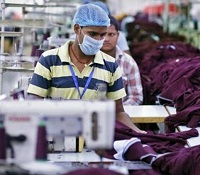 With order cancellations and payment deferrals becoming the order of the day during the pandemic, factory owners started laying off workers without paying even their due wages. As per an Al Jazeera report, some of these workers hail from countries that do not offer social security. In February 2020, a garment factory in a Southeast Asian country failed to pay workers as Chinese suppliers cancelled a pre-confirmed order.
Taking a view of this, the International Organization of Employers (IOE) along with International Trade Union Confederation (ITUC) and IndustriALL Global Union launched an initiative known as Call to Action (CtA) with support from the International Labour Organization (ILO).
An excuse for inaction
The initiative has so far attracted 130 industry stakeholders, of whom two-thirds are brands and retailers. The CtA aims to protect garment workers and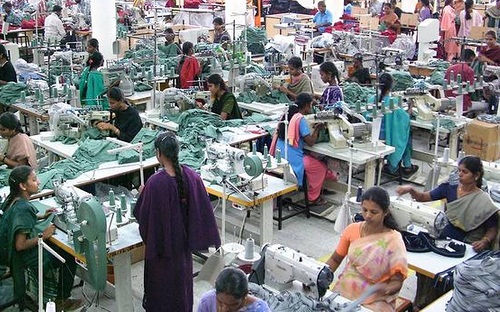 manufacturers from the economic fallout of the pandemic and create a sustainable protection system for them. Though a welcome move, the initiative is now being used by some brands as an excuse for their inaction. Michael Levine, Vice President and Chief Sustainability Officer, Under Armour warns such brands, being a signatory of the CIA does not absolve these brands from their accountability to workers, he says.
From the beginning, the CtA working group has been focusing only on eight priority countries: Bangladesh, Cambodia, Ethiopia, Haiti, India, Indonesia, Myanmar and Pakistan. Countries like the Philippines, Sri Lanka and Vietnam, which are experiencing mass lay-offs, are being ignored. Also, the agreement fails to prioritize countries in which brands like Primark manufacture their garments.
Wage assurance scheme for workers
Even in countries prioritized by the agreement, its implementation is painstakingly slow. For instance, the European Union and the German government announced a $135 million fund to Bangladesh in October last year. However, the commitment is yet to be fulfilled with Bangladesh has so far received only $2.15 million funds from the initiative.
As a result, less than 2,000 workers have received direct income support. These workers are owned at least $3 billion alone for March to June 2020 period. They need immediate support from both factory owners and the government. Trade unions and labor rights organizations have been demanding pubic commitment from these brands to pay their workers and support them in case of job losses.
Brands need to stop using such initiatives to back out of their commitment towards workers. They need to set up wage assurance and severance guarantee fund to help build a better future for the industry.