The textile yarn market is projected to grow at a CAGR of 4.2 per cent from 2015 to 2020 and reach $12.64 billion dollars by 2020. The market growth is driven by higher levels of discretionary expenditure by consumers and development of new varieties. The market is further driven by factors such as urbanisation and high industrial requirement.
Asia-Pacific accounts for the largest market share for textile yarn, followed by North America and the rest of the world. Textile yarn products such as cotton and polyester are among the widely used products in Asia-Pacific; changing consumption pattern is one of the major factors driving the textile yarn market in this region.
The North American region is projected to be the fastest growing market with investments from several multinational manufacturers, especially in countries such as the US and Canada. Stringent government regulations for the trade of textile yarn products pose one of the inhibitors for the textile yarn market. Also, the volatility in production level of plant and animal source yarn hinders the growth of the textile yarn market.
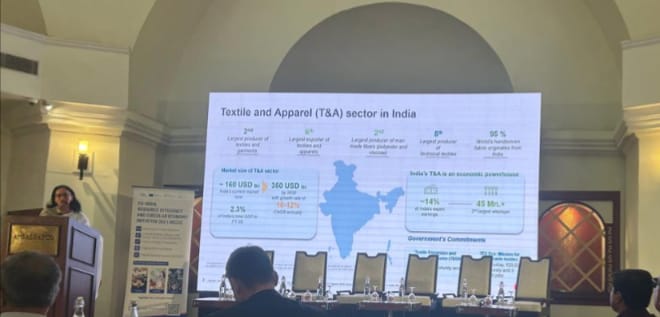
With 47 million spindles and 0.75 million open-end rotors, India has the world’s second largest spinning capacity. Cotton yarn accounts for nearly 73 per cent of total spun yarn production.

- 1
- 2
- 3
- 4
- 5
- 6
- 7
- 8
- 9
- 10
Corporate fashion adopts reverse logistics to unlock the $367 bn resale market
Global fashion retailers are rapidly changing their business models around resale, repair, and textile recovery as the secondhand apparel market... Read more
Tariff Shock 2026: Forced-labor enforcement is repricing global fashion trade
Washington’s latest trade intervention signals a break in the global apparel sourcing patterns. The Office of the United States Trade... Read more
Circular Samvaad 2.0 aims to transform Indian textiles from linear waste to glob…
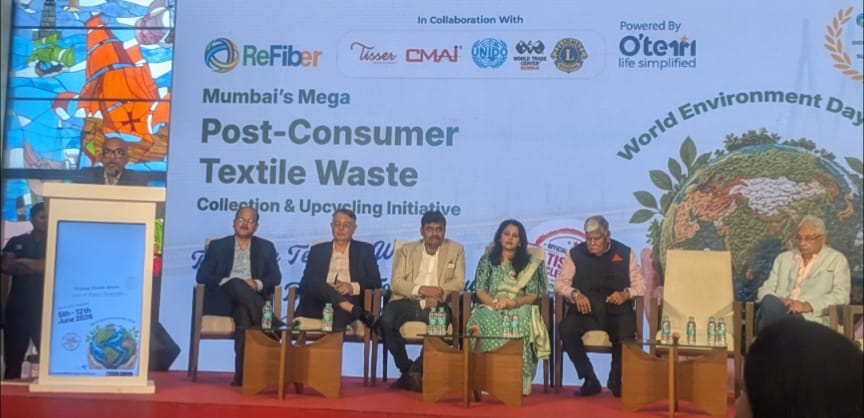
On the occasion of World Environment Day, industry leaders, policymakers, and international experts gathered in the capital yesterday for Circular... Read more
From Sentiment to Sustainability: How Mumbai’s ‘Mega Post Textile Waste Initiat…
Walk into almost any Indian household, and you will find wardrobes harboring clothes that haven’t been worn in years. They... Read more
CMAI launches new initiative to combat waste and formalize textile recovery acro…
In a landmark move to address the mounting crisis of post-consumer textile waste, the Clothing Manufacturers Association of India (CMAI)... Read more
Trends-Fabrics (Denim-Kidswear) trends for Spring/Summer 2026-27 by Drapers
For the Spring/Summer 2026-27 season, the kidswear denim market is defined by a shift toward lightweight comfort, playful aesthetics, and... Read more
Cost spiral across fibers, chemicals and logistics squeezes India’s apparel expo…
India’s textile manufacturing sector has entered one of its most financially strained periods in recent years as increasing fiber, yarn,... Read more
How India’s textile recycling network is becoming a global ESG blueprint
India’s textile industry is mounting an aggressive defence against growing international criticism that developing economies are becoming dumping grounds for... Read more
Cotton trade under pressure as war risks and tariff chaos raise apparel costs
The global textile and apparel industry is entering a high-stakes period of volatility as the ongoing Iran war creates a... Read more
Copenhagen GFA summit 2026 signals reset in global apparel finance
" " The global apparel, textile, and fiber manufacturing industries are entering a decisive phase of financial and operational realignment, as... Read more