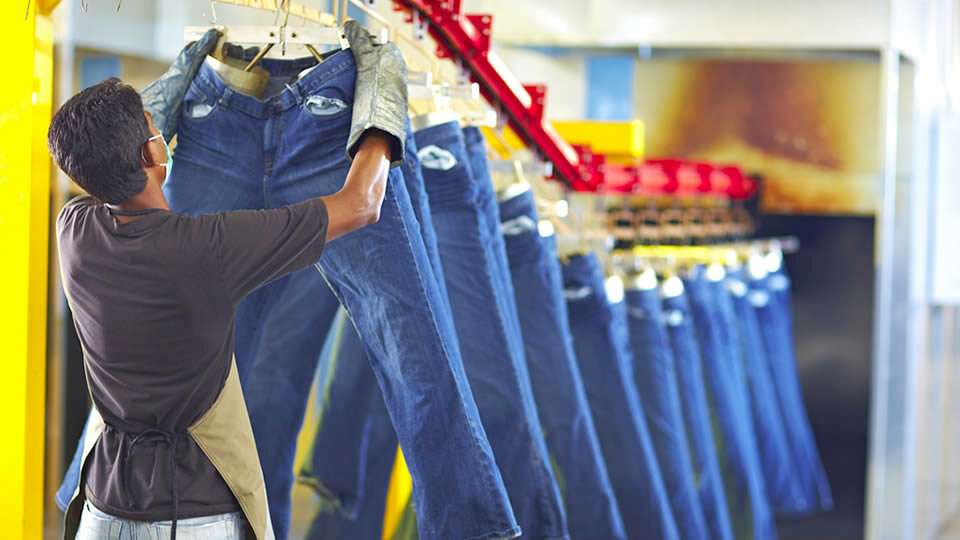
Besides facing load-shedding of around six to eight hours, the value-added industry in Punjab, Pakistan, except spinning sector, is without gas for the last two weeks. The SNGPL had committed to provide at least 25 per cent gas to the garment sector but even this limited quantity of gas was not ensured, as the industry on Ferozepur Road, Kotlakhpat industrial area, Township industrial estate, Quaid-e-Azam Industrial Estate and industrial clusters on Multan Road are not getting gas supply for last two weeks along with suspension of power supply of over 6 hours.
As per Malik Naseer, Vice Chairman, Pakistan Readymade Garments Manufacturers and Exporters Association (PRGMEA), the garment industry in Punjab was becoming uncompetitive within Pakistan due to prolonged power load-shedding and complete gas supply suspension while there was smooth gas and power supply in other provinces. Value-added textile industry in Punjab was facing problems because of the increasing cost of production due to gas shortages, higher electricity tariff, and amounts stuck up with the Federal Board of Revenue (FBR) in sales tax refunds, he urged the government to provide a level playing field to the Punjab-based clothing industry by providing greater gas and power supply, which will help exporters reduce their energy costs, and by releasing the amounts stuck up in sales tax refunds.
Ijaz A Mumtaz, president of Lahore Chamber of Commerce and Industry, warned of massive lay-offs and industrial closures if unscheduled load-shedding is not stopped immediately in Lahore Township Industrial area by the Lahore Electric Supply Company (LESCO). LCCI former vice president Kashif Anwar too has said the industry needs continuous supply of electricity to keep the units operational and to complete the export orders well within the given timeframe but only because of the shortage of electricity the exports are not up to the mark. Pakistan had already lost a number of international markets and the new longer hour power cuts would further aggravate the situation, he claimed.

- 1
- 2
- 3
- 4
- 5
- 6
- 7
- 8
- 9
- 10
Spykar accelerates offline expansion: plans 100 new stores across India
A titan of the Indian denim-first fashion scene, Spykar has officially unveiled an aggressive retail growth strategy. As consumer demand... Read more
The Inventory Illusion: Rethinking the Zara benchmark in a volatile retail era
For over a decade, the global fashion industry has treated the Zara playbook as the gold standard of inventory efficiency.... Read more
Retail Without Retail: How Walmart’s depot network is turning space into logisti…
Walmart is fundamentally rewriting the commercial real estate and retail logistics playbook with the rise of its ‘Walmart Depots’ a... Read more
Global textile regulation tightens, forcing realignment across fashion supply ch…
Global fashion and consumer goods supply chains are entering a decisive regulatory transition as Extended Producer Responsibility (EPR) frameworks for... Read more
Luxury’s new power axis, US dominance, China reset, Gulf surge
As the post-China luxury order takes shape, the US is emerging as the industry’s most dependable growth engine, while Japan,... Read more
India’s $9 Billion Landfill Blind Spot How trashed clothes hold the key to globa…
A massive economic windfall is sitting uncollected in India’s landfills, and the key to unlocking it lies in rethinking how... Read more
Red Sea crisis reshapes textile trade routes, challenges India’s export margins,…
Global apparel trade is now in a new operational phase where geopolitical stability and logistics reliability are as important as... Read more
EU’s textile waste rules enter enforcement phase, raising alarms across fashion …
Europe’s apparel and textile industry is approaching one of its most significant regulatory transitions in decades. As the European Union... Read more
Corporate fashion adopts reverse logistics to unlock the $367 bn resale market
Global fashion retailers are rapidly changing their business models around resale, repair, and textile recovery as the secondhand apparel market... Read more
Tariff Shock 2026: Forced-labor enforcement is repricing global fashion trade
Washington’s latest trade intervention signals a break in the global apparel sourcing patterns. The Office of the United States Trade... Read more