The Indian textile and apparel sector is poised for a significant transformation, with the Union Government announcing an ambitious target to expand the industry’s market size to Rs 33 lakh crore by FY31. Currently valued at approximately Rs 16 lakh crore, this objective represents a doubling of the sector's contribution to the national economy. Union Textiles Minister Giriraj Singh emphasized, this growth will be driven by a robust ecosystem that integrates domestic consumption with an aggressive export strategy. By diversifying into 135 international markets and leveraging a network of 18 free trade agreements, the ministry intends to position India as a premier hub for high-value fashion and technical textiles.
Operationalizing the growth strategy
To reach this valuation, the ministry is focusing on comprehensive value-chain integration, ranging from farm-level productivity to advanced manufacturing. A central pillar of this plan is the ‘5F’ vision - Farm to Fiber, Fiber to Factory, Factory to Fashion, and Fashion to Foreign—which streamlines raw material availability and manufacturing efficiency. The government has prioritized infrastructure modernization, evidenced by the rollout of seven PM MITRA Parks, which are collectively projected to attract Rs 70,000 crore in investments and generate over two million jobs. These integrated clusters are designed to lower logistics costs and improve the global competitiveness of Indian textile firms.
Workforce empowerment and technical adoption
A critical component of this strategy involves scaling the formal labor force, which has already grown from 2.8 crore in 2014 to 5.3 crore in 2024-25. Minister Singh highlighted, the industry is expected to generate an additional 2 crore jobs over the next three years, fueled by the modernization of traditional sectors like handloom and handicrafts. For instance, the government’s targeted skilling initiatives aim to raise the annual income of individual weavers to Rs 5 lakh. Complementing this, the rapid expansion of the technical textiles market - growing from $6 billion to $25 billion - demonstrates a successful shift toward high-performance materials. As manufacturers increasingly adopt AI-driven machinery and automated production lines, the sector is well-positioned to meet the demands of global supply chains seeking sustainable, high-quality manufacturing alternatives.
The Indian textile landscape
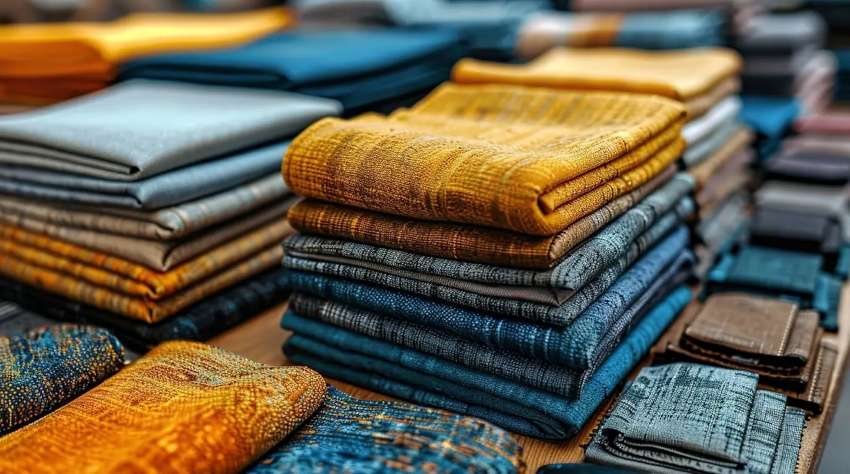
The Indian textile sector is a primary pillar of the domestic economy, encompassing the entire value chain from natural fiber cultivation to garment assembly. Key products include cotton yarn, technical textiles, and ready-made apparel. Growth is currently supported by state-led investment schemes, infrastructure development, and proactive trade policy reforms. Historically a labor-intensive industry, the sector is rapidly transitioning toward high-tech, innovation-driven manufacturing to enhance global export competitiveness and long-term financial performance.