Textile Exchange will be held in Mumbai from October 5 to 10, 2015. It will bring together leaders from the global textile industry to create a space for learning and networking. In addition to the two-day conference, which will focus on the theme, ‘Textiles– A Circular Life’, the six days include opportunities for exploring India’s rich heritage in textiles.
New networking opportunities include an organized activity designed to connect buyers and suppliers in a fun and focused manner as well as nightly events. The event will also include a Textile Sustainability Conference. This is a conference covering supply chain management, product integrity and sustainable materials in the global textile industry. The Textile Sustainability Conference, organised by Textile Exchange, will also include a roundtable on organic cotton and a discussion on the Indian textile industry in 2015.
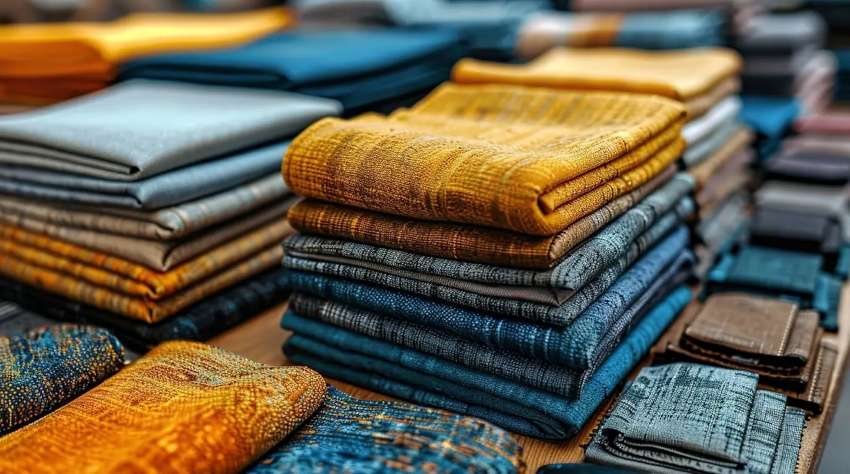
Fabrics, the basic material of the textile industry, have varied use in the production of different items. Its supply chain can remain smooth only if there is a continuous supply of textile fabric from various textile fabric manufacturers and wholesale companies. Fabrics are usually differentiated on the basis of composition, natural fabrics and synthetic fabrics.
Differentiation of fabrics by use may include apparel fabrics, bag fabrics, clothing fabrics, home furnishing fabrics, hosiery fabrics, industrial fabrics. Fabrics categorized on the basis of the manufacturing process include blended fabrics, warp knit fabrics, ribbed fabrics, satin fabrics and crocheted fabrics.
textileexchange.org/event/2015textileconf

- 1
- 2
- 3
- 4
- 5
- 6
- 7
- 8
- 9
- 10
Spykar accelerates offline expansion: plans 100 new stores across India
A titan of the Indian denim-first fashion scene, Spykar has officially unveiled an aggressive retail growth strategy. As consumer demand... Read more
The Inventory Illusion: Rethinking the Zara benchmark in a volatile retail era
For over a decade, the global fashion industry has treated the Zara playbook as the gold standard of inventory efficiency.... Read more
Retail Without Retail: How Walmart’s depot network is turning space into logisti…
Walmart is fundamentally rewriting the commercial real estate and retail logistics playbook with the rise of its ‘Walmart Depots’ a... Read more
Global textile regulation tightens, forcing realignment across fashion supply ch…
Global fashion and consumer goods supply chains are entering a decisive regulatory transition as Extended Producer Responsibility (EPR) frameworks for... Read more
Luxury’s new power axis, US dominance, China reset, Gulf surge
As the post-China luxury order takes shape, the US is emerging as the industry’s most dependable growth engine, while Japan,... Read more
India’s $9 Billion Landfill Blind Spot How trashed clothes hold the key to globa…
A massive economic windfall is sitting uncollected in India’s landfills, and the key to unlocking it lies in rethinking how... Read more
Red Sea crisis reshapes textile trade routes, challenges India’s export margins,…
Global apparel trade is now in a new operational phase where geopolitical stability and logistics reliability are as important as... Read more
EU’s textile waste rules enter enforcement phase, raising alarms across fashion …
Europe’s apparel and textile industry is approaching one of its most significant regulatory transitions in decades. As the European Union... Read more
Corporate fashion adopts reverse logistics to unlock the $367 bn resale market
Global fashion retailers are rapidly changing their business models around resale, repair, and textile recovery as the secondhand apparel market... Read more
Tariff Shock 2026: Forced-labor enforcement is repricing global fashion trade
Washington’s latest trade intervention signals a break in the global apparel sourcing patterns. The Office of the United States Trade... Read more