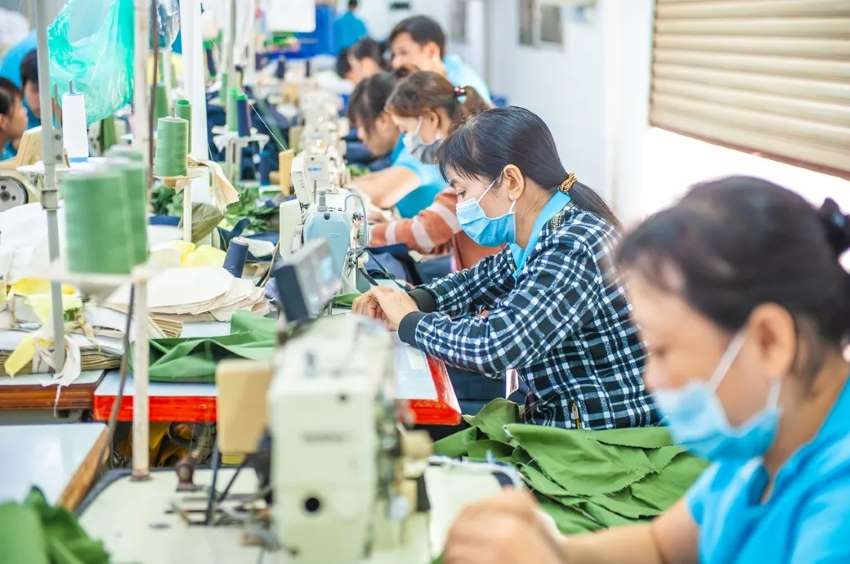
The Integrated Skilled Development Scheme introduced in India in 2010 -11 to address the manpower requirements of textiles and related segments has a target to equip 15 lakh people by the end of March 2017. It’s expected to help overcome the shortage of skilled workforce in textile sector and become a growth driver in the industry and trigger innovation and scale.
The government provides a grant subsidy of 75 per cent of the project cost with a ceiling of Rs 10,000 per trainee. So far around 4.20 lakh candidates have been successfully trained across diverse sectors like apparel and garments, textiles, handlooms, handicrafts, sericulture, technical textiles, jute etc. Around 3,250 training centers are there across states, cities and rural areas including remote locations, backward regions and left wing extremism-affected areas.
During 2010, around six projects were sanctioned under the scheme. This has increased progressively to 57 in the year 2014 and 76 in the year 2015-16. The scheme was revamped in 2014-15, with a view to simplifying procedures and focusing on partnering with industry for scaling up of implementation of the training program with assured employment.
Steps have been taken to devise strong monitoring norms and to enhance the quality of training. There has been a continuous endeavor towards digitisation of skill development initiatives.
- 1
- 2
- 3
- 4
- 5
- 6
- 7
- 8
- 9
- 10
India’s textile trade gets a Pacific push as New Zealand FTA removes tariff barr…
India and New Zealand have inked a ‘once-in-a-generation’ Free Trade Agreement (FTA), one that will have a profound impact on... Read more
Lululemon’s world-first nylon circularity push signals a new apparel arms race
The global apparel industry’s circularity narrative is entering a more technically demanding phase. Polyester recycling once the flagship of sustainable... Read more
Beyond the DTC Rush: Levi’s hybrid channel strategy sets a new retail benchmark
The global apparel sector is entering a phase where channel strategy is no longer a tactical lever but a core... Read more
The New Rules of Resale: EPR turning secondhand into fashion’s strategic growth …
The global fashion industry is facing a decisive regulatory and commercial reset. What began as a sustainability narrative around reuse... Read more
The 2027 Mandate: Why denim’s future hinges on verifiable data
For decades, the global denim industry has relied on a narrative of durability, heritage, and authenticity. That narrative is now... Read more
Europe’s textile core unravels as costs, imports and policy pressure bite
Europe’s textile and apparel sector, long seen as a benchmark for craftsmanship and industrial depth, is slipping into a prolonged... Read more
Automation, innovation, regulation are the forces shaping textiles in 2026
The global textile sector has entered a new era. Early 2026 saw the industry breach a $1.06 trillion valuation, reflecting... Read more
The new Brussels rulebook, every EU apparel order is now a balance-sheet risk
The humble export order sheet is undergoing a transformation. What was once a straightforward commercial instrument: SKU, volume, FOB price,... Read more
Why 2026-27 could be a defining cotton year for India’s farm-to-fashion economy
The global cotton economy is entering a more constrained phase, and for India, the implications run far beyond the farm... Read more
Luxury resale’s next big battle is no longer digital, it is about who controls s…
For nearly a decade, the luxury resale story was written in the language of platforms. Market leadership was measured by... Read more