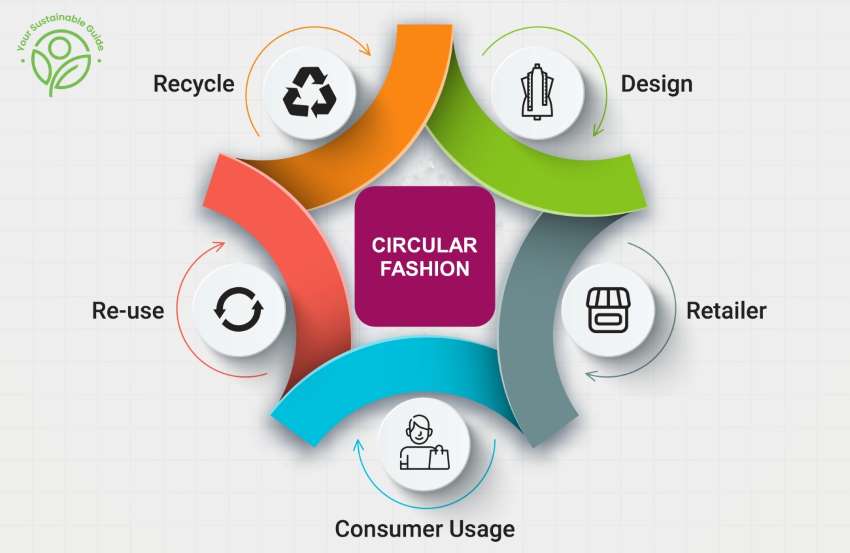
Tucson, Arizona, US, is high on recycling textiles. Textiles are deposited at municipal landfills in large volumes. The city has strong recycling collection services. Tucson’s waste diversion goals for unwanted clothing and other textiles are both viable and self-sustaining. There are convenient drop off points for clothing, shoes, toys and household textiles at retail chains, shopping centers and fashion malls.
Textile recycling provides both environmental and economical benefits. It reduces the need for landfill space. Certain synthetic fiber products do not decompose while natural fibers such as wool do decompose but produce methane which contributes to global warming.
Recycling reduces the pressure on virgin resources. This includes materials traditionally used in textiles such as cotton or wool as well as oil and other chemicals employed to produce synthetic fibers. It reduces pollution as well as water and energy consumption and reduces the demand for dyes and fixing agents. This, in turn, lowers the number of problems caused by their use and manufacture.
While recycling collected textiles are manually sorted and graded according to their condition and the types of fibers used. Wearable shoes and clothes are resold either in the same country of origin or abroad. Unwearable textiles are sold to the flocking industry for shredding and re-spinning.
- 1
- 2
- 3
- 4
- 5
- 6
- 7
- 8
- 9
- 10
Bharat Tex 2026: Redefining the global textile value chain
Union Minister of Textiles, Giriraj Singh, has officially unveiled Bharat Tex 2026, signaling a significant leap in India’s influence over... Read more
Intertextile Shanghai Spring 2026: A hub for global textile innovation
The textile industry’s pulse is quickening as Intertextile Shanghai Apparel Fabrics – Spring Edition prepares to open its doors from... Read more
Moscow Fashion Week 2026: Blending sustainable innovation with timeless glamour
Scheduled to run from March 14-19, 2026 in Moscow, Russia, the Moscow Fashion Week (MFW) is cementing its status as... Read more
The Store as Stage: How fashion is crafting immersive consumer worlds
The North American fashion retail sector in 2026 is shedding its product-first identity and shifting towards a model that values... Read more
Turning the supply chain upside down, on-demand production reshapes apparel
The global fashion industry, long celebrated for its creativity and scale, is facing a structural reckoning. For decades, retailers and... Read more
Intertex Milano 2026 - A global nexus for textile innovation
Intertex Milano is set to return this summer, confirming its status as a premier international destination for the textile and... Read more
Primark at crossroads as AB Foods weighs spin-off amid digital and Lefties press…
The long-standing supremacy of Europe’s budget fashion champion, Primark, is facing a test. As of February 2026, Associated British Foods... Read more
Vietnam, Bangladesh, Cambodia drive US apparel imports in 2025
The 2025 year-end data for the US apparel sector reveals an industry in structural flux. Despite aggressive tariff measures and... Read more
The New Dress Code: Sportswear’s takeover of modern wardrobes
For much of the last decade, fashion retail has been defined by volatility. Trends have shortened, discount cycles have intensified... Read more
Hemp finds its moment in India’s $500 billion American trade calculus
In the grand arithmetic of India’s expanding trade engagement with the US, the headlines usually gravitate toward oil cargoes, aircraft... Read more