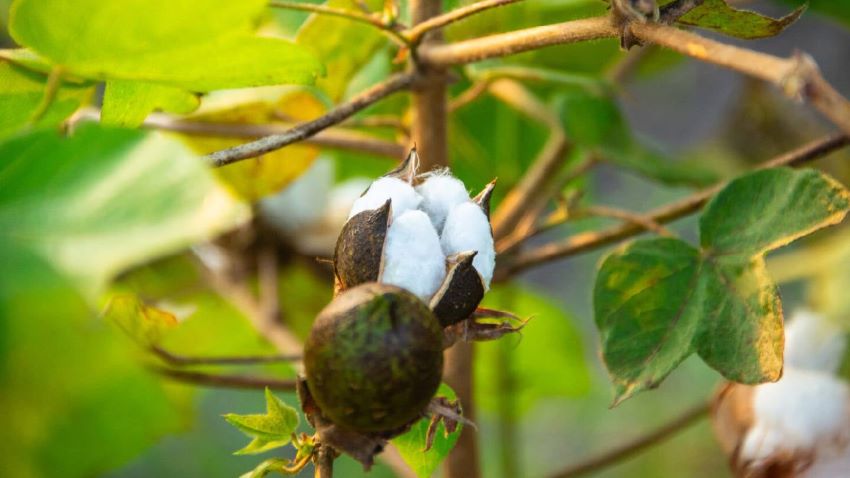
US scientists are not very hopeful about total eradication of the Cotton Leaf Curl Virus in Pakistan. However, they are optimistic about controlling the menace by developing a virus-resistant crop to mitigate huge losses. Pakistan’s cotton production may double once the virus is controlled. The disease can cause major losses to Pakistan’s cotton industry threatening both economic stability and food security. The US is working with Pakistan to develop crop management techniques that will mitigate the effects of this devastating disease, especially as it affects small farmers. The project is focusing on capacity building, investment in infrastructure including green houses and breeding houses for extra generation.
The virus keeps mutating and needs continuous monitoring. It’s possible to check it by rotating two crops including wheat and cotton. Quality seeds based on germination and purity can make a difference by increasing cotton production and building up resistance. Management practices also go a long way.
Co-ordinated efforts are needed to combat the virus and develop disease-resistant cotton varieties that can save millions of cotton bales from falling prey to the virus every year. Cotton production in Pakistan can be maximised by rotating different crops, using the best pesticides and adopting different methods of cultivating and picking the crops.
- 1
- 2
- 3
- 4
- 5
- 6
- 7
- 8
- 9
- 10
India’s textile trade gets a Pacific push as New Zealand FTA removes tariff barr…
India and New Zealand have inked a ‘once-in-a-generation’ Free Trade Agreement (FTA), one that will have a profound impact on... Read more
Lululemon’s world-first nylon circularity push signals a new apparel arms race
The global apparel industry’s circularity narrative is entering a more technically demanding phase. Polyester recycling once the flagship of sustainable... Read more
Beyond the DTC Rush: Levi’s hybrid channel strategy sets a new retail benchmark
The global apparel sector is entering a phase where channel strategy is no longer a tactical lever but a core... Read more
The New Rules of Resale: EPR turning secondhand into fashion’s strategic growth …
The global fashion industry is facing a decisive regulatory and commercial reset. What began as a sustainability narrative around reuse... Read more
The 2027 Mandate: Why denim’s future hinges on verifiable data
For decades, the global denim industry has relied on a narrative of durability, heritage, and authenticity. That narrative is now... Read more
Europe’s textile core unravels as costs, imports and policy pressure bite
Europe’s textile and apparel sector, long seen as a benchmark for craftsmanship and industrial depth, is slipping into a prolonged... Read more
Automation, innovation, regulation are the forces shaping textiles in 2026
The global textile sector has entered a new era. Early 2026 saw the industry breach a $1.06 trillion valuation, reflecting... Read more
The new Brussels rulebook, every EU apparel order is now a balance-sheet risk
The humble export order sheet is undergoing a transformation. What was once a straightforward commercial instrument: SKU, volume, FOB price,... Read more
Why 2026-27 could be a defining cotton year for India’s farm-to-fashion economy
The global cotton economy is entering a more constrained phase, and for India, the implications run far beyond the farm... Read more
Luxury resale’s next big battle is no longer digital, it is about who controls s…
For nearly a decade, the luxury resale story was written in the language of platforms. Market leadership was measured by... Read more