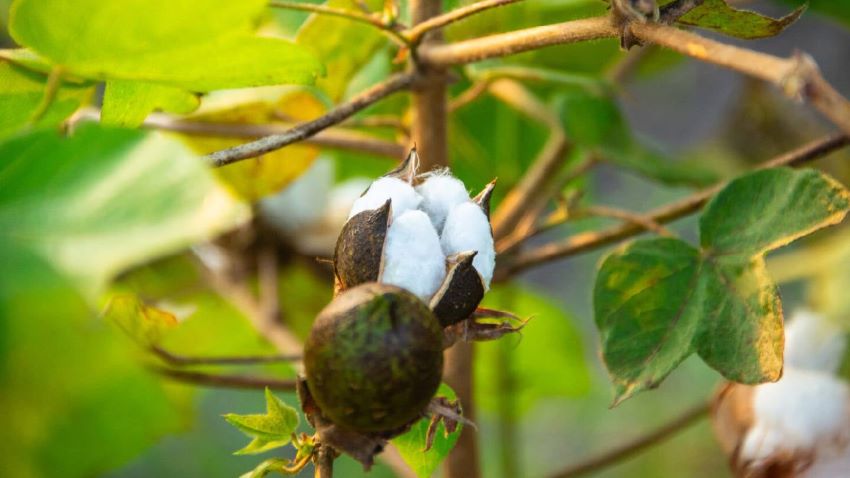
Low prices and a global oversupply of cotton have been putting a lot of pressure on America’s cotton producers. They have been having a tough past few years for a number of reasons. Among these are low demands and reduced federal subsidies, stemming from a World Trade Organization dispute. Brazil had complained that US subsidies were distorting global trade markets. The WTO agreed, and the US revised its subsidy program for cotton farmers in the 2014 farm bill.
And China, which had been holding a lot of cotton stocks in reserve, has been releasing them into the global market, pushing prices down. That means the price of cotton is not covering the cost of production.
Cotton growers will be given $300 million in aid to help stabilize the industry. Texas is the nation’s leading cotton-producing state. The new aid program will offer producers one-time payments that are determined by their acreage last year and a portion of average ginning costs in their regions. Ginning is the process by which cotton lint is separated from cotton seed. The aid will mostly help farmers finance their operations. The aid program caps payments at $40,000 per producer.
- 1
- 2
- 3
- 4
- 5
- 6
- 7
- 8
- 9
- 10
The New Rules of Resale: EPR turning secondhand into fashion’s strategic growth …
The global fashion industry is facing a decisive regulatory and commercial reset. What began as a sustainability narrative around reuse... Read more
The 2027 Mandate: Why denim’s future hinges on verifiable data
For decades, the global denim industry has relied on a narrative of durability, heritage, and authenticity. That narrative is now... Read more
Europe’s textile core unravels as costs, imports and policy pressure bite
Europe’s textile and apparel sector, long seen as a benchmark for craftsmanship and industrial depth, is slipping into a prolonged... Read more
Automation, innovation, regulation are the forces shaping textiles in 2026
The global textile sector has entered a new era. Early 2026 saw the industry breach a $1.06 trillion valuation, reflecting... Read more
The new Brussels rulebook, every EU apparel order is now a balance-sheet risk
The humble export order sheet is undergoing a transformation. What was once a straightforward commercial instrument: SKU, volume, FOB price,... Read more
Why 2026-27 could be a defining cotton year for India’s farm-to-fashion economy
The global cotton economy is entering a more constrained phase, and for India, the implications run far beyond the farm... Read more
Luxury resale’s next big battle is no longer digital, it is about who controls s…
For nearly a decade, the luxury resale story was written in the language of platforms. Market leadership was measured by... Read more
Digital Arms Race: Indian apparel giants deploy AI to neutralize tariff crisis
The Indian textile and apparel sector is in a digital survival phase in 2026, shifting from traditional labor-intensive models to... Read more
Europe’s Textile Endgame: Why Project FAE is becoming fashion’s most critical in…
Europe’s apparel majors are no longer treating circularity as a branding layer. With Project FAE or Feedstock Activation Europe, the... Read more
Engineering color at source, dye-free production is cutting cost, water, and tim…
For over a century, coloring has been anchored in wet processing, an energy-intensive, chemically saturated stage that happen post spinning.... Read more