On January 29, 2026, the United States and El Salvador formalized a landmark agreement on reciprocal trade, a move designed to insulate the Western Hemisphere’s textile ecosystem from Asian market volatility. Signed by Jamieson Greer, US Trade Representative and María Luisa Hayem, Economy Minister, Salvadore, the accord effectively builds upon the CAFTA-DR framework by eliminating reciprocal tariffs on eligible apparel and textile exports. This development is projected to reverse a 4.6 per cent contraction in Salvadoran textile revenues recorded in late 2025, with industry analysts now forecasting a growth recovery of 2 per cent to 3 per cent for FY26.
Strengthening the co-production model
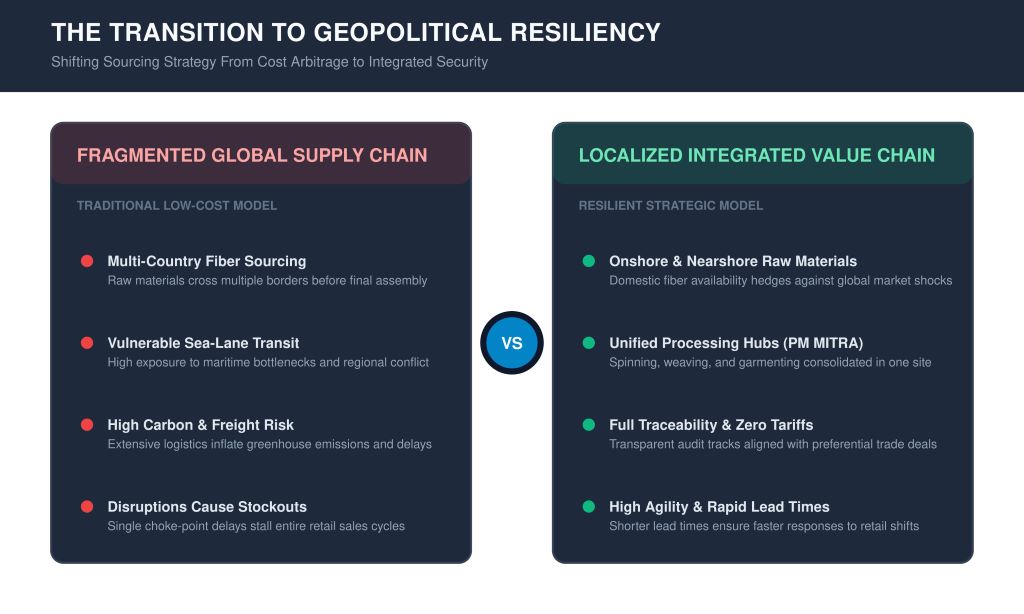
The agreement specifically targets the ‘yarn-forward’ co-production model, which integrates US fiber and yarn exports with Salvadoran garment manufacturing. By streamlining regulatory authorizations and removing non-tariff barriers, the pact reduces the administrative friction that has historically hampered rapid-response logistics. Kim Glas, CEO, National Council of Textile Organizations (NCTO), noted, the agreement fortifies a critical export market for US textile workers while offering US brands a geopolitically resilient alternative to Trans-Pacific sourcing. For El Salvador, which sends 65 per cent of its textile output to the US, the deal provides the legal certainty needed to attract fresh foreign direct investment into specialized niches like performance wear and synthetic fiber blends.
Sustainability as a nearshoring catalyst
Beyond tariff relief, the pact emphasizes environmental enforcement and digital trade facilitation, aligning Salvadoran factories with the growing demand for ‘green-certified’ production. El Salvador currently operates 19 free trade zones equipped with advanced water-recycling and energy-efficient systems, positioning the nation as a leader in sustainable nearshoring. As U.S. retailers reassess their inventory strategies in light of global shipping disruptions, El Salvador’s proximity - offering lead times of under three weeks - combined with this new reciprocal status, establishes a high-tech manufacturing lab for the Americas. This strategic alignment is expected to safeguard over 60,000 direct jobs while enhancing the transparency of the regional apparel value chain.
As the pillar of El Salvador’s economy, this sector generates 30 per cent of total national exports. Historically focused on basic cotton apparel, the industry is transitioning into high-value technical textiles and athleisure for the North American market. With revenues exceeding $2.1 billion, the sector aims to regain its 2022 performance levels through enhanced automation and US trade reciprocity.