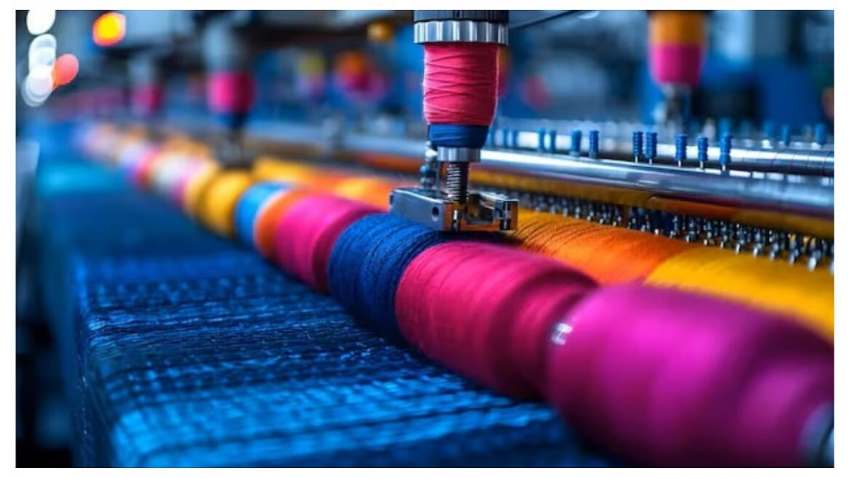
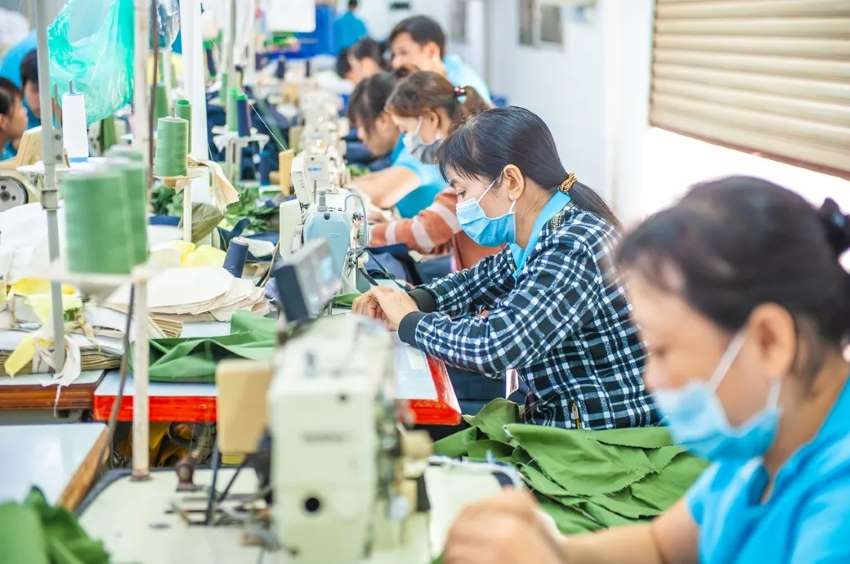
As Intertextile Shenzhen Apparel Fabrics prepares for its June 9–11, 2026 return at the Futian Convention & Exhibition Center, the event is capturing a critical shift in China’s high-end woven and embroidered market. Authoritative reports project this specific segment will reach RMB 385 billion (~$53.5 billion) by 2026-end, expanding at a steady Y-o-Y rate of 6.8 per cent. This growth is no longer tethered to traditional manual labor; instead, it is being fueled by a ‘Physical AI’ revolution where artificial intelligence is embedded directly into the looms and circular knitting machines of the Greater Bay Area (GBA).
The rise of ‘Innovation Studio’ and functional weaves
A primary driver of this 2026 expansion is the debut of the ‘Innovation Studio,’ a high-visibility extension of ‘The Closet’ display zone. This area marks a departure from standard seasonal catalogs, focusing instead on advanced material science such as 3D-knitted functional fibers and digital jacquards that offer superior durability and ‘easy-care’ properties. These technological advancements are essential for the region's 650+ exhibitors to maintain pricing power in a market increasingly split between premium, culturally significant hand-embroidery and high-efficiency industrial wovens. The integration of AI design tools like AiDA and automated defect detection systems like WiseEye has transitioned from experimental concepts to essential floor-level infrastructure.
Strategic decarbonization and the GBA ecosystem
The ‘Future Horizons’ forum at the fair will address the dual challenge of high-speed digital transactions and the mandatory shift toward decarbonized sourcing. With Shenzhen’s R&D intensity hitting a record 6.67 per cent of its GDP, the city is leveraging its proximity to hubs like Dongguan and Hong Kong to pilot ‘smart’ supply chains that reduce waste through real-time stock optimization. AI is optimizing the entire product cycle, helping manufacturers add value while achieving long-term cost savings, notes Derek Lai, Senior Engineer, HKRITA. As global buyers increasingly prioritize ‘Eco-Accountability,’ the GBA’s ability to provide traceable, GRS-certified recycled blends - demonstrated by a growing number of pavilions from Japan and Korea - is becoming the region’s most significant competitive advantage in the $727 billion South China textile ecosystem.
A flagship apparel fabric sourcing platform serving the Greater Bay Area, Intertextile Shenzhen specializes in high-growth segments like functional sportswear, womenswear, and premium denim. Historically the center of China’s garment production, the fair now focuses on AI-led manufacturing and sustainable ‘Innovation Studio’ solutions to drive its $727 billion regional ecosystem toward a 2030 net-zero target.