UK multinational companies may come under pressure to follow fair and clean practices in their global operations. This includes an end to exploitative working conditions, including modern slavery and child labor; toxic pollution; rampant destruction of rainforests; land-grabs and evictions of indigenous peoples and local communities; and violent attacks on human rights defenders.
Apparel brands, which do much of their sourcing from Asia, would potentially be hugely impacted by such regulations. There are still no laws in the UK specifically requiring companies to take action to prevent and rectify human rights abuses and environmental damage. Instead, companies seek to profit by undercutting more responsible operators who are trying to raise standards. Meanwhile, British consumers are at risk of buying products tainted by abuses and environmental devastation. A new law would increase protection for individuals and communities, workers, human rights defenders, and the environment. It would create clarity and a level playing field for companies.
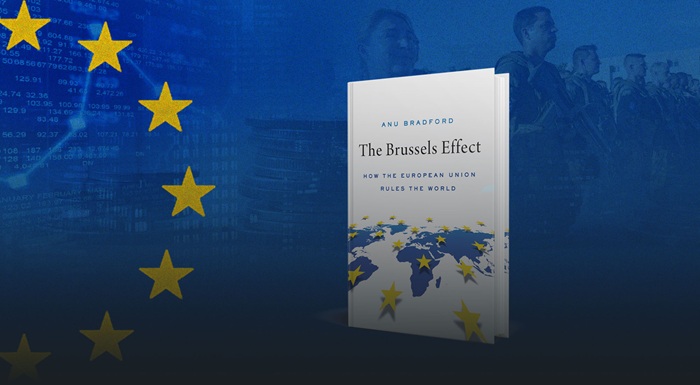
Moves to regulate due diligence issues within global supply chains are already afoot at the EU level and within the UN as well as within individual EU states such as Germany and France. Around the world, policy makers, business leaders, academics and campaigners are coming together to work for legislative change to end irresponsible corporate practices.
- 1
- 2
- 3
- 4
- 5
- 6
- 7
- 8
- 9
- 10
Cotton markets hold firm as tariffs, higher supply reshape global fiber economic…
In a year marked by tariff escalations, geopolitical brinkmanship and a recalibration of global trade flows, the international cotton market... Read more
Beyond Cotton How Kapok could redefine sustainable insulation in textiles
In the lush, humid heart of Southeast Asian rainforests stands a giant, a silent sentinel of the forest canopy. Growing... Read more
Bharat Tex 2026: Redefining the global textile value chain
Union Minister of Textiles, Giriraj Singh, has officially unveiled Bharat Tex 2026, signaling a significant leap in India’s influence over... Read more
Intertextile Shanghai Spring 2026: A hub for global textile innovation
The textile industry’s pulse is quickening as Intertextile Shanghai Apparel Fabrics – Spring Edition prepares to open its doors from... Read more
Moscow Fashion Week 2026: Blending sustainable innovation with timeless glamour
Scheduled to run from March 14-19, 2026 in Moscow, Russia, the Moscow Fashion Week (MFW) is cementing its status as... Read more
The Store as Stage: How fashion is crafting immersive consumer worlds
The North American fashion retail sector in 2026 is shedding its product-first identity and shifting towards a model that values... Read more
Turning the supply chain upside down, on-demand production reshapes apparel
The global fashion industry, long celebrated for its creativity and scale, is facing a structural reckoning. For decades, retailers and... Read more
Intertex Milano 2026 - A global nexus for textile innovation
Intertex Milano is set to return this summer, confirming its status as a premier international destination for the textile and... Read more
Primark at crossroads as AB Foods weighs spin-off amid digital and Lefties press…
The long-standing supremacy of Europe’s budget fashion champion, Primark, is facing a test. As of February 2026, Associated British Foods... Read more
Vietnam, Bangladesh, Cambodia drive US apparel imports in 2025
The 2025 year-end data for the US apparel sector reveals an industry in structural flux. Despite aggressive tariff measures and... Read more