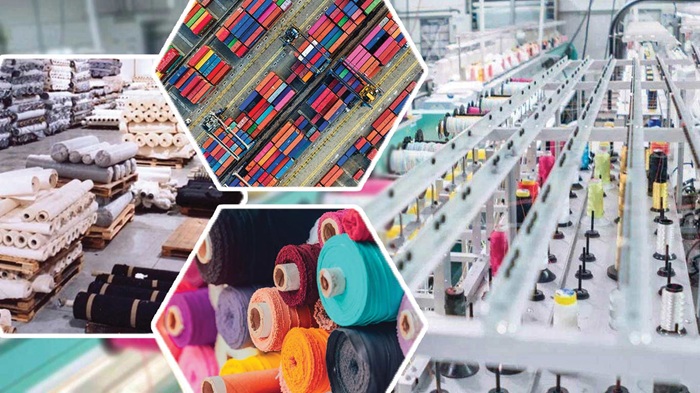
India and Turkey are major export destinations for Nepali yarn. Along with rising demand for yarn, Nepali factories have started utilising their capacity towards upper level and have doubled their capacity utilisation from 35 or 40 per cent to 70 or 75 per cent.
Currently there are four spinning mills in Nepal that import raw materials from various countries and they are also trying to create backward linkages to maximise the benefits of yarn export. Around 10,000 people are directly employed in yarn production at present.
The four yarn producers in the country jointly produce almost 40,000 metric tons of yarn a year and production could go up if the factories operate at optimum capacity. Earlier factories were largely running below capacity as the country was facing a crippling power shortage and labor unrest.
Turkey has suspended the generalised system of preferences on export of yarn from Nepal since January on the ground that Chinese yarn is being circumvented to Turkey via Nepal. Nepali exporters who were largely focused on the Indian market are increasingly attracted toward the Turkish market as the latter fetches better prices. The country now fears about the possible adverse impact on jobs and exports of the country due to Turkey’s decision to suspend the GSP facility.
- 1
- 2
- 3
- 4
- 5
- 6
- 7
- 8
- 9
- 10
Cotton markets hold firm as tariffs, higher supply reshape global fiber economic…
In a year marked by tariff escalations, geopolitical brinkmanship and a recalibration of global trade flows, the international cotton market... Read more
Beyond Cotton How Kapok could redefine sustainable insulation in textiles
In the lush, humid heart of Southeast Asian rainforests stands a giant, a silent sentinel of the forest canopy. Growing... Read more
Bharat Tex 2026: Redefining the global textile value chain
Union Minister of Textiles, Giriraj Singh, has officially unveiled Bharat Tex 2026, signaling a significant leap in India’s influence over... Read more
Intertextile Shanghai Spring 2026: A hub for global textile innovation
The textile industry’s pulse is quickening as Intertextile Shanghai Apparel Fabrics – Spring Edition prepares to open its doors from... Read more
Moscow Fashion Week 2026: Blending sustainable innovation with timeless glamour
Scheduled to run from March 14-19, 2026 in Moscow, Russia, the Moscow Fashion Week (MFW) is cementing its status as... Read more
The Store as Stage: How fashion is crafting immersive consumer worlds
The North American fashion retail sector in 2026 is shedding its product-first identity and shifting towards a model that values... Read more
Turning the supply chain upside down, on-demand production reshapes apparel
The global fashion industry, long celebrated for its creativity and scale, is facing a structural reckoning. For decades, retailers and... Read more
Intertex Milano 2026 - A global nexus for textile innovation
Intertex Milano is set to return this summer, confirming its status as a premier international destination for the textile and... Read more
Primark at crossroads as AB Foods weighs spin-off amid digital and Lefties press…
The long-standing supremacy of Europe’s budget fashion champion, Primark, is facing a test. As of February 2026, Associated British Foods... Read more
Vietnam, Bangladesh, Cambodia drive US apparel imports in 2025
The 2025 year-end data for the US apparel sector reveals an industry in structural flux. Despite aggressive tariff measures and... Read more