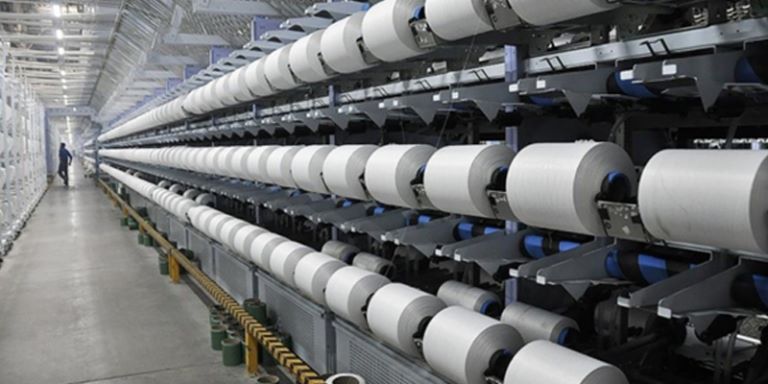
Tirupur manufacturers are worried about the 18 per cent GST rate fixed for different segments in the production chain. The feeling is that this will put pressure on the working capital of the job working units, forcing them to exit the business.
Tirupur’s textile industry does business worth over Rs 50,000 crores every year, including revenue earned from exports. The industry also employs over 1,000,000 people.
Over 80 per cent of units in the Tirupur cluster are dependent on job work to carry out the various stages of garment manufacturing. The sequence of activities, from the yarn to garment is knitting, bleaching, dyeing, calendaring or compacting, printing, garmenting, embroidery and value-added activities like embellishment, glasswork, ARI work, thread work.
The product is normally transported from one stage of processing to the other at least five to seven times before getting packed for shipment or for domestic sales. At almost every stage now, 18 per cent GST will be applicable.
GST may increase costs by around two or three per cent. However the worry is not limited to costs, which can be managed through refund or passing on to the buyer. The worry is over the fate of hundreds of micro and small units, which were never under any tax purview so far.
- 1
- 2
- 3
- 4
- 5
- 6
- 7
- 8
- 9
- 10
The second life economy gets a boost as resale outgrows traditional apparel reta…
For decades, resale existed in the margins of the apparel economy, thrift stores, peer-to-peer marketplaces, and charity bins quietly absorbing... Read more
Rising polyester costs shake India’s textile manufacturing hubs
India’s synthetic textile industry is confronting a sudden and destabilizing price shock that is reverberating across its vast manufacturing ecosystem.... Read more
Cotton markets hold firm as tariffs, higher supply reshape global fiber economic…
In a year marked by tariff escalations, geopolitical brinkmanship and a recalibration of global trade flows, the international cotton market... Read more
Beyond Cotton How Kapok could redefine sustainable insulation in textiles
In the lush, humid heart of Southeast Asian rainforests stands a giant, a silent sentinel of the forest canopy. Growing... Read more
Bharat Tex 2026: Redefining the global textile value chain
Union Minister of Textiles, Giriraj Singh, has officially unveiled Bharat Tex 2026, signaling a significant leap in India’s influence over... Read more
Intertextile Shanghai Spring 2026: A hub for global textile innovation
The textile industry’s pulse is quickening as Intertextile Shanghai Apparel Fabrics – Spring Edition prepares to open its doors from... Read more
Moscow Fashion Week 2026: Blending sustainable innovation with timeless glamour
Scheduled to run from March 14-19, 2026 in Moscow, Russia, the Moscow Fashion Week (MFW) is cementing its status as... Read more
The Store as Stage: How fashion is crafting immersive consumer worlds
The North American fashion retail sector in 2026 is shedding its product-first identity and shifting towards a model that values... Read more
Turning the supply chain upside down, on-demand production reshapes apparel
The global fashion industry, long celebrated for its creativity and scale, is facing a structural reckoning. For decades, retailers and... Read more
Intertex Milano 2026 - A global nexus for textile innovation
Intertex Milano is set to return this summer, confirming its status as a premier international destination for the textile and... Read more