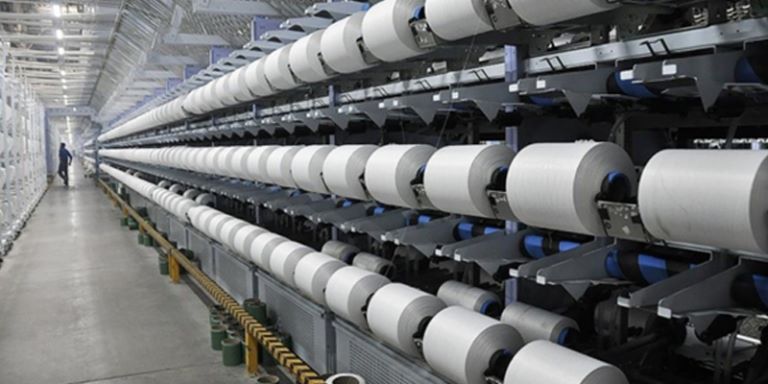
India’s preeminent knitwear manufacturing cluster, Tiruppur, has raised its performance trajectory by establishing an ambitious export baseline, targeting an expansion to $11.5 billion by 2030. To mitigate the historical vulnerability associated with cotton price volatility and shifting global buyer preferences, the cluster is executing a structural transition toward a balanced manufacturing mix. The updated strategy mandates that man-made fibers (MMF) and blended fabrics comprise 50 per cent of total regional garment production. This material diversification allows local manufacturers to capture higher-margin segments in the technical textile and global athleisure markets, which currently dominate international consumer demand.
Policy synchronization and supply chain interventions
The realization of this multi-billion-dollar export mandate is heavily contingent upon large-scale infrastructure deployment and central policy support. During recent bilateral stakeholder consultations, the Union Ministry of Textiles committed to accelerating the development of the 1,052-acre PM MITRA Mega Textile Park at Virudhunagar, which serves as a vital processing hub for the regional supply chain. The integration of integrated spinning, green processing, and advanced machinery modernization schemes will fundamentally enhance our cost competitiveness, noted KM Subramanian, President, Tiruppur Exporters’ Association. Key challenges, such as logistics costs and tariff uncertainties in Western markets, are being offset by the imminent implementation of new Free Trade Agreements (FTAs) alongside a dedicated state allocation of Rs 1,250 crore for industrial worker housing.
Prioritizing technical textile innovation
The Tiruppur industrial cluster is India's premier knitwear manufacturing hub, commanding nearly 60 per cent of the nation’s total knitwear export volume. Operating for over five decades, the cluster generates direct employment for more than one million personnel. Its modern operational roadmap prioritizes large-scale sustainable processing and technical textile innovation to achieve its long-term financial targets.