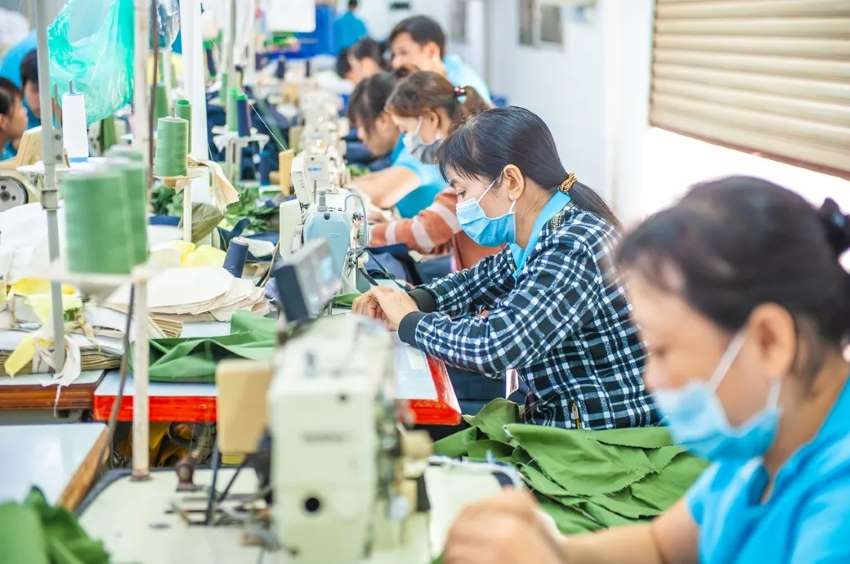
Sri Lanka is looking at developing into a global fashion giant. The apparel industry is focusing on promoting value against volume in a highly competitive global market to boost export revenue. Apparel manufacturers are also seeking to infuse local designs, materials and fabrics into the production of value added functional or fashion apparels for the global market.
There is a large segment of Indians who prefer to purchase Sri Lankan garments due to their high quality and price competiveness. So Sri Lanka needs to manufacture high-end garments particularly targeting the growing Indian upper-class segment. This is in addition to supplying products to conventional markets such as the EU and the US.
Lanka should also look at developing its domestic apparel manufacturing sector, which is growing at a fast pace. While the country’s domestic apparel manufacturing market itself is close to about $2.5 billion, exports account for around $5 billion.
In the post quota era the Sri Lankan garment industry progressively lost market share to cheaper sourcing destinations. The country’s garment manufacturing industry went in for a re-positioning to become internationally more competitive. The country established itself as a sourcing destination of quality garments produced under high ethical and manufacturing standards. In order to attract international buyers, the industry in Sri Lanka has built its reputation over the years on factors other than price. These are quality, on-time delivery and great customer service, ethical and environmentally friendly employment practices, good working conditions and payment of decent wage rates.
- 1
- 2
- 3
- 4
- 5
- 6
- 7
- 8
- 9
- 10
Intertextile Shanghai Spring 2026: A hub for global textile innovation
The textile industry’s pulse is quickening as Intertextile Shanghai Apparel Fabrics – Spring Edition prepares to open its doors from... Read more
Moscow Fashion Week 2026: Blending sustainable innovation with timeless glamour
Scheduled to run from March 14-19, 2026 in Moscow, Russia, the Moscow Fashion Week (MFW) is cementing its status as... Read more
The Store as Stage: How fashion is crafting immersive consumer worlds
The North American fashion retail sector in 2026 is shedding its product-first identity and shifting towards a model that values... Read more
Turning the supply chain upside down, on-demand production reshapes apparel
The global fashion industry, long celebrated for its creativity and scale, is facing a structural reckoning. For decades, retailers and... Read more
Intertex Milano 2026 - A global nexus for textile innovation
Intertex Milano is set to return this summer, confirming its status as a premier international destination for the textile and... Read more
Primark at crossroads as AB Foods weighs spin-off amid digital and Lefties press…
The long-standing supremacy of Europe’s budget fashion champion, Primark, is facing a test. As of February 2026, Associated British Foods... Read more
Vietnam, Bangladesh, Cambodia drive US apparel imports in 2025
The 2025 year-end data for the US apparel sector reveals an industry in structural flux. Despite aggressive tariff measures and... Read more
The New Dress Code: Sportswear’s takeover of modern wardrobes
For much of the last decade, fashion retail has been defined by volatility. Trends have shortened, discount cycles have intensified... Read more
Hemp finds its moment in India’s $500 billion American trade calculus
In the grand arithmetic of India’s expanding trade engagement with the US, the headlines usually gravitate toward oil cargoes, aircraft... Read more
EU PET spunbond imports under scrutiny, misclassification sparks regulatory and …
The European nonwovens and technical textiles sector is facing an unprecedented compliance crisis as a rise of customs misclassification threatens... Read more