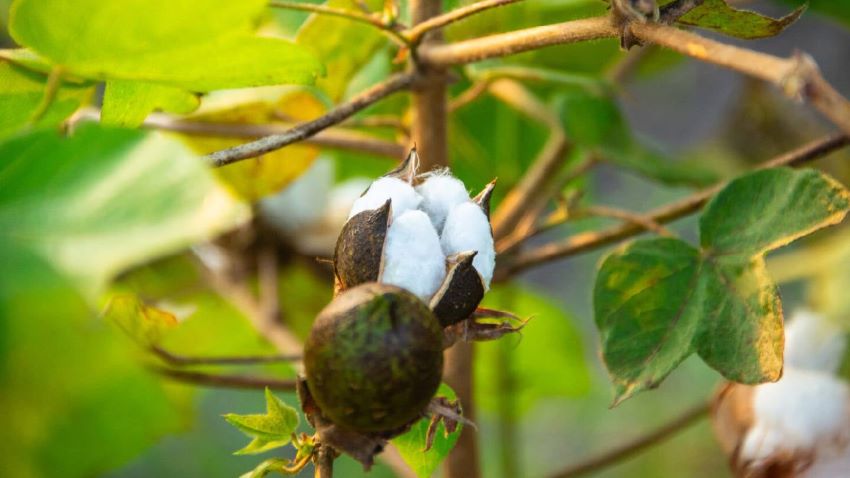
Gujarat has been India’s leading cotton producing state owing to its abundant black soil. It sells nearly 120 lakh bales a year, two-thirds of this to Tamil Nadu. Hosiery yarn makers spin the sought-after Sankar 6 variety from Gujarat to make garments sold across the world, including top retailers such as Walmart and Macy’s in the US.
Sankar 6 is priced at Rs 34,000 to Rs 34,200 a candy. Gujarat cotton commands a premium over competing states because it requires fewer chemicals for dyeing, among other advantages. However, pink worm infestation in cotton crops and lack of water for irrigation have spoiled the quality of a huge quantity of cotton bales. This has made yarn manufacturers in Tamil Nadu look to overseas markets.
About 43 mills in the textile hub of Coimbatore and Tirupur are turning to West African nations to replace the supply from their decades-old source as they seek more meters of yarn per bale of cotton. They plan to procure cotton from countries like Mali, Ivory Coast and Burkina Faso.
One advantage is that imports can be booked in January, all the way up to June at a steady price from West African countries. This will provide a continuous supply of the same fiber at lower interest rates of around 2.5 per cent a year.
- 1
- 2
- 3
- 4
- 5
- 6
- 7
- 8
- 9
- 10
Global cotton enters a deficit year in 2026 as supply drop meets logistics risk
The global cotton economy has entered a fragile and sensitive phase. Early projections for the 2026-27 season suggest that world... Read more
India’s textile trade gets a Pacific push as New Zealand FTA removes tariff barr…
India and New Zealand have inked a ‘once-in-a-generation’ Free Trade Agreement (FTA), one that will have a profound impact on... Read more
Lululemon’s world-first nylon circularity push signals a new apparel arms race
The global apparel industry’s circularity narrative is entering a more technically demanding phase. Polyester recycling once the flagship of sustainable... Read more
Beyond the DTC Rush: Levi’s hybrid channel strategy sets a new retail benchmark
The global apparel sector is entering a phase where channel strategy is no longer a tactical lever but a core... Read more
The New Rules of Resale: EPR turning secondhand into fashion’s strategic growth …
The global fashion industry is facing a decisive regulatory and commercial reset. What began as a sustainability narrative around reuse... Read more
The 2027 Mandate: Why denim’s future hinges on verifiable data
For decades, the global denim industry has relied on a narrative of durability, heritage, and authenticity. That narrative is now... Read more
Europe’s textile core unravels as costs, imports and policy pressure bite
Europe’s textile and apparel sector, long seen as a benchmark for craftsmanship and industrial depth, is slipping into a prolonged... Read more
Automation, innovation, regulation are the forces shaping textiles in 2026
The global textile sector has entered a new era. Early 2026 saw the industry breach a $1.06 trillion valuation, reflecting... Read more
The new Brussels rulebook, every EU apparel order is now a balance-sheet risk
The humble export order sheet is undergoing a transformation. What was once a straightforward commercial instrument: SKU, volume, FOB price,... Read more
Why 2026-27 could be a defining cotton year for India’s farm-to-fashion economy
The global cotton economy is entering a more constrained phase, and for India, the implications run far beyond the farm... Read more