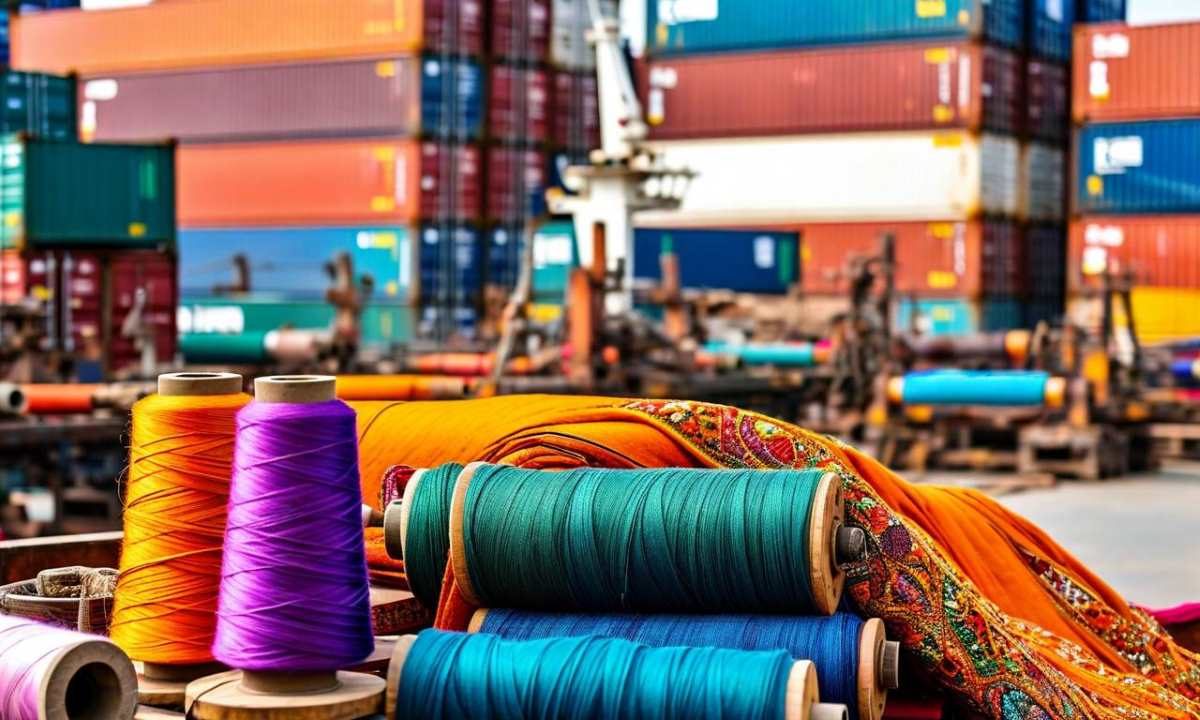
China’s forward imported yarn market remains sluggish and the Coronavirus (COVID-19) outbreak has worsened demand for imported yarns. Weavers are gradually returning to work, especially the large scale companies. But small and medium-sized weavers are still shut down. Besides restrictions on travelling, logistics has been impacted too, with delays in deliveries, transportation, resulting in stock accumulation. Trading will be dull for some more time.
Indian exporters are burdened with stocks due to few purchases from China in the past two months, and the recent reduction in orders from Bangladesh and Egypt. Judging from the price spread between the spot and the forward, the latter is much higher than the former, and buyers may be more cautious in purchasing. Vietnamese carded 32S for airjet increased and the Indian yarn price spread dropped.
The PFY market remained largely quiet. Only some companies revised down offers, and most leading companies sustained their pre-holiday price levels. Most market players retreated to the sidelines, so transactions failed to rise apparently. Meanwhile, for the downstream market, the traditional peak season of the textile industry in March to May is anticipated to be discounted when sales of winter wear and spring wear are dragged down by the epidemic and some exporting orders are transferred.
- 1
- 2
- 3
- 4
- 5
- 6
- 7
- 8
- 9
- 10
India’s textile trade gets a Pacific push as New Zealand FTA removes tariff barr…
India and New Zealand have inked a ‘once-in-a-generation’ Free Trade Agreement (FTA), one that will have a profound impact on... Read more
Lululemon’s world-first nylon circularity push signals a new apparel arms race
The global apparel industry’s circularity narrative is entering a more technically demanding phase. Polyester recycling once the flagship of sustainable... Read more
Beyond the DTC Rush: Levi’s hybrid channel strategy sets a new retail benchmark
The global apparel sector is entering a phase where channel strategy is no longer a tactical lever but a core... Read more
The New Rules of Resale: EPR turning secondhand into fashion’s strategic growth …
The global fashion industry is facing a decisive regulatory and commercial reset. What began as a sustainability narrative around reuse... Read more
The 2027 Mandate: Why denim’s future hinges on verifiable data
For decades, the global denim industry has relied on a narrative of durability, heritage, and authenticity. That narrative is now... Read more
Europe’s textile core unravels as costs, imports and policy pressure bite
Europe’s textile and apparel sector, long seen as a benchmark for craftsmanship and industrial depth, is slipping into a prolonged... Read more
Automation, innovation, regulation are the forces shaping textiles in 2026
The global textile sector has entered a new era. Early 2026 saw the industry breach a $1.06 trillion valuation, reflecting... Read more
The new Brussels rulebook, every EU apparel order is now a balance-sheet risk
The humble export order sheet is undergoing a transformation. What was once a straightforward commercial instrument: SKU, volume, FOB price,... Read more
Why 2026-27 could be a defining cotton year for India’s farm-to-fashion economy
The global cotton economy is entering a more constrained phase, and for India, the implications run far beyond the farm... Read more
Luxury resale’s next big battle is no longer digital, it is about who controls s…
For nearly a decade, the luxury resale story was written in the language of platforms. Market leadership was measured by... Read more