Silver Star Fashions makes use of simple but effective techniques to monitor inventory levels and control the non-conforming materials in the trims store and fabric store. Silver Star Fashions was founded in 1967. It makes dresses for women and children.
Trims are stored style-wise and issued on the basis of the trim card. Inventory levels of each trim are indicated on a board installed at the beginning of each row of racks for each trim stacked in that particular row of racks. The fabric store on the other hand is segregated in two parts – the fabric store and the bonded fabric store. While the fabric store is used to stock inventory that is either under inspection or to be inspected, the bonded fabric store stocks only the inspected fabric.
The bonded fabric store uses color coded racks to segregate ready to issue goods (green) and approval pending goods (yellow). These racks are kept covered using poly bags. The inventory level for ready reference is again monitored using the system of boards by each row of racks.
The factory has invested in Optitex CAD systems for pattern making and cutting floor management. Tracking an order’s introduction in the factory’s ecosystem, the first exercise is the feasibility analysis of the style. Technical feasibility is taken care of by the industrial engineering team. For execution of the orders, the production planning department calculates the productivity of the style based on its SAM, number of operations involved, fabric and order quantity.
- 1
- 2
- 3
- 4
- 5
- 6
- 7
- 8
- 9
- 10
India’s textile trade gets a Pacific push as New Zealand FTA removes tariff barr…
India and New Zealand have inked a ‘once-in-a-generation’ Free Trade Agreement (FTA), one that will have a profound impact on... Read more
Lululemon’s world-first nylon circularity push signals a new apparel arms race
The global apparel industry’s circularity narrative is entering a more technically demanding phase. Polyester recycling once the flagship of sustainable... Read more
Beyond the DTC Rush: Levi’s hybrid channel strategy sets a new retail benchmark
The global apparel sector is entering a phase where channel strategy is no longer a tactical lever but a core... Read more
The New Rules of Resale: EPR turning secondhand into fashion’s strategic growth …
The global fashion industry is facing a decisive regulatory and commercial reset. What began as a sustainability narrative around reuse... Read more
The 2027 Mandate: Why denim’s future hinges on verifiable data
For decades, the global denim industry has relied on a narrative of durability, heritage, and authenticity. That narrative is now... Read more
Europe’s textile core unravels as costs, imports and policy pressure bite
Europe’s textile and apparel sector, long seen as a benchmark for craftsmanship and industrial depth, is slipping into a prolonged... Read more
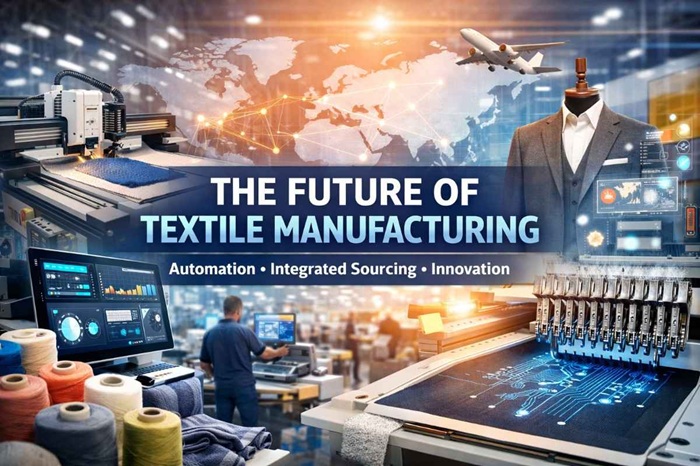
Automation, innovation, regulation are the forces shaping textiles in 2026
The global textile sector has entered a new era. Early 2026 saw the industry breach a $1.06 trillion valuation, reflecting... Read more
The new Brussels rulebook, every EU apparel order is now a balance-sheet risk
The humble export order sheet is undergoing a transformation. What was once a straightforward commercial instrument: SKU, volume, FOB price,... Read more
Why 2026-27 could be a defining cotton year for India’s farm-to-fashion economy
The global cotton economy is entering a more constrained phase, and for India, the implications run far beyond the farm... Read more
Luxury resale’s next big battle is no longer digital, it is about who controls s…
For nearly a decade, the luxury resale story was written in the language of platforms. Market leadership was measured by... Read more