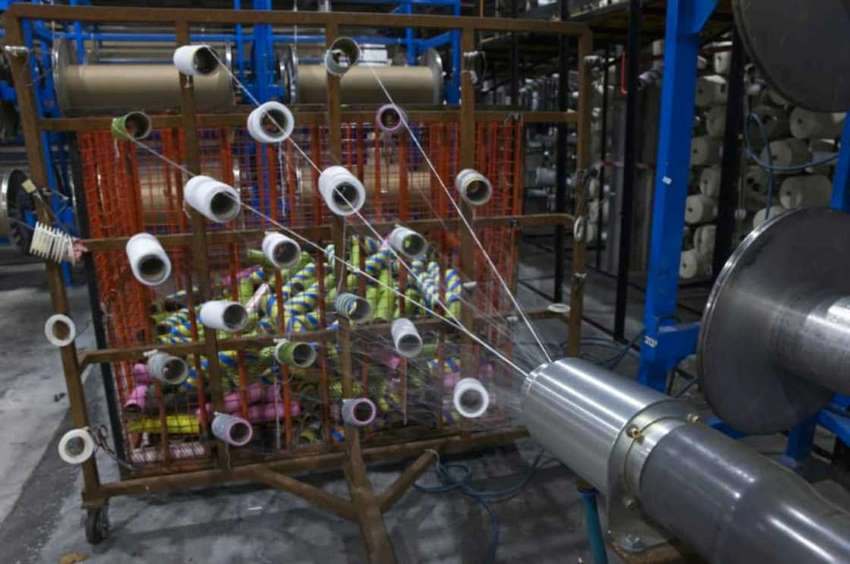
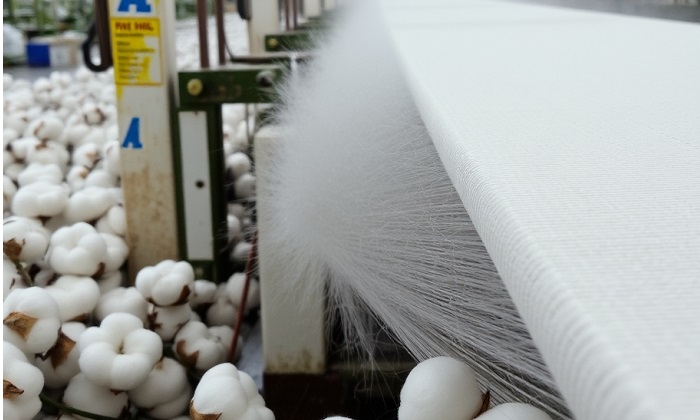
Panipat is home to some 150 or 200 mills, which take discarded clothes from western countries and turn them into recycled cloth. The industry employs around 20,000 people.
Panipat’s history in textiles began after partition. Weavers were uprooted and moved to the ancient city. They set up looms to knit coarse, handspun cotton carpets, wall hangings and sofa covers. The city’s later emergence as a recycling hub coincided with a slump in Prato, a small industrial town in Italy, with textile tradition. In the 1990s Panipat mill owners bought discarded Italian machinery from Prato designed to make cheap shoddy yarn from recycled wool. (Shoddy is a word for reclaimed fiber). The industry took off; its annual revenues rose to over 300 million dollars.
Panipat may help the planet but also exhibits the least attractive features of the textile business in developing countries: sweatshop conditions for workers, rock bottom pay, use of child labor and so on. Almost all workers there are contract laborers who earn a tenth of what those in the formal sector are paid. Also times have changed. Cheaper and lighter polyester substitutes are preferred by wholesale buyers such as aid agencies, railways and hospitals, whether Indian or foreign. Such materials need expensive machines that many Panipat mills cannot afford.
- 1
- 2
- 3
- 4
- 5
- 6
- 7
- 8
- 9
- 10
Polyester volatility redraws India’s textile industry competitive map across Asi…
India’s synthetic textile industry has entered a phase of cost instability as polyester staple fibre (PSF) prices rise across domestic... Read more
The £7 Billion Question: Who pays for fashion’s ‘free rental’ habit?
The global fashion industry is facing an uncomfortable paradox: its most valuable customers may also be its most destructive. A... Read more
India, China Bangladesh face fresh headwinds as global apparel markets rebalance
Global apparel trade is entering a more uneven recovery phase, with demand growth persisting but losing uniform momentum across major... Read more
Global cotton enters a deficit year in 2026 as supply drop meets logistics risk
The global cotton economy has entered a fragile and sensitive phase. Early projections for the 2026-27 season suggest that world... Read more
India’s textile trade gets a Pacific push as New Zealand FTA removes tariff barr…
India and New Zealand have inked a ‘once-in-a-generation’ Free Trade Agreement (FTA), one that will have a profound impact on... Read more
Lululemon’s world-first nylon circularity push signals a new apparel arms race
The global apparel industry’s circularity narrative is entering a more technically demanding phase. Polyester recycling once the flagship of sustainable... Read more
Beyond the DTC Rush: Levi’s hybrid channel strategy sets a new retail benchmark
The global apparel sector is entering a phase where channel strategy is no longer a tactical lever but a core... Read more
The New Rules of Resale: EPR turning secondhand into fashion’s strategic growth …
The global fashion industry is facing a decisive regulatory and commercial reset. What began as a sustainability narrative around reuse... Read more
The 2027 Mandate: Why denim’s future hinges on verifiable data
For decades, the global denim industry has relied on a narrative of durability, heritage, and authenticity. That narrative is now... Read more
Europe’s textile core unravels as costs, imports and policy pressure bite
Europe’s textile and apparel sector, long seen as a benchmark for craftsmanship and industrial depth, is slipping into a prolonged... Read more