The textile and apparel industry is currently navigating a critical transition from pilot-stage sustainability projects to full-scale industrial operations. With Americans discarding over 10 million tons of textiles annually, the launch of the Textiles Recycling Expo USA in Charlotte, North Carolina, underscores a regional shift toward domestic infrastructure development. As the global textile recycling market continues to expand - projected to reach approximately $7.36 billion in 2026 - the focus has moved decisively toward bridging the gap between waste collection and high-value fiber regeneration.
Engineering sustainability into the supply chain
Industry leaders are increasingly recognizing, circularity must be integrated at the design phase rather than addressed as an afterthought. Traditionally one of the most complex categories due to intricate fiber blends, high-performance apparel is now a primary target for innovation. Recyclability must be engineered into products from the design stage itself to make industrial-scale recovery viable, notes Maximilian Köhnlein, Senior Specialist- Apparel Material Innovation, On. Advanced technologies, including AI-driven near-infrared spectroscopy, are now enabling sorting centers to identify garment compositions at speeds of 50 garments per second, a prerequisite for efficient chemical recycling.
Navigating regulatory and economic realities
Despite the technological momentum, the sector faces significant hurdles in balancing operational costs with the performance requirements of virgin-quality fibers. While mechanical recycling currently dominates the market due to lower operational costs, the industry is seeing a marked increase in capital expenditure toward chemical recycling to manage mixed-fiber waste. As regulatory frameworks tighten, particularly regarding extended producer responsibility, brands are under mounting pressure to formalize reverse supply chains. The current industry objective is to normalize the ‘green premium’ by achieving economies of scale, thereby positioning recycled textiles as a stable, competitive alternative to virgin materials in the global apparel market.
Textile recycling infrastructure
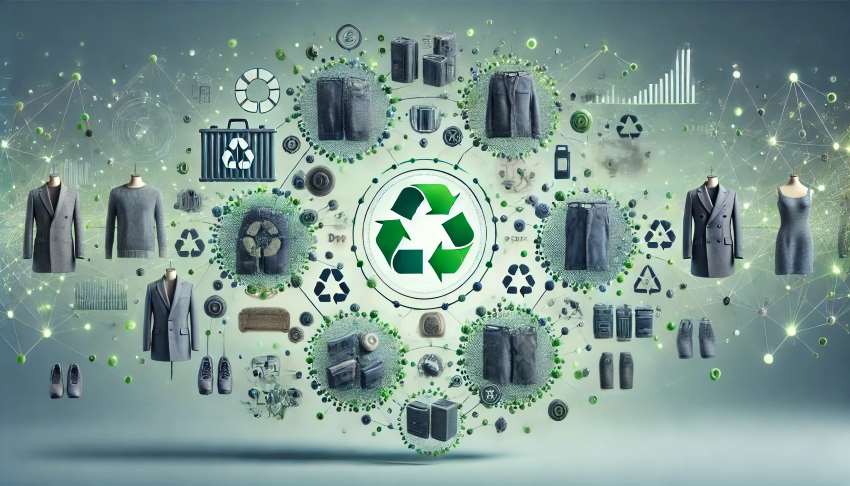
The textile recycling sector focuses on recovering fibers from post-consumer and industrial waste to create circular supply chains. Key categories include apparel, home furnishings, and technical textiles. Growth is driven by AI-sorting, fiber-to-fiber chemical regeneration, and regulatory compliance. The market remains in a high-growth phase, with significant investments in automated processing technologies.