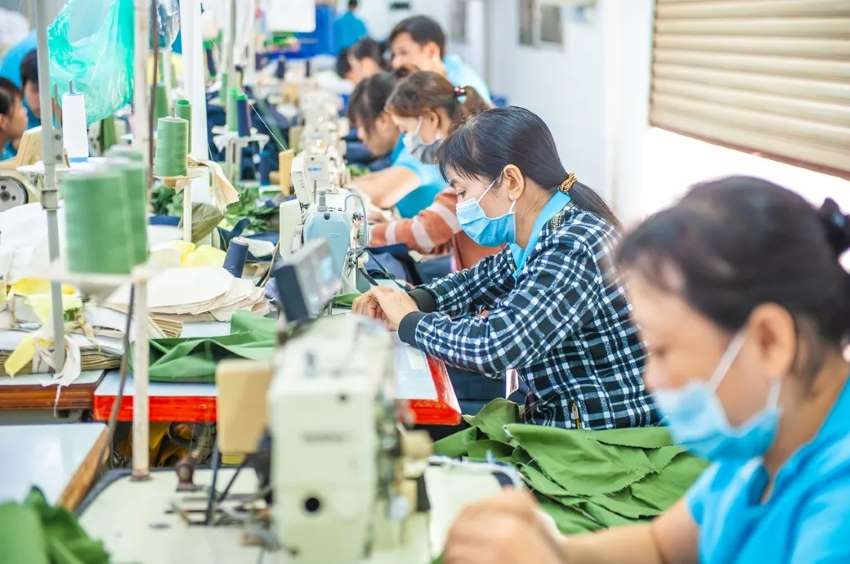
Following the recent terror attack in Gulshan, global buyers and brands asked Bangladesh’s RMG exporters to meet them outside Bangladesh for business deals for the upcoming season. Some buyers have already postponed their visit and scheduled their meeting in a third country on security grounds. The apparel makers apprehend that besides production cost hike, they might lose orders as well, if the current situation in the country continues unabated.
Moshiul Alam Sajal, managing director of Posmi Sweaters said that three of his buyers from Italy, France and Spain asked him to get ready for a meeting in a third country for negotiation of new orders for the coming season.
Like Sajal, a good number of manufacturers are facing the same problem. It costs over Tk4 lakh to meet the buyers in a third country, but the main problem is that a third-country meeting prevents the manufacturers from displaying a whole lot of samples since it is not possible to carry a good number of styles with them, they said.
For that the government has to take measures to ensure the safety of foreigners, Sajal said, suggesting that the government should unearth the root of militancy and bring them to book to prevent further attacks.
- 1
- 2
- 3
- 4
- 5
- 6
- 7
- 8
- 9
- 10
Polyester volatility redraws India’s textile industry competitive map across Asi…
India’s synthetic textile industry has entered a phase of cost instability as polyester staple fibre (PSF) prices rise across domestic... Read more
The £7 Billion Question: Who pays for fashion’s ‘free rental’ habit?
The global fashion industry is facing an uncomfortable paradox: its most valuable customers may also be its most destructive. A... Read more
India, China Bangladesh face fresh headwinds as global apparel markets rebalance
Global apparel trade is entering a more uneven recovery phase, with demand growth persisting but losing uniform momentum across major... Read more
Global cotton enters a deficit year in 2026 as supply drop meets logistics risk
The global cotton economy has entered a fragile and sensitive phase. Early projections for the 2026-27 season suggest that world... Read more
India’s textile trade gets a Pacific push as New Zealand FTA removes tariff barr…
India and New Zealand have inked a ‘once-in-a-generation’ Free Trade Agreement (FTA), one that will have a profound impact on... Read more
Lululemon’s world-first nylon circularity push signals a new apparel arms race
The global apparel industry’s circularity narrative is entering a more technically demanding phase. Polyester recycling once the flagship of sustainable... Read more
Beyond the DTC Rush: Levi’s hybrid channel strategy sets a new retail benchmark
The global apparel sector is entering a phase where channel strategy is no longer a tactical lever but a core... Read more
The New Rules of Resale: EPR turning secondhand into fashion’s strategic growth …
The global fashion industry is facing a decisive regulatory and commercial reset. What began as a sustainability narrative around reuse... Read more
The 2027 Mandate: Why denim’s future hinges on verifiable data
For decades, the global denim industry has relied on a narrative of durability, heritage, and authenticity. That narrative is now... Read more
Europe’s textile core unravels as costs, imports and policy pressure bite
Europe’s textile and apparel sector, long seen as a benchmark for craftsmanship and industrial depth, is slipping into a prolonged... Read more