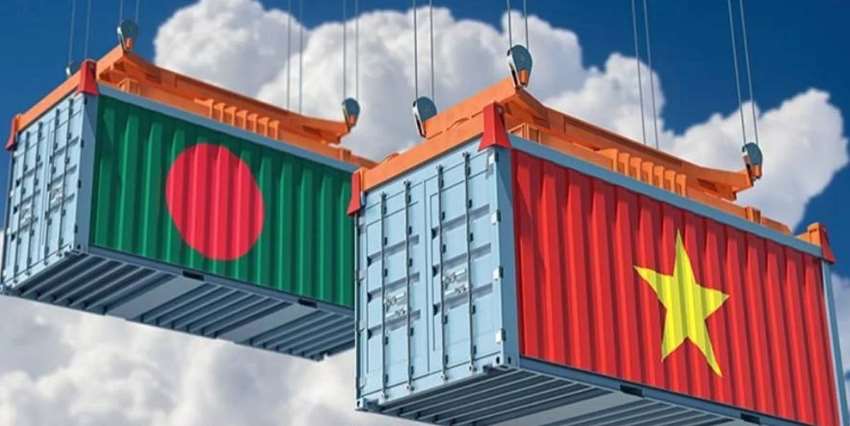
The Indian textile industry has flagged concerns about an Environment Ministry move to mandate virtually all textile firms to reduce their effluent discharge to zero. The argument is that such a stipulation goes beyond what the developed world follows and would make Indian firms even more uncompetitive at a time when export orders are shrinking. Accounting for 14 per cent of India’s exports, the textile industry is India’s largest employer after agriculture. But, the industry has recently lost ground to Bangladesh and Vietnam in the global market as the preferred supplier for readymade garments.
The Ministry of Environment and Forest issued a draft notification in late November that proposes new pollution control standards for effluents from the textile industry. It also requires all textile units set up in clusters such as Tirupur in Tamil Nadu to set up common effluent treatment plants to ensure zero liquid discharge, irrespective of their waste water quantity.
According to the ministry, the industry players would be granted 30 months to construct or augment their existing effluent treatment plants to comply with this new regulation under the Environment Protection Act of 1986. No new or existing units will be allowed to operate their factories after that, in the absence of such arrangements.
In this regard, the industry members have raised their apprehensions about the implications of the new norms in a missive sent earlier this week to the ministries of textiles as well as environment and forests, questioning the assumption that textile units discharge effluents without treating them.
According to A Didar Singh, Secretary General of the Federation of Indian Chambers of Commerce and Industry (FICCI), ‘zero discharge’ is not the only solution. The effluent can be treated and reused for various other purposes including discharge in the sea at least in coastal states.
- 1
- 2
- 3
- 4
- 5
- 6
- 7
- 8
- 9
- 10
Bharat Tex 2026: Redefining the global textile value chain
Union Minister of Textiles, Giriraj Singh, has officially unveiled Bharat Tex 2026, signaling a significant leap in India’s influence over... Read more
Intertextile Shanghai Spring 2026: A hub for global textile innovation
The textile industry’s pulse is quickening as Intertextile Shanghai Apparel Fabrics – Spring Edition prepares to open its doors from... Read more
Moscow Fashion Week 2026: Blending sustainable innovation with timeless glamour
Scheduled to run from March 14-19, 2026 in Moscow, Russia, the Moscow Fashion Week (MFW) is cementing its status as... Read more
The Store as Stage: How fashion is crafting immersive consumer worlds
The North American fashion retail sector in 2026 is shedding its product-first identity and shifting towards a model that values... Read more
Turning the supply chain upside down, on-demand production reshapes apparel
The global fashion industry, long celebrated for its creativity and scale, is facing a structural reckoning. For decades, retailers and... Read more
Intertex Milano 2026 - A global nexus for textile innovation
Intertex Milano is set to return this summer, confirming its status as a premier international destination for the textile and... Read more
Primark at crossroads as AB Foods weighs spin-off amid digital and Lefties press…
The long-standing supremacy of Europe’s budget fashion champion, Primark, is facing a test. As of February 2026, Associated British Foods... Read more
Vietnam, Bangladesh, Cambodia drive US apparel imports in 2025
The 2025 year-end data for the US apparel sector reveals an industry in structural flux. Despite aggressive tariff measures and... Read more
The New Dress Code: Sportswear’s takeover of modern wardrobes
For much of the last decade, fashion retail has been defined by volatility. Trends have shortened, discount cycles have intensified... Read more
Hemp finds its moment in India’s $500 billion American trade calculus
In the grand arithmetic of India’s expanding trade engagement with the US, the headlines usually gravitate toward oil cargoes, aircraft... Read more