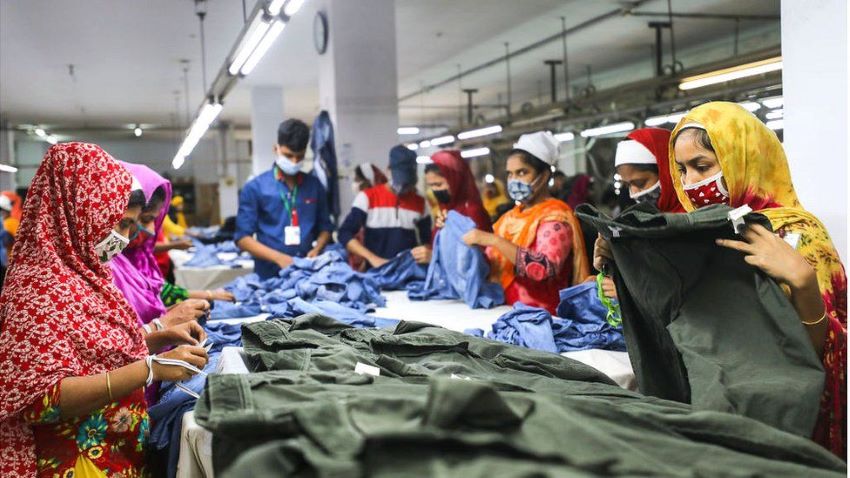
Eager to avoid the higher costs associated with tariffs, several American consumer goods companies are considering shifting, or already have shifted, their supply chains away from China. They are in most cases seeking alternative manufacturers in countries that offer similar manufacturing capacity for a comparable cost.
However, rapid changes to supply chains also may expose companies to greater risks. Establishing compliant, reliable and secure supply chains takes time, and failure to properly vet suppliers can have material consequences.
One US company took 20 years to establish its supply chain in China. To cultivate a partnership, companies typically vet new suppliers by executing multiple inspections and verifying compliance with company-specific policies and codes of conduct. Once suppliers achieve these initial requirements, they have to be monitored on an ongoing basis and must comply with periodic audits. Companies have to invest a significant amount of time and money to establish and maintain a secure supply chain. As China and the United States continue to introduce new tariffs and exchange threats, companies may forego these precautions as they attempt to quickly redirect production. This situation could be exacerbated given that the factories with available capacity to accept new orders are likely to have lower standards.
- 1
- 2
- 3
- 4
- 5
- 6
- 7
- 8
- 9
- 10
Global cotton enters a deficit year in 2026 as supply drop meets logistics risk
The global cotton economy has entered a fragile and sensitive phase. Early projections for the 2026-27 season suggest that world... Read more
India’s textile trade gets a Pacific push as New Zealand FTA removes tariff barr…
India and New Zealand have inked a ‘once-in-a-generation’ Free Trade Agreement (FTA), one that will have a profound impact on... Read more
Lululemon’s world-first nylon circularity push signals a new apparel arms race
The global apparel industry’s circularity narrative is entering a more technically demanding phase. Polyester recycling once the flagship of sustainable... Read more
Beyond the DTC Rush: Levi’s hybrid channel strategy sets a new retail benchmark
The global apparel sector is entering a phase where channel strategy is no longer a tactical lever but a core... Read more
The New Rules of Resale: EPR turning secondhand into fashion’s strategic growth …
The global fashion industry is facing a decisive regulatory and commercial reset. What began as a sustainability narrative around reuse... Read more
The 2027 Mandate: Why denim’s future hinges on verifiable data
For decades, the global denim industry has relied on a narrative of durability, heritage, and authenticity. That narrative is now... Read more
Europe’s textile core unravels as costs, imports and policy pressure bite
Europe’s textile and apparel sector, long seen as a benchmark for craftsmanship and industrial depth, is slipping into a prolonged... Read more
Automation, innovation, regulation are the forces shaping textiles in 2026
The global textile sector has entered a new era. Early 2026 saw the industry breach a $1.06 trillion valuation, reflecting... Read more
The new Brussels rulebook, every EU apparel order is now a balance-sheet risk
The humble export order sheet is undergoing a transformation. What was once a straightforward commercial instrument: SKU, volume, FOB price,... Read more
Why 2026-27 could be a defining cotton year for India’s farm-to-fashion economy
The global cotton economy is entering a more constrained phase, and for India, the implications run far beyond the farm... Read more