Readymade garment workers in Bangladesh will soon benefit from the added security of insurance. Bangladesh Garment Manufacturers and Exporters Association (BGMEA) has directed its member factories to institute worker insurance or face export embargoes.
The country’s central garment sector organisation has also said it would cancel a facility’s membership for denying insurance. BGMEA is prioritising secure work environments and worker safety. Factories that are non-compliant with the direction would be spared from all kinds of facilities BGMEA provides. The organisation would be monitoring insurance implementation closely.
It isn’t uncommon for factory owners to forego insurance installments in favor of pocketing it for profit. Factories opting out of providing insurance won’t be able to export goods without the necessary documentation that only BGMEA can provide. Two of the major services BGMEA provides are issuance of utilisation declaration, a record of raw materials imported duty free, and utilisation permission, a written consent from customs mandatory for the sale of duty-free goods.
BGMEA is one of the largest trade associations in the country representing the readymade garment industry, particularly the woven garment, knitwear and sweater sub-sectors. Started in 1983, BGMEA takes care of an industry that is the backbone of Bangladesh’s economy. The association is dedicated to promoting and facilitating the apparel industry through policy advocacy to the government, services to members, ensuring workers’ rights and social compliance at factories.
- 1
- 2
- 3
- 4
- 5
- 6
- 7
- 8
- 9
- 10
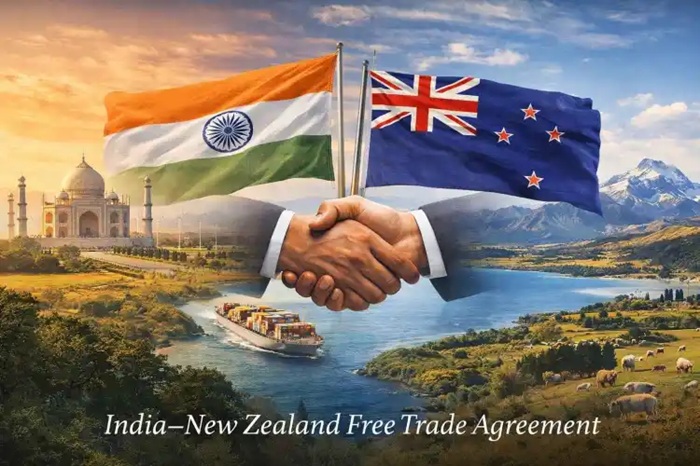
India’s textile trade gets a Pacific push as New Zealand FTA removes tariff barr…
India and New Zealand have inked a ‘once-in-a-generation’ Free Trade Agreement (FTA), one that will have a profound impact on... Read more
Lululemon’s world-first nylon circularity push signals a new apparel arms race
The global apparel industry’s circularity narrative is entering a more technically demanding phase. Polyester recycling once the flagship of sustainable... Read more
Beyond the DTC Rush: Levi’s hybrid channel strategy sets a new retail benchmark
The global apparel sector is entering a phase where channel strategy is no longer a tactical lever but a core... Read more
The New Rules of Resale: EPR turning secondhand into fashion’s strategic growth …
The global fashion industry is facing a decisive regulatory and commercial reset. What began as a sustainability narrative around reuse... Read more
The 2027 Mandate: Why denim’s future hinges on verifiable data
For decades, the global denim industry has relied on a narrative of durability, heritage, and authenticity. That narrative is now... Read more
Europe’s textile core unravels as costs, imports and policy pressure bite
Europe’s textile and apparel sector, long seen as a benchmark for craftsmanship and industrial depth, is slipping into a prolonged... Read more
Automation, innovation, regulation are the forces shaping textiles in 2026
The global textile sector has entered a new era. Early 2026 saw the industry breach a $1.06 trillion valuation, reflecting... Read more
The new Brussels rulebook, every EU apparel order is now a balance-sheet risk
The humble export order sheet is undergoing a transformation. What was once a straightforward commercial instrument: SKU, volume, FOB price,... Read more
Why 2026-27 could be a defining cotton year for India’s farm-to-fashion economy
The global cotton economy is entering a more constrained phase, and for India, the implications run far beyond the farm... Read more
Luxury resale’s next big battle is no longer digital, it is about who controls s…
For nearly a decade, the luxury resale story was written in the language of platforms. Market leadership was measured by... Read more