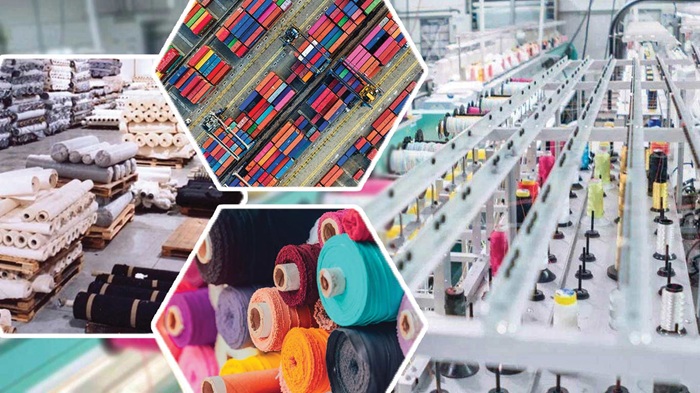
The likes of H&M, Zara and Mango have halted production. With sales plummeting and store closures are happening manufacturers are facing daily order cancellations. H&M has for now closed stores or will close in the US, Germany, two of its key markets, Canada, Portugal, Belgium, Switzerland, Greece, Slovakia, Lithuania, Peru, Ukraine, the Philippines, Malaysia and Cyprus. Inditex has temporarily closed 3,785 stores in 39 markets.
Since these apparel brand have halted production, vendors are at a loss for their next step—and others in the supply chain are at risk of losing their jobs as evaporating orders will see some factories hard pressed to pay their workers. If there’s any light at the end of the supply chain’s present tunnel, it will take a quick turnaround of events and a lockdown lift in the next couple of weeks that would see spending and production start to pick back up. Both situations, however, may be unlikely to unfold in short order. Beyond stalled production, the worry now is whether manufacturers will get paid. As a consequence of the substantial drop in global demand, they are now carefully scrutinizing and evaluating how to adjust and mitigate negative effects, both from a cost and risk perspective.
- 1
- 2
- 3
- 4
- 5
- 6
- 7
- 8
- 9
- 10
Global cotton enters a deficit year in 2026 as supply drop meets logistics risk
The global cotton economy has entered a fragile and sensitive phase. Early projections for the 2026-27 season suggest that world... Read more
India’s textile trade gets a Pacific push as New Zealand FTA removes tariff barr…
India and New Zealand have inked a ‘once-in-a-generation’ Free Trade Agreement (FTA), one that will have a profound impact on... Read more
Lululemon’s world-first nylon circularity push signals a new apparel arms race
The global apparel industry’s circularity narrative is entering a more technically demanding phase. Polyester recycling once the flagship of sustainable... Read more
Beyond the DTC Rush: Levi’s hybrid channel strategy sets a new retail benchmark
The global apparel sector is entering a phase where channel strategy is no longer a tactical lever but a core... Read more
The New Rules of Resale: EPR turning secondhand into fashion’s strategic growth …
The global fashion industry is facing a decisive regulatory and commercial reset. What began as a sustainability narrative around reuse... Read more
The 2027 Mandate: Why denim’s future hinges on verifiable data
For decades, the global denim industry has relied on a narrative of durability, heritage, and authenticity. That narrative is now... Read more
Europe’s textile core unravels as costs, imports and policy pressure bite
Europe’s textile and apparel sector, long seen as a benchmark for craftsmanship and industrial depth, is slipping into a prolonged... Read more
Automation, innovation, regulation are the forces shaping textiles in 2026
The global textile sector has entered a new era. Early 2026 saw the industry breach a $1.06 trillion valuation, reflecting... Read more
The new Brussels rulebook, every EU apparel order is now a balance-sheet risk
The humble export order sheet is undergoing a transformation. What was once a straightforward commercial instrument: SKU, volume, FOB price,... Read more
Why 2026-27 could be a defining cotton year for India’s farm-to-fashion economy
The global cotton economy is entering a more constrained phase, and for India, the implications run far beyond the farm... Read more