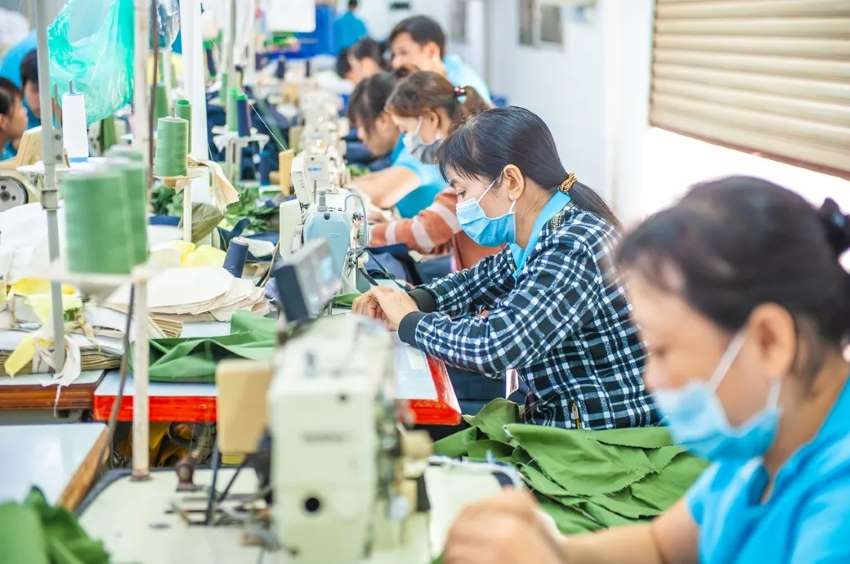
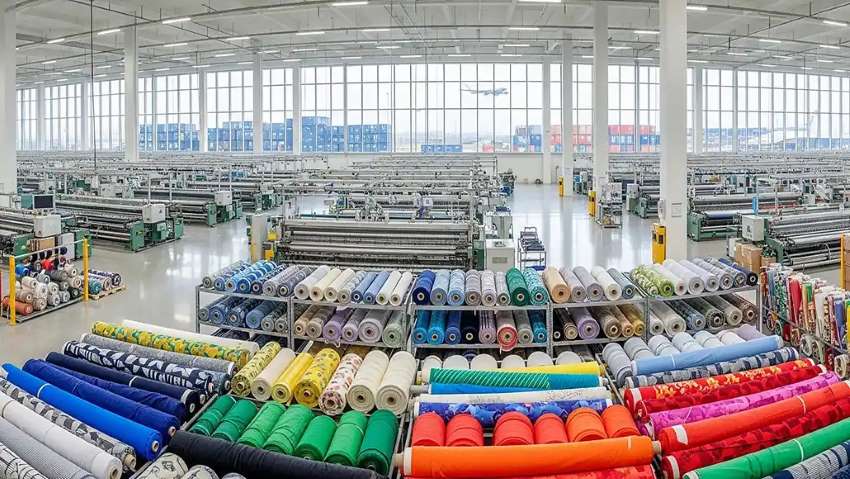
A joint Sino-Dutch project has been launched in the Yangtze River Delta. ‘Sustainable Textiles’ aim is to achieve more sustainability within the supply chain and take the first steps towards a fully circular production cycle. The project supports Dutch fashion brands committed to making their supply chain more sustainable. The project specifically aims at improving the sustainability of dyeing and printing enterprises in the Yangtze River Delta region. The Dutch environmental consulting agency Arcadis is, with support from the Netherlands Consulate General in Shanghai, managing the project for the ten involved companies.
With three modules, the project aims to help participating printing and dyeing enterprises reduce their environmental footprint and control occupational safety and health risks. The environmental pollution control module discusses the green supply chain. Topics include chemical management, waste gas treatment, waste disposal and land pollution control. Also, solutions to re-use waste water are introduced. The energy consumption module discusses solutions for printing and dyeing enterprises to reduce energy consumption, use of chemicals and water resources. The occupational safety and health module aims at creating a safe and healthy working environment. It includes on-site hazard assessment and guidance for enterprises.
Producing a cotton shirt requires about 2700 liters of water, which equals a two year drinking supply for an average person. Besides use of resources, it’s also about the waste being produced. When not handled safely, chemicals in this process can cause serious pollution and affect aquatic plants and algae or crops and soils.
- 1
- 2
- 3
- 4
- 5
- 6
- 7
- 8
- 9
- 10
Bharat Tex 2026: Redefining the global textile value chain
Union Minister of Textiles, Giriraj Singh, has officially unveiled Bharat Tex 2026, signaling a significant leap in India’s influence over... Read more
Intertextile Shanghai Spring 2026: A hub for global textile innovation
The textile industry’s pulse is quickening as Intertextile Shanghai Apparel Fabrics – Spring Edition prepares to open its doors from... Read more
Moscow Fashion Week 2026: Blending sustainable innovation with timeless glamour
Scheduled to run from March 14-19, 2026 in Moscow, Russia, the Moscow Fashion Week (MFW) is cementing its status as... Read more
The Store as Stage: How fashion is crafting immersive consumer worlds
The North American fashion retail sector in 2026 is shedding its product-first identity and shifting towards a model that values... Read more
Turning the supply chain upside down, on-demand production reshapes apparel
The global fashion industry, long celebrated for its creativity and scale, is facing a structural reckoning. For decades, retailers and... Read more
Intertex Milano 2026 - A global nexus for textile innovation
Intertex Milano is set to return this summer, confirming its status as a premier international destination for the textile and... Read more
Primark at crossroads as AB Foods weighs spin-off amid digital and Lefties press…
The long-standing supremacy of Europe’s budget fashion champion, Primark, is facing a test. As of February 2026, Associated British Foods... Read more
Vietnam, Bangladesh, Cambodia drive US apparel imports in 2025
The 2025 year-end data for the US apparel sector reveals an industry in structural flux. Despite aggressive tariff measures and... Read more
The New Dress Code: Sportswear’s takeover of modern wardrobes
For much of the last decade, fashion retail has been defined by volatility. Trends have shortened, discount cycles have intensified... Read more
Hemp finds its moment in India’s $500 billion American trade calculus
In the grand arithmetic of India’s expanding trade engagement with the US, the headlines usually gravitate toward oil cargoes, aircraft... Read more