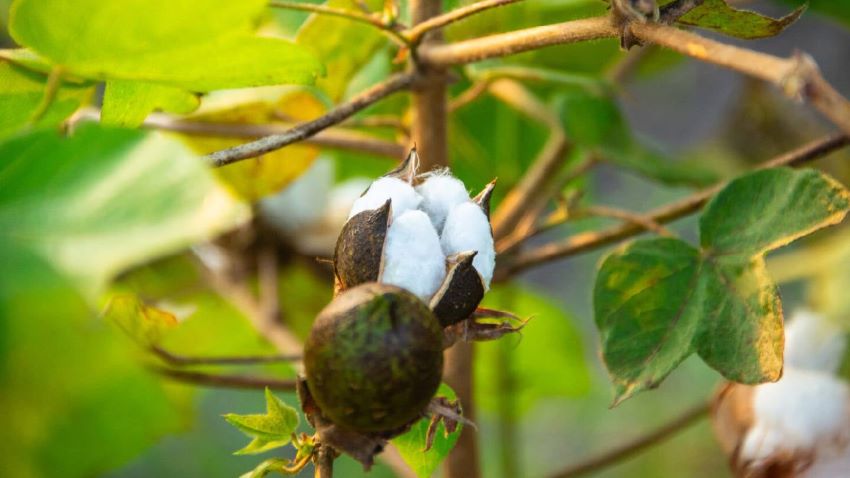
As per a India Ratings and Research (Ind-Ra) report, domestic cotton prices to remain under pressure in 2016-17 due to continuation of Chinese direct subsidy-based policy and lower demand from spinning mills. Though Bangladesh, Pakistan and Vietnam have replaced China with India as a supplier, volumes are picking up at a slow pace, and are unlikely to match Chinese demand. During April-December 2015 India produced 28.5 million bales as against 29.5 million bales in FY15 and 31 million bales in FY14 against which exports have been 5.3 million bales (4.2 million bales in FY15 and 9.3 million bales in FY 14).
In CY17 (International Cotton Year, which commences from August and ends in July), the ratings agency expects cotton prices to stay firm. Domestic prices had declined in CY16 in line with Ind-Ra's expectations and are expected to remain under pressure in CY17 as well. According to the rating agency, the international cotton prices, however, will remain sensitive to the release of cotton by China from its cotton reserves, which Ind-Ra estimates to be around 59 per cent of global cotton stock at FY16.
Chinese cotton reserves will directly impact the quantum of imports in that country and consequently, global stock levels outside China, the report added. The cotton industry is likely to revive moderately in CY17 as exports to Vietnam, Pakistan, and Bangladesh grow. Vietnam is likely to increase its spindles capacity by 30 per cent in FY17.
The local cotton production in Pakistan and Bangladesh is unable to keep pace with the increasing demand for apparels from these locations, providing opportunities to Indian exporters.
- 1
- 2
- 3
- 4
- 5
- 6
- 7
- 8
- 9
- 10
Global cotton enters a deficit year in 2026 as supply drop meets logistics risk
The global cotton economy has entered a fragile and sensitive phase. Early projections for the 2026-27 season suggest that world... Read more
India’s textile trade gets a Pacific push as New Zealand FTA removes tariff barr…
India and New Zealand have inked a ‘once-in-a-generation’ Free Trade Agreement (FTA), one that will have a profound impact on... Read more
Lululemon’s world-first nylon circularity push signals a new apparel arms race
The global apparel industry’s circularity narrative is entering a more technically demanding phase. Polyester recycling once the flagship of sustainable... Read more
Beyond the DTC Rush: Levi’s hybrid channel strategy sets a new retail benchmark
The global apparel sector is entering a phase where channel strategy is no longer a tactical lever but a core... Read more
The New Rules of Resale: EPR turning secondhand into fashion’s strategic growth …
The global fashion industry is facing a decisive regulatory and commercial reset. What began as a sustainability narrative around reuse... Read more
The 2027 Mandate: Why denim’s future hinges on verifiable data
For decades, the global denim industry has relied on a narrative of durability, heritage, and authenticity. That narrative is now... Read more
Europe’s textile core unravels as costs, imports and policy pressure bite
Europe’s textile and apparel sector, long seen as a benchmark for craftsmanship and industrial depth, is slipping into a prolonged... Read more
Automation, innovation, regulation are the forces shaping textiles in 2026
The global textile sector has entered a new era. Early 2026 saw the industry breach a $1.06 trillion valuation, reflecting... Read more
The new Brussels rulebook, every EU apparel order is now a balance-sheet risk
The humble export order sheet is undergoing a transformation. What was once a straightforward commercial instrument: SKU, volume, FOB price,... Read more
Why 2026-27 could be a defining cotton year for India’s farm-to-fashion economy
The global cotton economy is entering a more constrained phase, and for India, the implications run far beyond the farm... Read more