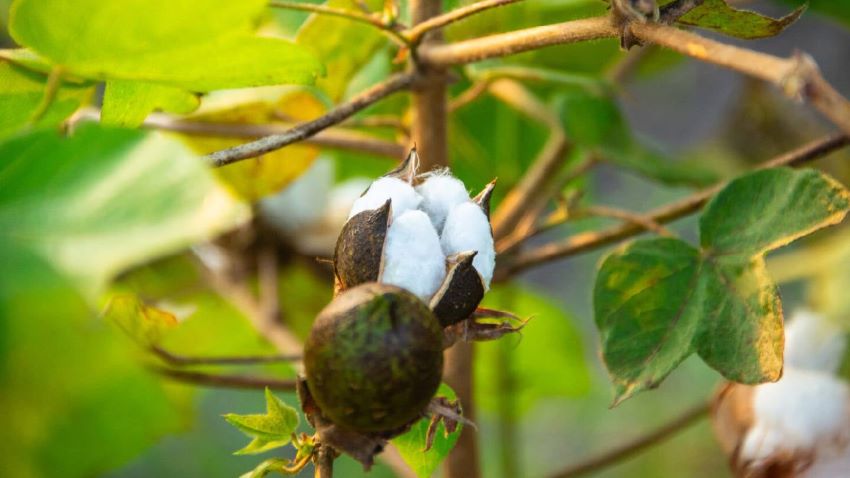
The Cotton Development and Research Association (CDRA) has launched kapas plucking machines for farmers. The association had been making attempts to manufacture cotton picking machines to suit Indian cotton crop conditions and bring down the cost for farmers since there is a shortage of labor for cotton picking.
It developed the battery-powered, portable, handheld kapas plucking machine in association with Coimbatore-based Point Industries. The machine is provided with a cotton collection bag. With manual picking, a farm worker will be able to pick 13 kg to 15 kg of kapas a day and the farmer pays Rs 230 to Rs 250 as wages. This works out to over 35 per cent of the kapas’ cost. With the machine, the cost can be reduced to less than seven per cent of the kapas’ price.
The association would appoint distributors for sale of the machine to farmers. The response to the machine so far has been encouraging. The association has appealed to the state government to reduce the value added tax on the machine to five per cent from the current 14.5 per cent. It had conducted several field trials before launching it for sale.
- 1
- 2
- 3
- 4
- 5
- 6
- 7
- 8
- 9
- 10
India’s textile trade gets a Pacific push as New Zealand FTA removes tariff barr…
India and New Zealand have inked a ‘once-in-a-generation’ Free Trade Agreement (FTA), one that will have a profound impact on... Read more
Lululemon’s world-first nylon circularity push signals a new apparel arms race
The global apparel industry’s circularity narrative is entering a more technically demanding phase. Polyester recycling once the flagship of sustainable... Read more
Beyond the DTC Rush: Levi’s hybrid channel strategy sets a new retail benchmark
The global apparel sector is entering a phase where channel strategy is no longer a tactical lever but a core... Read more
The New Rules of Resale: EPR turning secondhand into fashion’s strategic growth …
The global fashion industry is facing a decisive regulatory and commercial reset. What began as a sustainability narrative around reuse... Read more
The 2027 Mandate: Why denim’s future hinges on verifiable data
For decades, the global denim industry has relied on a narrative of durability, heritage, and authenticity. That narrative is now... Read more
Europe’s textile core unravels as costs, imports and policy pressure bite
Europe’s textile and apparel sector, long seen as a benchmark for craftsmanship and industrial depth, is slipping into a prolonged... Read more
Automation, innovation, regulation are the forces shaping textiles in 2026
The global textile sector has entered a new era. Early 2026 saw the industry breach a $1.06 trillion valuation, reflecting... Read more
The new Brussels rulebook, every EU apparel order is now a balance-sheet risk
The humble export order sheet is undergoing a transformation. What was once a straightforward commercial instrument: SKU, volume, FOB price,... Read more
Why 2026-27 could be a defining cotton year for India’s farm-to-fashion economy
The global cotton economy is entering a more constrained phase, and for India, the implications run far beyond the farm... Read more
Luxury resale’s next big battle is no longer digital, it is about who controls s…
For nearly a decade, the luxury resale story was written in the language of platforms. Market leadership was measured by... Read more