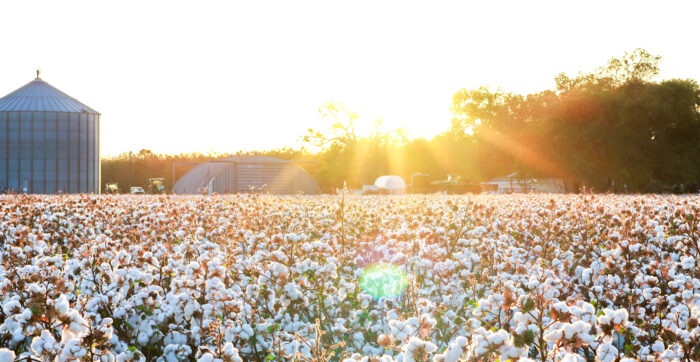
Some forward-thinking brands are aiming at creating a closed-loop textile supply chain. To bring about a closed-loop supply chain, industry players across the world are finding innovative ways to recycle and reuse, and some are even creating entirely new fibers and textiles from eco-friendly — and often unexpected — materials. To create a more sustainable process, some textile companies are developing alternative fibers from waste products, finding innovative ways to recycle fibers, and even fermenting agricultural products to make new materials. In Germany, Qmilk turns spoiled milk into fabric by drying out the milk and making it into a dough, from which a thin protein-based fiber is created. An Italian company is using citrus byproducts to create a spinnable fabric. In California and Japan, companies are working with sugar, water, salts, and yeast to make fermented spider silk thread. Pineapple leaves from plantations in the Philippines are used as faux leather.
Besides expanding the range of materials, textile suppliers are also looking at o reducing waste by recycling fibers. Evrnu, for example, uses cotton garment waste to make a fine fiber with a process using 98 percent less water and 90 percent less carbon emissions than cotton and polyester respectively. Similarly, Circular Systems, a starup, is taking factory floor scraps to turn them into yarn instead of burning them. This increases resource efficiency, by 20 per cent of textiles going into the factory end up in the cutting room floor. Fabric production has a big footprint. Overall, the world produces more than a 100 million tons of fiber a year. Millions of tons of new clothing, footwear, sheets, towels, and other products are being produced annually. The United States sends approximately 21 billion pounds of textile waste to landfills yearly.
- 1
- 2
- 3
- 4
- 5
- 6
- 7
- 8
- 9
- 10
Cotton markets hold firm as tariffs, higher supply reshape global fiber economic…
In a year marked by tariff escalations, geopolitical brinkmanship and a recalibration of global trade flows, the international cotton market... Read more
Beyond Cotton How Kapok could redefine sustainable insulation in textiles
In the lush, humid heart of Southeast Asian rainforests stands a giant, a silent sentinel of the forest canopy. Growing... Read more
Bharat Tex 2026: Redefining the global textile value chain
Union Minister of Textiles, Giriraj Singh, has officially unveiled Bharat Tex 2026, signaling a significant leap in India’s influence over... Read more
Intertextile Shanghai Spring 2026: A hub for global textile innovation
The textile industry’s pulse is quickening as Intertextile Shanghai Apparel Fabrics – Spring Edition prepares to open its doors from... Read more
Moscow Fashion Week 2026: Blending sustainable innovation with timeless glamour
Scheduled to run from March 14-19, 2026 in Moscow, Russia, the Moscow Fashion Week (MFW) is cementing its status as... Read more
The Store as Stage: How fashion is crafting immersive consumer worlds
The North American fashion retail sector in 2026 is shedding its product-first identity and shifting towards a model that values... Read more
Turning the supply chain upside down, on-demand production reshapes apparel
The global fashion industry, long celebrated for its creativity and scale, is facing a structural reckoning. For decades, retailers and... Read more
Intertex Milano 2026 - A global nexus for textile innovation
Intertex Milano is set to return this summer, confirming its status as a premier international destination for the textile and... Read more
Primark at crossroads as AB Foods weighs spin-off amid digital and Lefties press…
The long-standing supremacy of Europe’s budget fashion champion, Primark, is facing a test. As of February 2026, Associated British Foods... Read more
Vietnam, Bangladesh, Cambodia drive US apparel imports in 2025
The 2025 year-end data for the US apparel sector reveals an industry in structural flux. Despite aggressive tariff measures and... Read more