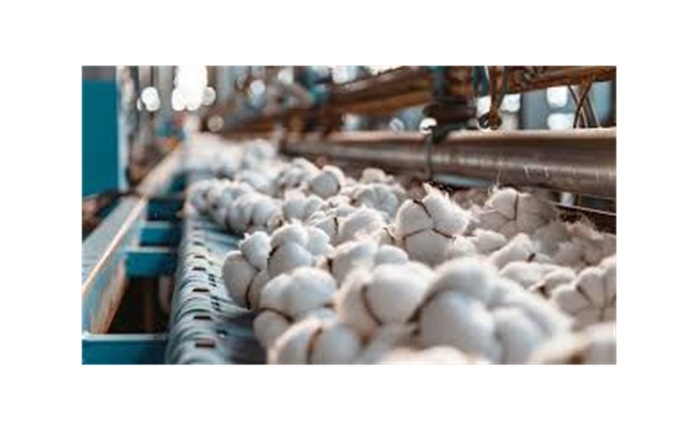
A team of international scientists from Israel, Germany and Austria has used a biological approach to impart functionality to cotton by incorporating biological molecules. External biological molecules that contain glucose moieties with specific functionalities were incorporated to upland cotton in vitro. The in vitro cultures were incubated with glucose moieties that could penetrate through the cell wall to be incorporated into fibers. Glucose moieties with magnetic complexes could enable cotton to be magnetic.
The incorporation of biological molecules enables fibers to have functionalities that are durable. Washability, durability and wearability are some of the challenges faced by the smart textiles sector. The exploitation of biological methods may give new opportunities for natural fibers to penetrate into the technical textiles sector. This approach can be adapted to other fibers such as flax and bamboo.
It would be useful for the cotton industry if such efforts translate to the farm level to develop functional fibers directly from plants. Cotton is known for its versatility, performance and natural comfort. It’s used to make all kinds of clothes and home wares as well as for industrial purposes like tarpaulins, tents, hotel sheets and army uniforms. Finding value-added applications for cotton, like in wearable smart textiles, will be the next phase of R& D in the cotton sector.
- 1
- 2
- 3
- 4
- 5
- 6
- 7
- 8
- 9
- 10
The second life economy gets a boost as resale outgrows traditional apparel reta…
For decades, resale existed in the margins of the apparel economy, thrift stores, peer-to-peer marketplaces, and charity bins quietly absorbing... Read more
Rising polyester costs shake India’s textile manufacturing hubs
India’s synthetic textile industry is confronting a sudden and destabilizing price shock that is reverberating across its vast manufacturing ecosystem.... Read more
Cotton markets hold firm as tariffs, higher supply reshape global fiber economic…
In a year marked by tariff escalations, geopolitical brinkmanship and a recalibration of global trade flows, the international cotton market... Read more
Beyond Cotton How Kapok could redefine sustainable insulation in textiles
In the lush, humid heart of Southeast Asian rainforests stands a giant, a silent sentinel of the forest canopy. Growing... Read more
Bharat Tex 2026: Redefining the global textile value chain
Union Minister of Textiles, Giriraj Singh, has officially unveiled Bharat Tex 2026, signaling a significant leap in India’s influence over... Read more
Intertextile Shanghai Spring 2026: A hub for global textile innovation
The textile industry’s pulse is quickening as Intertextile Shanghai Apparel Fabrics – Spring Edition prepares to open its doors from... Read more
Moscow Fashion Week 2026: Blending sustainable innovation with timeless glamour
Scheduled to run from March 14-19, 2026 in Moscow, Russia, the Moscow Fashion Week (MFW) is cementing its status as... Read more
The Store as Stage: How fashion is crafting immersive consumer worlds
The North American fashion retail sector in 2026 is shedding its product-first identity and shifting towards a model that values... Read more
Turning the supply chain upside down, on-demand production reshapes apparel
The global fashion industry, long celebrated for its creativity and scale, is facing a structural reckoning. For decades, retailers and... Read more
Intertex Milano 2026 - A global nexus for textile innovation
Intertex Milano is set to return this summer, confirming its status as a premier international destination for the textile and... Read more