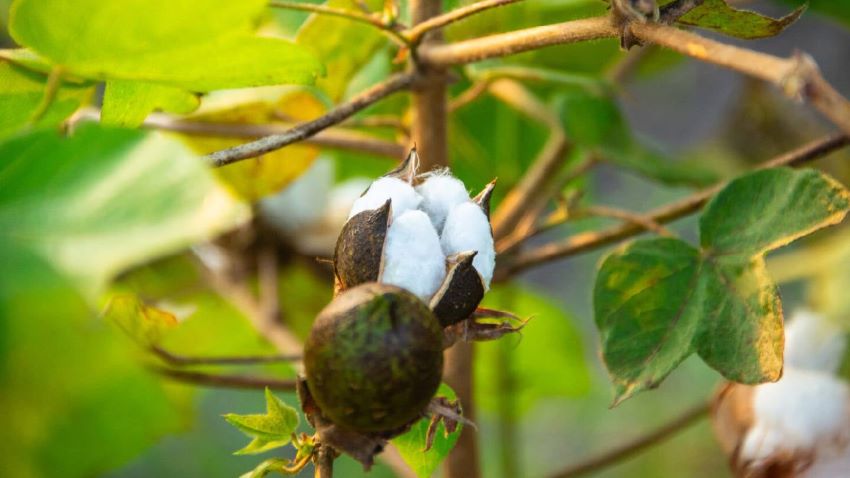
Better Cotton Initiative has joined the United Nations Fashion Industry Charter for Climate Action. Better Cotton Initiative is a non profit that promotes better standards in cotton farming. By signing the charter, the Better Cotton Initiative is demonstrating its will to ensure cotton production is on the path to a low-carbon future.
The charter is a series of targets with the aim of reducing greenhouse gas emissions by 30 per cent by 2030 and achieving zero emissions by 2050. Launched in December, in Poland, the charter has been signed by over 40 companies such as H&M, Stella McCartney, Adidas, Inditex, Hugo Boss, PVH and Levi Strauss. Levi Strauss is a vocal advocate for environmental protection. Levi Strauss runs a program in five major markets - Japan, the United States, Canada, the United Kingdom and Germany - that gives customers a 15 per cent discount on a new Levi’s item if they donate any old clothes (they don’t have to be Levi’s) to be recycled. By 2025, Levi Strauss plans to manufacture all of its products from recycled cotton. It would be the first company to do so.
Climate change has devastating effects on the apparel industry, the communities in which the industry operates, and the world at large.
- 1
- 2
- 3
- 4
- 5
- 6
- 7
- 8
- 9
- 10
Global cotton enters a deficit year in 2026 as supply drop meets logistics risk
The global cotton economy has entered a fragile and sensitive phase. Early projections for the 2026-27 season suggest that world... Read more
India’s textile trade gets a Pacific push as New Zealand FTA removes tariff barr…
India and New Zealand have inked a ‘once-in-a-generation’ Free Trade Agreement (FTA), one that will have a profound impact on... Read more
Lululemon’s world-first nylon circularity push signals a new apparel arms race
The global apparel industry’s circularity narrative is entering a more technically demanding phase. Polyester recycling once the flagship of sustainable... Read more
Beyond the DTC Rush: Levi’s hybrid channel strategy sets a new retail benchmark
The global apparel sector is entering a phase where channel strategy is no longer a tactical lever but a core... Read more
The New Rules of Resale: EPR turning secondhand into fashion’s strategic growth …
The global fashion industry is facing a decisive regulatory and commercial reset. What began as a sustainability narrative around reuse... Read more
The 2027 Mandate: Why denim’s future hinges on verifiable data
For decades, the global denim industry has relied on a narrative of durability, heritage, and authenticity. That narrative is now... Read more
Europe’s textile core unravels as costs, imports and policy pressure bite
Europe’s textile and apparel sector, long seen as a benchmark for craftsmanship and industrial depth, is slipping into a prolonged... Read more
Automation, innovation, regulation are the forces shaping textiles in 2026
The global textile sector has entered a new era. Early 2026 saw the industry breach a $1.06 trillion valuation, reflecting... Read more
The new Brussels rulebook, every EU apparel order is now a balance-sheet risk
The humble export order sheet is undergoing a transformation. What was once a straightforward commercial instrument: SKU, volume, FOB price,... Read more
Why 2026-27 could be a defining cotton year for India’s farm-to-fashion economy
The global cotton economy is entering a more constrained phase, and for India, the implications run far beyond the farm... Read more