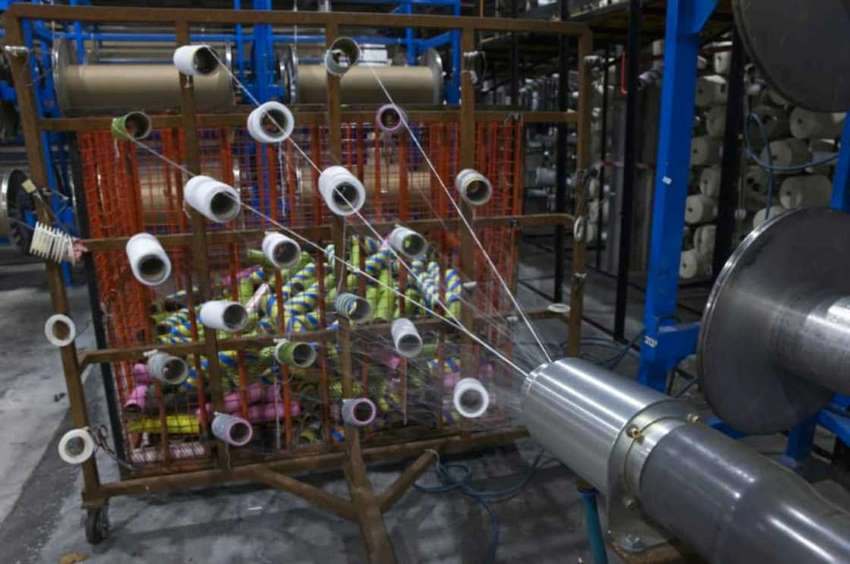
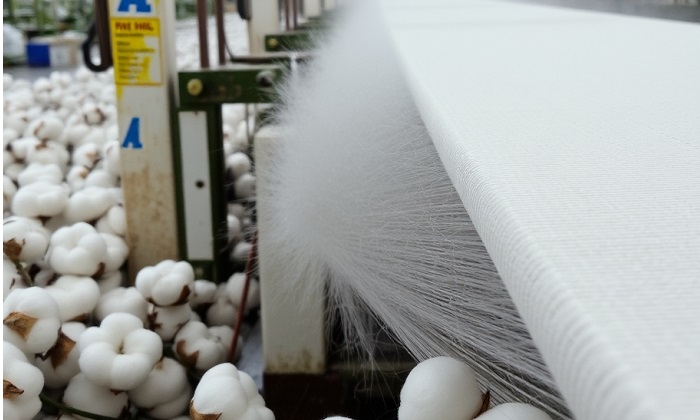
Some 16 textile mills that had shut down in Bangladesh will be reopened under a public-private partnership. The aim is to combine the resources of the state and the skilled manpower of the private sector for further progress of the country’s textile industry. The public-private partnership project is expected to lead to maximum utilization of manpower and resources; profit maximization; risk minimization; reduced cost.
Meanwhile textile mills in Bangladesh want the five per cent advance tax proposed on import of textile machinery and spare parts to be withdrawn. They say the proposed taxes would discourage investment in the sector and halt expansion of textile mills in the country. The five per cent tax is also proposed on some raw materials used in textile mills such as polyester, tencel fiber and viscose. As of now import of textile machinery is subject to only one per cent customs duty. There are 430 yarn manufacturing mills, 802 fabric manufacturing mills, and 244 dyeing-printing finishing mills in Bangladesh. Proposals the industry has welcomed are those relating to keep the corporation tax rate at 15 per cent for the textile sector for the next three years and a one per cent cash incentive against exports of apparel goods to traditional markets.

- 1
- 2
- 3
- 4
- 5
- 6
- 7
- 8
- 9
- 10
Why European consumers are spending more but buying less fashion
For much of the last two decades, the European fashion industry operated under the assumption that rising consumer wealth would... Read more
Why US apparel prices defied inflation while product quality improved
As inflation reshapes nearly every aspect of American household spending, one consumer category continues to stand apart. Housing costs have... Read more
The Resale Revolution: Vinted’s marketplace model reshapes European retail
The French fashion market has reached a turning point. In a development that highlights the growing influence of circular commerce,... Read more
France declares war on ultra-fast fashion with new green law, will reshape globa…
France has become the first major economy to legislate specifically against the ultra-fast fashion business model, a watershed moment for... Read more
France declares war on ultra-fast fashion with new green law, will reshape globa…
France has become the first major economy to legislate specifically against the ultra-fast fashion business model, a watershed moment for... Read more
Click-and-Collect: Why retailers are turning pickup counters into sales machines
Modern retail has changed the role of the physical store. Once viewed primarily as a point of sale or inventory... Read more
Why fashion e-commerce returns persist despite smarter sizing technology
For over a decade, the fashion sector has invested heavily in virtual fitting rooms, AI-powered size recommendations, and 3D body... Read more
A Quest for Essence: Unveiling the 2027 A/W Trends at Intertextile Shanghai Appa…
As the global textile industry looks toward the upcoming season, the Intertextile Shanghai Apparel Fabrics – Autumn Edition stands ready... Read more
Beyond globalization, local consumer behavior rewriting fashion retail strategy
The traditional blueprint for global fashion expansion is being rewritten. For decades, apparel companies assumed globalization would gradually create a... Read more
Virtual wardrobes redraw retail boundaries as gaming platforms become fashion ec…
The boundary between physical clothing and digital apparel is rapidly eroding as gaming environments evolve into fully functioning consumer markets.... Read more