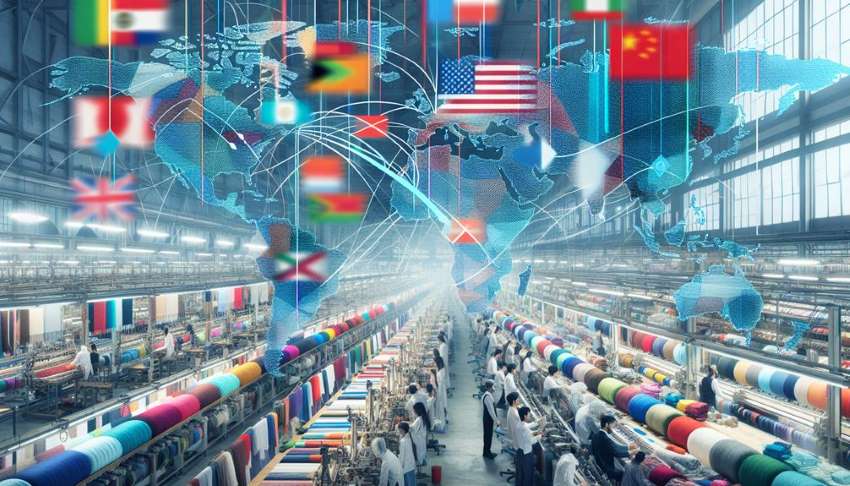
Information Technology (IT) has created at least 40,000 jobs in the readymade garment sector of Bangladesh. This indicates the extent to which digitalization has given a boost to the biggest export earning sector of the country.
During the last one year Bangladesh has produced IT engineers and developed an IT network to provide jobs in the readymade garment sector. The old system is no more capable of handling the huge volume of activities involved in this sector.
The plan is to cover the entire sector within the IT network. As international markets are run by IT technologies, digitalization of the readymade garment trade would enable the country to further enhance apparel exports. The necessary legal frameworks have been created to introduce e-commerce and e-payment in limited areas to deliver the services in an easier, transparent and accountable manner. Measures have also been taken to introduce electronic money order and mobile cash card. With the beginning of mobile banking service, more than 1.5 crore clients have been receiving the service.
IT enables faster processes. It has been found in the automobile industry that a car that can be made in three months can with the help of IT be made in an amazing 17 minutes.

- 1
- 2
- 3
- 4
- 5
- 6
- 7
- 8
- 9
- 10
Crude correction gives polyester a fresh cost advantage
A sustained correction in crude oil and petrochemical benchmarks is reshaping the economics of synthetic yarns, widening the cost gap... Read more
Chinese apparel majors trade volume for margin in premiumisation push
China’s apparel and consumer goods market is moving beyond the traditional volume-at-any-cost model, with leading domestic brands betting on premium... Read more
India’s MMF push faces rising risk from China’s petrochemical dominance
India’s ambition to build a globally competitive synthetic textile industry is facing constraints as downstream capacity alone cannot solve: concentration... Read more
Shein’s Vietnam retreat exposes the limits of nearshoring
The global apparel industry has spent the past few years pursuing a straightforward strategy: reduce dependence on China by moving... Read more
Regional pavilions compete on fiber strengths and supply chain niches at Yarn Ex…
The trade floor at Yarn Expo Autumn 2026 in Shanghai, held between Aug 25-27, capitalizing on a sharp rebound in... Read more
Inside activewear's shift from stitched mesh to precision engineered textiles
The global functional apparel market, on track to touch $640 billion, is looking at a production shift as activewear manufacturers... Read more
Brazil’s cotton dominance puts Asian spinners on a new sourcing map
Brazil’s emergence as the world’s largest cotton exporter is no longer simply an agricultural success story. It has given a... Read more
Textile industry sees long-term growth but $100-bn export goal stays a stretch: …
India’s textile and apparel industry is entering a phase of optimism, but that confidence is tempered by a hard export... Read more
Apparel trade slumps as global textile mills move upstream
Global manufacturing is growing, but finished apparel is failing to capture that growth. United Nations Industrial Development Organization (UNIDO) data... Read more
Global apparel value chain converges in Shanghai as Intertextile Autumn 2026 ope…
The global apparel and textile community gathered in full force yesterday, August 25, 2026, as the Autumn Edition of Intertextile... Read more