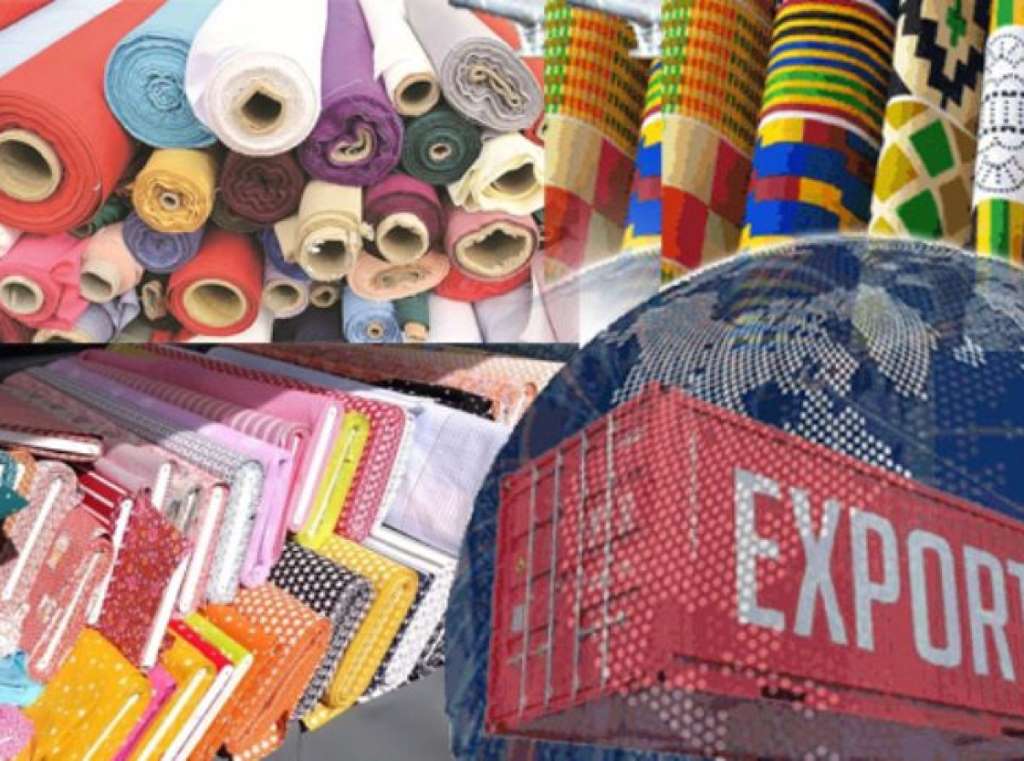
Global manufacturing is growing, but finished apparel is failing to capture that growth. United Nations Industrial Development Organization (UNIDO) data shows global manufacturing output grew 3.1 per cent year-on-year, led by medium-high and high-technology industries, which grew 4.3 per cent. Wearing apparel, however, remained one of the weakest-performing industrial segments.
Trade data from nine major apparel-producing countries reinforces this. Their combined apparel exports declined $2.61 billion to $97.6 billion, a 2.6 per cent dip. The decline was concentrated in non-knitted garments, which accounted for about 80 per cent of the overall export loss.
Table: Global, Indian manufacturing sector overview
|
Industrial & trade indicator |
Global benchmark |
Indian textile sector performance |
Supply chain implication |
|
Manufacturing Output Growth |
+3.1% YoY (UNIDO) |
+2.1% Overall Export Growth (Rs 3.16 lakh cr) |
Intermediate industrial goods outpacing apparel exports |
|
Apparel Trade Movement |
-$2.61 Billion across 9 Hubs |
RMG Exports: Rs 1,39,349.6 cr (+2.9%) |
Shifts toward flexible knits over structured wovens |
|
Man-Made Fiber (MMF) Segment |
>78% Global Fiber Consumption |
MMF Yarn/Fabrics: Rs 42,687.8 cr (+3.6%) |
Higher margin realization via synthetic blends |
|
Cotton Yarn & Fabric Exports |
Global Stock Deficit (-6.0%) |
Stable Exports at Rs 1,02,399.7 cr |
Domestic mill use absorbing raw fiber surplus |
The dip does not necessarily signal weaker consumer demand for textiles. Instead, it points to a reconfiguration of where value is being created. Western retailers are carrying leaner inventories, placing smaller and more frequent orders, and shortening supply chains. This favours flexible knitting and regional fabric production over long-lead, bulk woven-garment manufacturing.
India and Türkiye, which together accounted for around a quarter of the dollar decline, reflected the transition particularly well. Their traditional garment businesses face margin pressure even as textile mills position themselves as suppliers of yarns, fibres and engineered fabrics.
Cotton squeeze grows
The upstream shift is also being reinforced by raw-material economics. USDA projections point to a tightening global cotton balance in 2026/27. World cotton production is expected to fall 5.5 per cent, or 6.6 million bales, to 116 million bales. At the same time, global mill consumption is projected to rise 1.4 per cent to 121.8 million bales, the highest level in six years.
China, India and Pakistan are expected to account for roughly 75 per cent of the increase in mill consumption. Consequently, global ending stocks are projected to decline 6 per cent to 71.2 million bales.
Table: Global and Indian cotton market scenario
|
USDA cotton market |
Global supply volume |
India market share |
Impact on Indian mills |
|
World Cotton Crop Production |
116.0 mn bales (-5.5%) |
Domestic Crop & Imports Feed Local Mills |
Input cost pressures driving MMF fiber blending |
|
Global Mill Processing Volume |
121.8 mn bales (+1.4%) |
India Consumption: 25.7 mn bales (21%) |
High domestic mill utilization supports yarn output |
|
Ending Inventory Balances |
71.2 mn bales (-6.0%) |
Kasturi Cotton Quality Program Expansion |
Premium pricing realization for certified cotton |
|
Yarn & Fabric Market Value |
Recovering Global Prices (90¢/lb) |
Cotton Yarn Exports Up 16% to Regional Hubs |
Shift from raw cotton exports to spun yarn products |
For mills, this creates a difficult cost equation. Cotton prices approaching 90 cents per pound increase the risk of margin erosion, particularly for manufacturers dependent on commodity yarns and basic apparel. That is growing investment in man-made fibres. Polyester, filament yarns and recycled synthetic blends now account for over three-quarters of global fibre consumption. Their appeal goes beyond price: they offer stretch, durability, moisture management and other performance characteristics increasingly demanded by activewear and functional apparel.
Trade corridors are changing
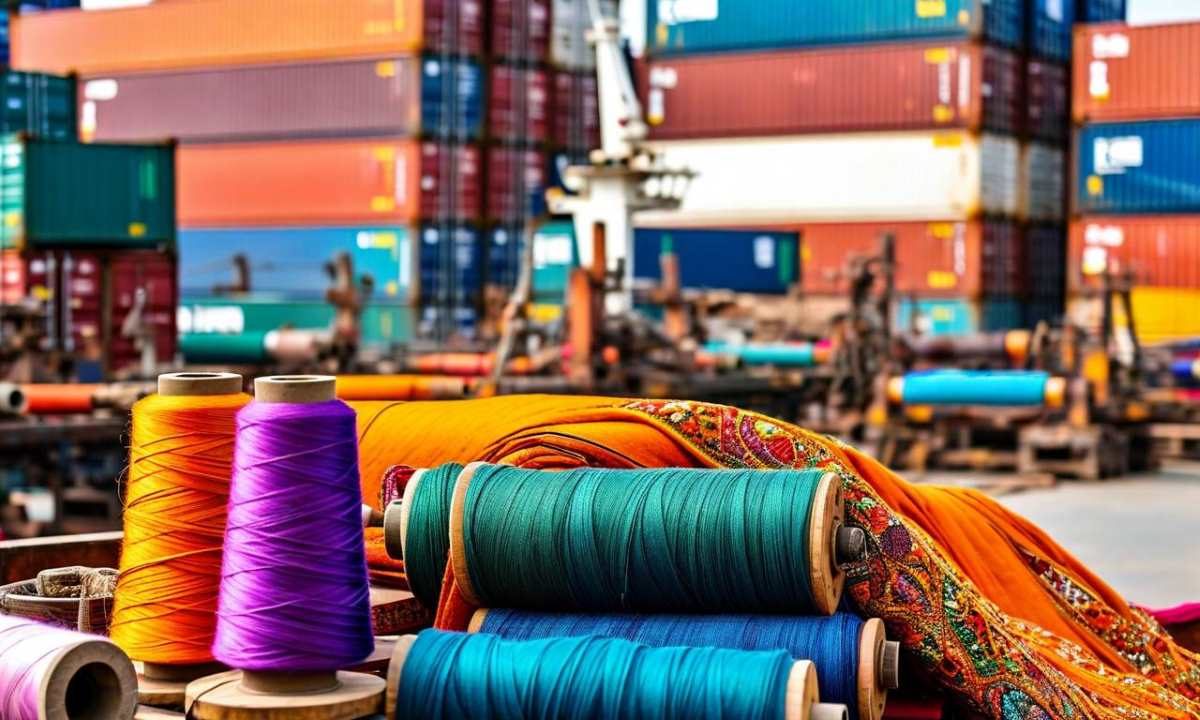
The most significant development may be the emergence of a new division of labour between fibre-producing countries and regional fabric and garment hubs. India, for instance, is simultaneously experiencing pressure in finished apparel exports and opportunities in intermediate materials. Its mills exported $264.77 million in synthetic yarns and $138.91 million in cotton yarns and woven fabrics to processing and assembly markets including Türkiye, North Africa and Eastern Europe.
The model is commercially logical. Instead of shipping finished garments thousands of kilometres to European markets, suppliers can export yarns and fabrics to closer manufacturing centres. These hubs can then convert them into smaller batches of finished products closer to the consumer.
Türkiye is particularly well placed for this model. While its garment exports face pricing pressure in European markets, its textile mills are importing yarn and fibre from India and Central Asia and converting these materials into specialised fabrics using high-speed shuttleless looms and circular knitting technology. For European brands, the attraction is speed. Regional production reduces ocean transit times and allows buyers to respond more quickly to changing fashion demand.
The margin moves upstream
This restructuring is changing the economics of the textile value chain. Commodity cut-and-sew manufacturing remains vulnerable to labour costs, excess capacity, volatile orders and retailer price pressure. Intermediate materials, by contrast, can provide greater differentiation.
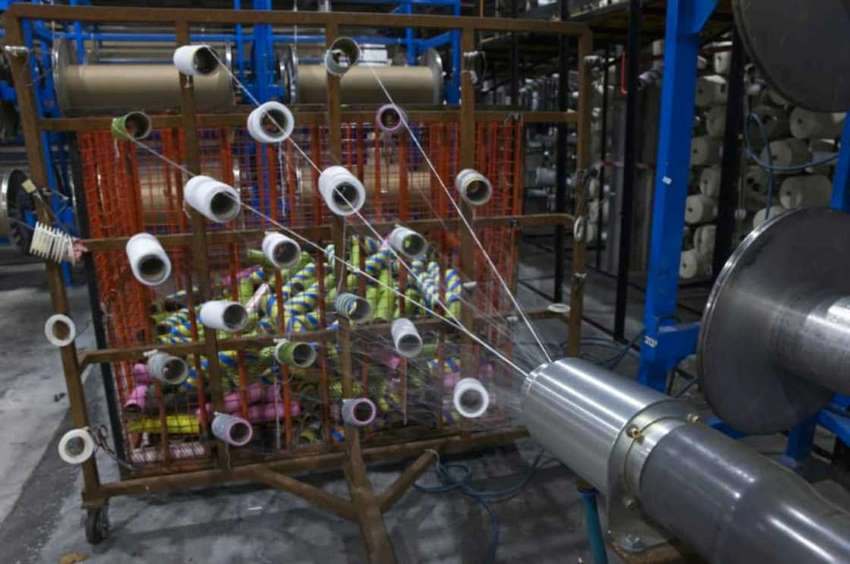
The opportunity lies in specialised yarn formulations, synthetic blending, recycled fibres, stretch fabrics, technical textiles and rapid-response finishing. Mills that control these capabilities can become strategic suppliers rather than interchangeable vendors. Vardhman Textiles is an example of this strategy. As conventional garment demand fell, the integrated Indian textile manufacturer shifted capacity towards higher-value blended yarns, stretch-matrix fabrics and technical textiles for regional processing markets.
Modernising air-jet spinning and developing recycled polyester blending capabilities allows such mills to compete on product specification and supply reliability rather than simply on commodity prices. The strategic objective is clear: capture more value before the material reaches the garment factory.
Compliance becomes a competitive tool
Regulation is further strengthening the case for upstream investment. European buyers increasingly require greater visibility over fibre origins, production processes, emissions and material composition. Carbon-related trade measures, evolving rules of origin and digital product passport requirements are pushing suppliers towards end-to-end traceability.
This creates a divide between manufacturers that can document their supply chains and those that cannot. Mills with digital tracking, certified materials, recycled-fibre capabilities and energy-efficient production systems will be better positioned to serve premium markets. The result is a paradox for global textiles. Finished apparel trade is weakening even as the broader textile manufacturing ecosystem becomes more technologically sophisticated.
From volume to value
The global apparel slowdown therefore should not be read simply as a demand crisis. It is increasingly a value-chain migration. Retailers want lower inventories, faster replenishment and shorter supply chains. Cotton shortages are encouraging fibre diversification. European buyers want regional responsiveness and traceability. And textile manufacturers are discovering that specialised yarns, engineered fabrics and technical materials can offer more defensible margins than mass garment assembly.
The next phase of global textile competition may consequently be decided less by who can sew garments at the lowest cost and more by who can supply the right fibre, yarn or fabric quickly, sustainably and with verifiable provenance. For India and other established textile-producing economies, that creates a strategic opening. The winners of the next trade cycle may not be the largest garment exporters, but the mills that successfully move one step upstream.