FW
Sintec expands market both in India and beyond
In this fiscal, Sintec Textile not only managed to strengthen its established markets in South India and South America but also set foot in new markets. The company reported a “dynamite” year in the Bangladesh market. It was also received well in North India along with cities like Ahmedabad, Ludhiana and Kolkata. The company was also able to capture the markets in Pakistan, Sri Lanka and Brazil, India, during the year. Its first machine under its own brand was sold in India.
Established in 2011, Sintec Textiles has several international branches and offers remarkable engineering know-how. The company currently manufactures compactors for knitted fabrics and brushing machines for wovens and knitted fabrics. Here, innovation is a continuous process and to offer its best to its customers the company’s research and development team aims to regularly update its products and introduce new products as well.
Swedish company Re:newcell recycles cotton creates new material
Re:newcell has created Circulose, a new, eco-friendly material made by recovering cotton from worn-out clothes. This is then transformed into a pristine, new material for reuse in fashion. Through its patented process, Circulose takes clothes containing cellulose, such as cotton and viscose, and transforms them into a biodegradable material that the fashion industry can make new clothes from. The process reduces the reliance on virgin cotton, oil production, and the harvesting of trees using less water, fewer chemicals, and emitting less CO2.
Re:newcell, based in Sweden, is a sustainable fashion company founded in 2012. It can produce 7,000 tons of biodegradable Circulose pulp a year, equaling about 30 million T-shirts by weight. It spent years creating and perfecting Circulose to ensure it brings the industry a great quality, affordable, circular material. The company’s aim is to upcycle a billion garments a year by 2030.
More than 50 brands have lined up to start using Circulose on a global level. Circulose was developed in response to the waste and pollution currently caused by the fashion industry which generates more greenhouse gases than international aviation and shipping combined. Additionally, less than one per cent of textile clothing is recycled, with the vast majority of unwanted or worn out garments ending up in landfills or incineration plants.
Bangladesh denim makers losing market share in US, Europe
Bangladesh denim makers are losing market share in the United States as their competitors, such as Vietnam, are reaping the benefits of the ongoing US-China trade war. The sector is also witnessing negative growth in the European market, due to the economic slowdown and a looming uncertainty centring the Brexit issue.
The ongoing US-China trade war has brought an advantage for the economies in countries such as Vietnam, Cambodia, Pakistan and Mexico. Those countries are getting more export orders from US buyers due to their preparedness in welcoming the trade redirection, while Bangladesh is not getting the benefits of being the second-largest apparel exporter in the world.
The reasons for losing competitiveness include: bulk investments concentrated on only five items, Bangladesh taka being stronger than the US dollar, and a lack of efficiency in product development and marketing.
As a result, apparel makers are getting fewer orders and are pressured to lower product prices. Small and medium enterprises which produce basic items are facing a tough time under the new wage structure while big companies are fighting for survival.
Cambodia: 90,000 jobs loses expected on suspension of trade preferences
The European Chamber of Commerce estimates that 90,000 jobs in Cambodia would be at risk if the EU suspends its special trade preferences over Cambodia’s record on democracy and human rights. The garment industry is Cambodia’s largest employer and generates $7 billion annually, but it faces uncertainty after the European Union (EU) this year began a process that could see tariffs reintroduced next August.
European companies would “pull out of production” in Cambodia if trade preferences ended, while the head of production at Sweden’s H&M warned of a “substantial backlash”. Workers who lose their jobs - mainly women - would likely end up in the entertainment or service industries, at bars and massage parlours, and be exposed to sexual exploitation. The alternative would be migrating to Thailand where two million Cambodians are estimated to work, many of them undocumented and vulnerable to modern-day slavery.
Cambodia benefits from the EU’s “Everything But Arms” (EBA) trade programme, which allows the world’s least-developed nations to export most goods to the EU free of duties. The bloc is Cambodia’s largest trading partner, accounting for 45 per cent of its exports in 2018. Clothing factories in the country employ 700,000 workers, and garments make up a large share of exports to the EU, worth about $5.5 billion.
Women’s brand Twee in One promotes reversible garments, focuses on sustainability
Twee in One specialises in clothing that is convertible and can be worn in multiple ways to create different looks. This means with each garment it is possible to pull off two different looks. These two looks may be varied in nature. So while one look may be apt for a formal meeting, another would be fit for a party. Capsule collections are launched every few months. The new collection has geometric prints to floral embroideries, pastels to quirky colors. The target customer is every woman who is mindful about fashion, loves to dress up well and is very outgoing.
Women’s wear brand Twee in One was launched in 2017. The reasoning is that reversible garments encourage sustainable fashion consumption as the multiple outfits they create allow consumers to purchase a lower volume of clothing. The brand’s definition of sustainability is that less is more.
The brand is in the process of increasing its commitment to sustainable design and now uses organic textiles and is working to reduce textile waste in the garment manufacturing process. It has launched a line of accessories that are convertible for multiple functions and plans to launch a men’s wear line in the near future.
SACTWU Welcomes Signing of Retail Treaties
The COSATU-affiliated Southern African Clothing & Textile Workers' Union appreciated the signing of Retail, Clothing, Textile, Footwear & Leather master plan. This plan makes a point to lay a firm for future growth and keeping the sustainability of our industry.
It was signed today by major CTFL retailers, manufacturers, labor and government, at the 2nd Presidential Investment Conference in Sandton, Gauteng.
In particular, we are pleased with the commitments made by government to help strengthen the inspections and compliance enforcement capacity of the South African Revenue Services (SARS) to stamp out illegal imports and under-invoicing, major retailers to procure more clothing, textile, footwear, and leather goods locally (up to 65 percent), and CTFL manufacturers to increase investment in modernizing productive capacity in our industry.
This R-CTFL Master plan sets the objective of creating more than 70 000 new manufacturing jobs in our industry, over the next few years. We look forward to the constructive and effective implementation of this new and innovative tri-partite social compact, the first of its kind to be signed by our industry's major stakeholders.
HKRITA’s research emerges winner at 2019 R&D 100 Awards
The Hong Kong Research Institute of Textiles and Apparel (HKRITA)’s research project “Revolutionary Relaxation Process for Sweater Manufacturing” was selected as one of the winners of the R&D 100 Awards in the category of process/prototyping. The project involved joint collaboration with The Hong Kong Polytechnic University (PolyU).
The R&D 100 Award is one of the world’s most prestigious innovation awards programs. It honors R&D pioneers and revolutionary ideas in science and technology. HKRITA’s award-winning project involved research into restoring the desired properties and performance of knitted fabrics using a novel relaxation process.
Relaxation of knitted fabrics is a prerequisite to the restoration of their properties and performance, and HKRITA has developed a low-pressure relaxation (LPR) process. Unlike the conventional washing and tumble drying (WTD) process, which features mechanical agitation, the LPR process applies micro-agitation to achieve sweater relaxation. In this way, the LPR process restores more effectively the sweater properties of dimensional stability, fabric appearance, and hand feel.
The process is based on the principle that when air pressure drops, water evaporates and its volume expands. The force field created by water vapor expansion in a garment acts on its fibers and yarns. An agitation action occurs, which has a relaxation effect on the garment. The new process is far more sustainable than the conventional one since it is faster, consumes less energy and discharges no water.
China becomes the benchmark of success for Western brands
"One of the reasons for these brands’ failure in the Chinese market is their conflicting ideas on doing business in China. However, there are a multitude of reasons for their failure in China that from bad timing to cultural missteps or inflexibility. Also, the Chinese market changes much faster than those in the US and Europe. On other hand, Western brands are slow to react to changing trends. Their lack of understanding of the legal and cultural environment leads to most failures."
 In recent years, China has become a predictor of future retail trends. The new retail model promoted by Chinese e-commerce giants like Alibaba and Tencent is “revolutionising the retail-scape” and is perfectly in line with changing consumer behavior. Therefore, these days a brand’s success in the Chinese market has become absolutely necessary for its global success. Failing in the Chinese market signals total global failure for these brands. Some recent examples of this are brands Macy’s and Forever 21, whose failure in China has made them the latest victims of the retail apocalypse.
Slow adoption of global trends leads to failure in China
As per Harvard Business Review, one of the reasons for these brands’ failure in the Chinese market is their conflicting ideas on doing business in China. However, there are a multitude of reasons for their failure in China that from bad timing to cultural missteps or inflexibility. Also, the Chinese market changes much faster than those in the US and Europe. On other hand, Western brands are slow to react to changing trends. Their lack of understanding of the legal and cultural environment leads to most failures.
Be it Bay’s failure to build connections with consumers, Macy’s disregard for the local culture, Amazon’s failure to adapt to local market or Forever 21’s flawed marketing strategy. These Western brands commonly ignore market considerations while breaking the rules of engagement with Chinese consumers.
Brand success stories in China
However, all is not lost as there are some Western brands who have translated their Chinese triumphs into an overall resurrection. Some of the most prominent examples are struggling luxury retailers like Tiffany & Co. and Salvatore Ferragamo who have successfully reinvented themselves as premier players in China.
Similarly , LVMH and Kering too have recorded stellar performances in the Chinese market as their best performing brands — Louis Vuitton and Dior for LVMH and Gucci and Saint Laurent for Kering — rely heavily on Chinese consumers. These examples reiterate the fact that the Chinese market can either make or break brands. Furthermore, luxury retailers that implement a “new retail” concept — even in Western societies — can replicate their Chinese success globally as both consumers and markets across the world are becoming just as sophisticated as the Chinese consumers.
Seamless multi-channel experience in China
A few years ago, consumers were looking for personalised services and chose stores that offered it. Harvard Business Review states this has changed now as consumers now expect a more sophisticated approach in their retail interactions. This has led to brands offering seamless multi-channel experiences, highly personalised products, made-to-order services, and persistent personalised customer experiences. Luxury brands that are serious about future success should look to China for inspiration and impulse.
Canton Fair showcases smart manufacturing
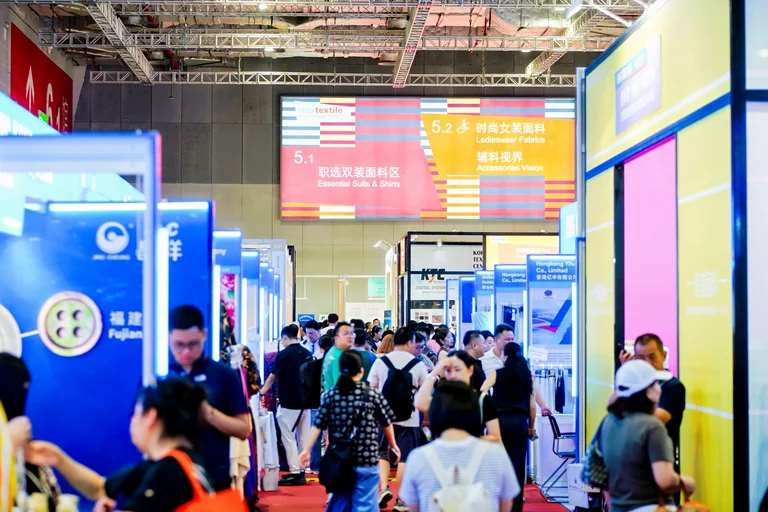
China’s Canton Fair featured more than 9,000 cloth and textile stands covering children's wear, underwear, accessories, sports and casual wear, men’s and women’s clothes, raw materials and home textiles.
Chinese companies showecased their raising capability in global operations, smart manufacturing and new product development. Sunrise Carpet offered flame-retardant silk and cotton blended carpets. Artweaver merged elements from native American culture with its denim fabric in its new impressionism-style carpet. Xique offered a towel made of bamboo charcoal fiber which can thoroughly clean pores and wash away dirt for a fresh experience. The company has covered developed markets such as Japan, Russia, Thailand, Singapore and Canada, and is adding new categories to its product line and introduced pillows to this year's Canton Fair.
An incubator for small and medium-sized companies, and an engine for market leaders, Canton Fair helps textile companies have fruitful results and encourages exhibitors to present new products and new technologies as well as to expand their market. The event is a platform where buyers need no longer visit the factory but pick up product samples on-site. This helps companies establish business relationships and raise brand awareness with partners. In addition to innovative design concepts, companies can look for new materials.
Bangladesh export earnings fall short in Q1
In the first quarter of the current fiscal year, garment exports from Bangladesh dropped 1.64 per cent year-on-year. Earnings from the sector fell 11.52 per cent short of the quarter’s target. While the country’s apparel exports have taken a hit in recent months, competitors have seen a rise in exports. Garment shipments from Vietnam increased by 10.54 per cent in the same quarter. It was 2.2 per cent for India and 4.74 per cent for Pakistan.
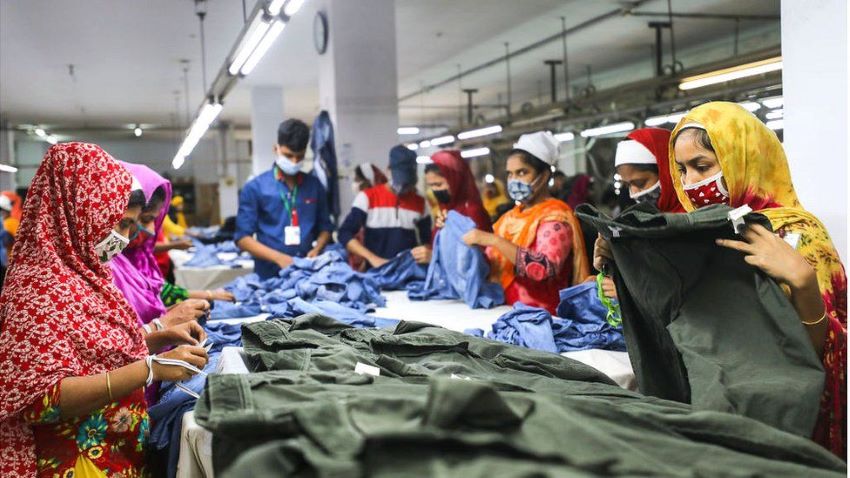
The second biggest apparel exporter globally, the Bangladesh garment manufacturing sector is not having the best of times lately. In the last seven months, 59 garment factories have gone out of business while around 25,900 workers have lost their jobs. Most garment factories are small and medium enterprises and they fail to maintain compliance strictly and pay their workers under the new wage structure.
Labor costs are rising across Asia and Bangladesh is no exception. Factories in Bangladesh have grown in a haphazard fashion, some even operating on the upper floors of office or residential buildings. Western apparel makers feel more secure buying from countries like China and Vietnam, where manufacturing is better planned and organized. Price pressure is intense. Western customers are demanding that prices be kept under control.