


FW
Trade war helps Indian exports
India’s exports to the US in the first half of 2019 increased. This was mainly due to the trade war between the US and China. The US tariffs on China resulted in India gaining in additional exports to the US in the first half of 2019 by selling more chemicals, metals and ore, electrical machinery and various machinery as well as increased exports in areas such as agri-food, furniture, office machinery, precision instruments, textiles and apparel and transport equipment.
The trade war has resulted in a sharp decline in bilateral trade, higher prices for consumers and trade diversion effects -- increased imports from countries not directly involved in the trade war. These trade diversion effects have brought substantial benefits for Taiwan, Mexico and the European Union. Trade diversion benefits to Korea, Canada and India were smaller, but still substantial. The remainder of the benefits was largely to the advantage of other southeast Asian countries.
Tariffs imposed by the United States on China are economically hurting both countries. Consumers in the US are bearing the heaviest brunt as their associated costs have largely been passed down to them and importing firms in the form of higher prices. And it is not only final consumers, but importers of intermediate products — firms which import parts and components from China.
US apparel imports from China down 18 per cent
US apparel imports from China fell 18 per cent in September. For the year to date through September, apparel imports from China were down 1.1 per cent, illustrating the steady erosion of sourcing from the top supplier for US fashion companies. Imports from Vietnam rose 12.7 per cent, with its shipments up 16.8 per cent from September 2018. Apparel imports from Bangladesh increased 9.96 per cent year to date but were down 3.5 per cent in the month compared to a year earlier. India’s shipments rose 8.37 per cent so far this year. Cambodia’s were up 11.13 per cent and imports from Pakistan advanced 9.41 per cent. Imports from Honduras increased 11.19 per cent year to date through September and Nicaragua’s shipments were up 19.9 per cent.
Despite the trade turmoil that in part is meant to stir interests in domestic manufacturing, the US imported 4.76 per cent more apparel year to date through September in 2019 compared to last year. However, reflecting the move to get Chinese goods into the country ahead of the September tariffs, the US imported 2.1 per cent less apparel in the month compared to September 2018.
Nearly every major apparel company in the US has slashed its sourcing from China as the raging trade war between the US and China has triggered steep punitive tariffs.
Katie Anderson appointed new CFO of Guess
Katie Anderson has been named chief financial officer (CFO) for denim and contemporary lifestyle brand Guess?, headquartered in Los Angeles. She replaces Sandeep Reddy, who will serve Guess until December 1.
Guess CEO Carlos Alberini feels Anderson strong technical, control and finance background and broad international experience will certainly be beneficial to Guess as both continue to expand global presence.
Guess currently runs 1,162 stores around the globe. Partners and distributors operates 562 additional retail stores worldwide. In August, the company released results for its second fiscal 2020 quarter. Its revenues increased 6 percent to $683 million, according to a company statement.
GAP CEO quits amid falling sales
GAP has estimated a 4 per cent drop in Q3 same-store sales, with declines across all its key brands including Old Navy. The drop comes as the GAP brand also has heavily discounted in a competitive retail environment. Art Peck, said to be the highest-paid CEO in retail business, has excelled over several years of sales declines at the GAP brand. GAP’s stock lost more than half its value during Peck’s tenure and is trading at around $18 a share. Peck’s compensation for 2018 was $20.7 million, filings show. As the flagship brand struggled and closed stores, Old Navy, GAP’s budget line created in 1994, continued to grow, topping $7 billion in sales last year.
Earlier this year, GAP said it will separate its better-performing Old Navy brand and shutter about 230 stores of its namesake apparel business, a process likely to be completed by 2020. Last year, GAP announced plans to spinoff Old Navy into a separate public company. GAP, which also owns Banana Republic, Athleta, Intermix, Hill City and Janie and Jack, and will hold onto those brands. It expects to complete the split in 2020.
Peck was expected to stay on with GAP through the spinoff, and Wall Street responded poorly to the announcement. GAP’s stock plunged during after-hours trading. The company also warned investors of weak sales during the third quarter and unexpectedly trimmed its guidance for the remainder of the year.
Century Textiles September sales rise
Century Textiles’ Q2 net sales were Rs 889.72 crores, as compared to Rs 884.71 crores during the period ended June 30, 2019. Net profit was Rs 182.70 crores for the period ended September 30, 2019, as against Rs 64.56 crores for the period ended June 30, 2019. EPS was Rs 16.35 for the period ended September 30, 2019, as compared to Rs 5.78 for the period ended June 30, 2019.
Net sales were Rs 889.72 crores during the period ended September 30, 2019, as compared to Rs 1094.91 crores during the period ended September 30, 2018. Net profit was Rs 182.70 crores for the period ended September 30, 2019, as against Rs 140.99 crores for the period ended September 30, 2018. EPS was Rs 16.35 for the period ended September 30, 2019, as compared to Rs 12.62 for the period ended September 30, 2018.
Net sales were Rs 1774.43 crores during the six month period ended September 30, 2019, as compared to Rs 2081.20 crores during the six month period ended September 30, 2018. Net profit was Rs 247.26 crores for the six month period ended September 30, 2019, as against Rs 5857.98 crores for the six month period ended September 30, 2018. EPS was Rs 22.13 for the six month period ended September 30, 2019, as compared to Rs 524.49 for the six month period ended September 30, 2018.
CAI Predicts Domestic Cotton Production for 2019-20 at 354.50 Lakh Bales
The Cotton Association of India (CAI) has envisaged a 13.62 percent hike in the cotton production of the country. CAI has stated that the country is expected to produce 354.50 lakh bales of cotton in the current year.
The producers have shifted their pulses to the growing area for cotton as the fibre which had traded well above its Minimum Support Price (MSP) throughout the last season. Perhaps increased cotton area and cheaper imports had led to industry experts fearing for a reversal of the price trend this season.
Focusing the present season the production would increase by 42.50 lakh bales than the 312 lakh bales as compared to last year’s production. ‘The increase in crop estimated for the 2019-20 season is on account of higher acreage under cotton than that of the previous season. Moreover, the CAI estimates yields to be higher as the country has received a good rainfall this year.
As per the reports, there is an extensive risk of damage to the crop in some zones due to flooding on account of excess rains. Having a tab on this, increase in the crop is restricted to 13.62%” the release said.
The CAI has estimated that the total cotton supply till the end of the cotton season ie till September 30, 2020 would 403 lakh bales which include 23.50 lakh bales of opening stock at the start of season and imports of 25 lakh bales.
Statistically, consumption of estimated by the CAI for the 2019-20 crop year is upto 30th September 2020 is 315 lakh bales while the CAI has estimated export of cotton for the season at 42 lakh bales. The taken forward stock predicted at the end of the season is nearly 46 lakh bales.
Textile label care crucial for Europeans
GINETEX, the International Association for Textile Care Labeling, shares the result of the second European Barometer for 2019 the textile care label and the Europeans", conducted with IPSOS. The survey was conducted in seven European countries: France, the United Kingdom, Germany, Italy, Sweden, the Czech Republic, and Spain.
Europeans appreciate their clothes and wish to keep them for as long as possible. This is one of the major trends identified by the barometer. In the seven surveyed countries, for instance, almost all respondents (97%) had purchased at least one item of clothing in the past six months. The proportions vary between 94% in Sweden and 98% in Italy and Spain. Europeans are concerned about the durability of their clothing and pay great attention to their care instructions: 70% respect their textile label’s guidelines - a relatively stable result (+1 point) compared to the last edition of our barometer. On this specific subject, however, answers differ quite significantly between the countries: 78% of Swedes follow the care instructions, 71% do so in France while only 64% do so in the United Kingdom.
When they were asked why they followed these guidelines, two out of three respondents mentioned that they wanted to keep their clothing for as long as possible that durability of clothing is a widely shared issue in Europe. Europeans are therefore sensitive to textile a label, referring to that whether they actually understand the care symbols is another question. The symbol for ironing is perfectly-identified: 98% of Europeans recognize it. The same goes for the washing symbol, which is well recognized by almost nine out of ten people (89%). For the other symbols, however, the proportions are much lower. Only 28% of respondents know the symbol for bleaching (although 45% in Spain and 40% in Italy do understand it), 24% know the symbol for drying and only 15% can identify the professional cleaning symbol.
Apparel Textile Sourcing Miami envisages global trade structure for 2020
"ATSM 2020 will have a focus on sustainability, near sourcing, and speed-to-market. Amongst many other topics that will be addressed, including Low MOQ Sourcing and the rise of micro-brand disruptors as the fastest-growing segment of the show's database and how retailers and consumers have adapted to the shift"
 ATSM 2020 predicts multiple conferences expansion with trends forecasting on lounge enhancements, three track fashion shows and more expected participation. The event is going to be vast in attendance and on track for the same growth in 2020. Furthermore, the event has quadrupled the number of exhibitions from Latin America and the USA.
The event plans to offer matchmaking, B2B sourcing, SME and enterprise-level seminar series, trend forecasts from PANTONE as a show partner, a runway show for designers from the local area and exhibitors to showcase the latest design and manufacturing techniques. ATSM will have a niche educational focus held in the fashion innovation lounge including highlights in global trade policy, color and design direction, and business strategy. ATSM 2020 will have a focus on sustainability, near sourcing, and speed-to-market. Amongst many other topics that will be addressed, including Low MOQ Sourcing and the rise of micro-brand disruptors as the fastest-growing segment of the show's database and how retailers and consumers have adapted to the shift. 
With a turbocharged geopolitical landscape, it is expected that trade policy, domestic production and sourcing alternatives will once again be a very hot topic. Conference and Educational Sessions continue to be a focus, featuring industry experts who will cover fashion trends, new technology applications such as AI and 3D printing, sourcing tips, sustainability, eCommerce strategy, international trade policy, marketing techniques and much more. The annual runway presentation is going to showcase a curated group of local up-and-coming fashion talent, established South Florida designers and what’s hot from the exhibition floor. Domestic Sourcing Pavilion with US-based manufacturers and service providers. Matchmaking services provides help through various sources to connect interested buyers with suppliers in a unique service that is present at the show and now available digitally year-round on ATS platforms. New Sourcing Markets Pavilion displaying more than 100 unique products from emerging markets including Inner Mongolia, Africa, India, the Philippines, Bangladesh, Pakistan and more. 2020 will see a larger Fabric & Trim Section for buyers looking for immediate shipment on open stock yardage and hardware items for apparel (low minimums also welcome in this pavilion). Being a Miami show, ATS has recognized the need for a Swim & Resort Section, showing the latest activewear, at leisure, and tech fabrics integrated into resort and swimwear. Categories will include finished apparel for men, women, and children that range from leisure, formal, denim, active, swim, intimates to performance. Also featured will be home wear and linens, hardware and textiles that include cotton, knits, yarn, leather, synthetic and blends.
Global apparel manufacturing map changes with brands moving to new destinations
"Politics is not the only factor that is leading to this shift. Factors like rising labor costs and an increasing reluctance in China to produce low-cost goods are equally responsible for brand exodus from China. Companies are diverting their supply chains despite the risk involved "
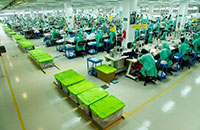 The global apparel manufacturing map is changing with many fashion brands shifting their focus away from China to new attractive destinations. On October 1, President Trump increased the existing tariffs on $250 billion worth of Chinese goods from 25 per cent to 30 per cent. He also taxed an additional $300 billion worth of Chinese imports at 15 per cent rate. This led to fashion brands such as Uniqlo, Levi’s, Crocs, Calvin Klein and Tommy Hilfiger moving their entire manufacturing base out of China.
However, politics is not the only factor that is leading to this shift. Factors like rising labor costs and an increasing reluctance in China to produce low-cost goods are equally responsible for brand exodus from China. Companies are diverting their supply chains despite the risk involved
Bangladesh emerges a popular choice
A lot of brands are migrating to Bangladesh. They are training their workforce and importing new expensive machinery into the country which has the capacity to manufacture everything from denim to shoes. They have even developed the laser technology needed to create high-quality jeans in the country. 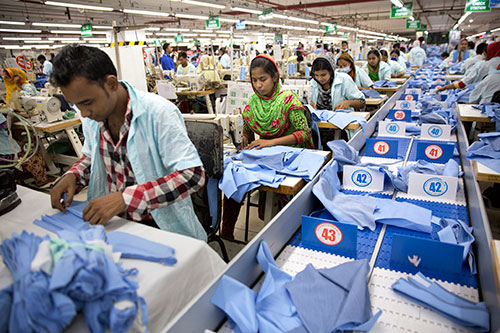
However, Bangladesh is yet to fully smoothen out the difficulties that previously beset its manufacturing industry. Brands and customers still cannot forget the Rana Plaza tragedy in Dhaka, killing 1,134 people – even though safety standards have improved significantly since then.
Vietnam gains popularity for footwear manufacturing
Another emerging popular choice is Vietnam, especially for footwear manufacturers. The country offers free trade with end-market countries including the 28 nations of the EU, Australia, Canada, Japan, Mexico, New Zealand and Singapore. Workers are skilled, labor is cheaper than China, the country’s infrastructure is also well developed. The country produces a much higher amount of footwear than anywhere else in Southeast Asia. It also makes very high-quality footwear, which is why Uniqlo makes all its footwear in Vietnam even though they rely largely on Bangladesh for everything else.
Favorable government policies attract brands to Cambodia
The third popular destination for brands is Cambodia, where apparel manufacturing accounts for 80 per cent of national export earnings and employs more people than any other industry. The country allows 100 per cent foreign equity ownership and an exemption from import duty on machinery and equipment. It’s ports helps it to import raw materials from China.
Cambodia also benefits from the EU’s ‘Everything but Arms’ scheme, which allows developing countries duty-free access to the EU market for export goods.
Indonesia to digitise clothing and textile industry
Alongwith these countries, Indonesia are also emerging as a preferred manufacturing destination for brands. The country’s capital Jakarta is rolling out an ambitious plan to digitalise its clothing and textile industry by 2030. This will be achieved by investing in top-quality machinery, training the workforce and working with local and international investors to build new, artificial-intelligence-ready factories.
The Indonesian government also wants to introduce the 3D scanning technology where customers can send in a 3D scan of their measurements and receive clothes fitted to their bodies – and AI-related 5G technology.
Though all these countries have a lot of potential, it won’t be easy for them to replace the role of China as a global apparel manufacturer. They will have to engage in plenty of cross-border sourcing in order to meet their requirements.
Bangladesh apparel exports to India up 17 per cent
Apparel exports from Bangladesh to India have gone up by 17 per cent from April to August 2019. This has impacted small players 80 per cent of the industry is still in the micro, small and medium sector. India’s apparel imports from Sri Lanka, on the other hand, have declined by two per cent over the same period.
To add to India’s problems, China has entered the picture. Free trade agreements with Bangladesh are encouraging duty-free imports of Chinese fabrics, with Bangladesh importing duty-free fabrics from China, adding value, and exporting duty-free to India. With Sri Lanka, India has a duty free agreement, but only up to eight million pieces.
The Indian apparel industry is worried about duty-free imports of readymade garments from Bangladesh. Bangladesh can export more than 60 products including garments to India, without any duty, under the South Asian Free Trade Area agreement. These exports have grown 480 per cent in the last five fiscal years. Textile goods produced and sold in India are subject to GST. However, the same products from Bangladesh reach India without any duty and so there is a 10 to 15 per cent cost difference between the products.










