FW
Faire and WGSN highlight trends
Faire has partnered with WGSN. Faire is an online wholesale marketplace connecting 6,00,000 independent retailers with 85,000 brands.
It empowers entrepreneurs through data-driven insight, backed by access to an unrivalled network of brands and retailers around the world. Faire is home to millions of products in the apparel category from over 12,000 apparel and footwear brands globally, making it a perfect bellwether to offer trusted fashion industry insights and trends.
WGSN is a forecasting agency. The partnership aims at spotlighting key consumer fashion trends to help guide independent brands and retailers globally via a toolkit. This comprehensive guide outlines spring/summer 2023 trends across silhouettes, colors, details, and patterns within women’swear and footwear. A second toolkit, outlining autumn/winter 2023 consumer trends, which will launch later this autumn, will be focused on creating emotional connections with consumers and exploring fashion trends that make them feel nostalgic.
These trends, insights, and their expertise in the industry have been instrumental in providing reliable fashion forecasting that allows independent brands and retailers to meet consumer lifestyle shifts and meticulously prepare for the buying season.
During Faire Fashion Week, Faire’s exclusive apparel and footwear preorder event, taking place on September 22, 2022, Faire and WGSN will host an Instagram Live discussion where industry experts will answer trend questions ahead of spring/summer 2023.
Curve launches intimate apparel tradeshow
Curve launched its first intimate apparel tradeshow in Montreal called Curve Montreal on September 18 and 19, 2022.
The tradeshow was originally planned in 2020. However, due to the pandemic and travel restrictions, it was postponed. The Curve event was brought to Montreal by MMode, an organization whose aim is to bring together players of the Québec fashion industry.
Canada was on a very strict lockdown, so this is the first time many of the retailers were traveling.Expectations were quite high as the Canadian lingerie community was looking forward to network and having a chance to preview collections more locally. MMode brought the curated Curve experience of the 50 best intimate apparel and swim collections to Montreal with ample opportunities for discovering new designers and learning new business strategies. Brand MRKNTN was selected as one of the ten talented designers for the prestigious Making the Cut reality TV fashion competition. By introducing new talents, the organisers were listening to the demands of the market.
Buying is always the focus of the Curve shows. However post-Covid retailers are craving experiences. Consequently, panels and special networking events have become equally important. After two years of shutdown, buyers want to feel connected to the lingerie community, make some memories and have fun too.
Global custom T-shirt printing market to clock in 9.7 CAGR: Study
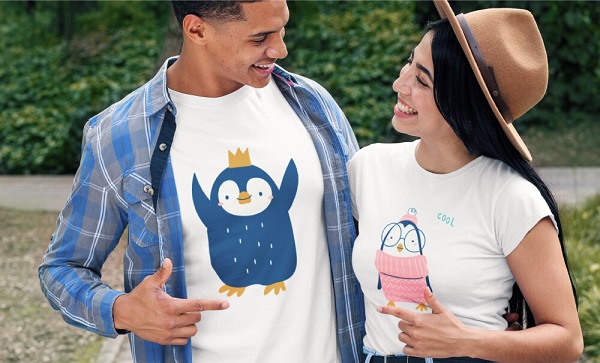
Global custom T-shirt printing market is expected to surpass $9,009.3 million with a CAGR of over 9.7 per cent to 2023 says a new study by Future Markets Insights (FMI) a premier provider of market intelligence and consulting services. In its latest report, FMI cited customized T-shirts are gaining immense popularity among the younger generation and a growing trend of wearing graphic, pre-printed T-shirts with movie logos and slogans is propelling sales in custom T-shirt printing market. Today, many prefer wearing printed T-shirts because of their unique design and trendy look on both men and women. These prints are usually extracted from computer. Usually, graphic professionals provide design to the fashion designers.
Printed tees a hit among Gen Y
Popularity of customized T-shirts among the young is attributable to availability of a wide range of color, pattern, garment, words or images that can be printed on tees. As a result, sales of pre-printed and creative graphic T-shirts are increasing. Subsequently, availability of trendy, fashionable, stylish, and unique customized T-shirts which reflects individual personalities is favoring its growth.
Another factor is the cost-effective prices of these T-shirts, especially across emerging economies that accelerate sales in these markets. Another popular use of custom printed T-shirts is to raise social awareness, raise a voice, and support a cause. Customers in industries such as hospitality, logistics, construction, industrial, and medical, are increasingly providing custom printed T-shirts to their employees as a marketing tool.
Growing influence of bloggers, promotional strategies, and improved standard of living are also driving up demand. “Increasing preferences towards customized, fashionable and unique clothing along with the rising income of the younger generation are major factors driving demand for custom t-shirts worldwide.” says an FMI analyst.
As per the report major players in the custom T-shirt printing market are: CafePress Inc., Custom Ink, LLC., CustomThread, Printful Inc., RushOrderTees.com, Spreadshirt, THEBLUEGECKOPRINTING, THREADBIRD, UberPrints, Inc., Vistaprint, among others. Manufacturers of custom t-shirt printing are focused on aggressive promotional strategies, advertisements, and new product launches that have driven sales growth globally.
As for techniques, screen printing segment is expected to hold over 52.1 per cent market share in 2021. Based on design, the artwork segment is expected to register a CAGR of 12.5 per cent from 2022 to 2032.
The US custom T-shirt printing market will contribute over 78.9 per cent share in North America whereas sales in Japan are expected to rise at over 15 per cent CAGR over the forecast period. India is expected to spearhead the growth in South Asia for custom T-shirt printing market, with sales increasing at 16.6 per cent CAGR through 2022 & beyond.
India builds up technical textiles
Some 23 research projects in the areas of specialty fibers, sustainable textiles, geotextiles, mobiltech and sports textiles have been cleared in India.
Among these 23 research projects are 12 projects of specialty fibers having application areas in agriculture, smart textiles, healthcare, strategic application and protective gears, four projects from sustainable textiles having application areas in agriculture and healthcare, five projects from geotextiles, one from mobiltech and one from sportech.
The growth of technical textiles in India has gained momentum in the past five years.The area of technical textiles in India has a technological gap, which is being addressed by identification of the area of research in technical textiles with industry interaction and promotional activities like conferences, exhibitions, and buyer-seller meets to promote the use of technical textiles in the country. Since industry and academia connect is essential for the growth of research and development in the application areas of technical textiles in India, priority is being given to building convergence with academicians, scientists and researchers.
India targets a fivefold increase in the export of technical textiles. There will be production-linked incentives for the textile sector including affordable infrastructure for textile manufacturing like cheap land and power and alignment with the best standards in textile manufacturing.
Patagonia develops tees with Eastman
Eastman and Patagonia have collaborated on a line of T-shirts. Outdoor apparel retailer Patagonia will use a fiber made by Eastman called Naia. Named for its enhanced sustainability, Naia is made with 60 per cent recycled content. Unlike other cellulose-based yarns and fibers, this option requires fewer virgin materials to make an environmentally friendly product.
Naia is made from a combination of molecularly recycled waste material, recycled cellulose and renewable wood pulp. The recycled cellulose comes from waste materials, textile waste and non-forest-derived cellulose waste. Eastman’s cutting-edge molecular recycling technology breaks down hard-to-recycle waste materials like plastic packaging and old carpet into fundamental building blocks to produce the acetic acid used to make cellulose acetate yarn and fiber.
This process not only produces fewer greenhouse gas emissions but also diverts waste materials from landfills, incinerators and other undesirable end-of-life destinations, finding new value for pre- and postconsumer waste that is not suitable for recycling by traditional means.
Eastman makes continuous efforts to collaborate with eco-conscious partners throughout the value chain. Patagonia has always been a company that chooses its fibers carefully and responsibly. Patagonia customers want garments that reflect who they are and what they care about without compromise on comfort and quality.
MAS supports Kenyan habitats
South Asian apparel major MAS Holdings (MAS) has partnered with The Wildlife Foundation (TWF), Kenya, to conserve 6,250 acres of the Nairobi National Park Wildlife Dispersal Area.
This initiative enables MAS and TWF to collaborate with local landowners to conserve wildlife on community- and privately-owned land.The project commenced in March 2022 and is an extension of TWF’s ongoing conservancy model through which TWF leases lands from local owners to promote wildlife conservation and better land use practices. Through this partnership, MAS has been able to expand TWF’s existing conservancy of 5,000 acres to a total coverage of 11,250 acres.
The conservancy model utilizes both monetary and non-monetary incentives to encourage landowners and local communities to keep land unfenced for wildlife and livestock to move freely in the outskirt lands of the park. This is coupled with initiatives to raise awareness on community-based conservation, place community rangers to mitigate human-wildlife conflict, train youth and women on topics such as beekeeping, biogas, and promote the use of technology to innovate solutions for conservation challenges.
MAS and TWF provide financial incentives to landowners to keep private lands open and unfenced for wildlife movement. This contributes to reducing human retaliations against lions and other predators as well as supporting to improve the education of the children in the area by providing landowners with lease payments aligned to the start of the children’s school terms.
New EU green legislation to step up sustainability efforts in Bangladesh
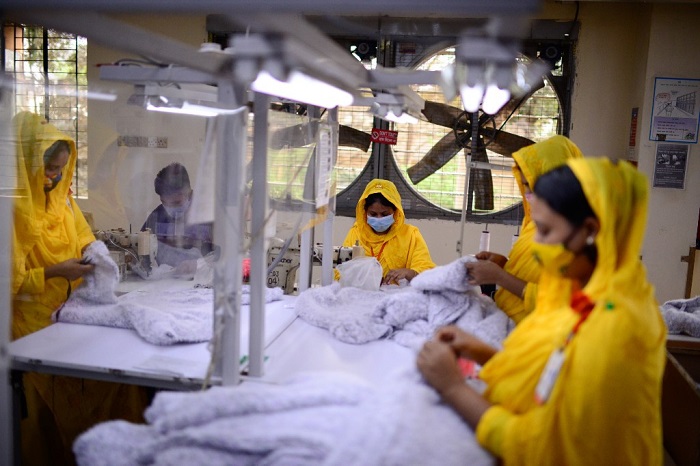
The huge amount of waste produced by the global textile industry has accelerated the need to reduce continued damage to planet Earth. Textile produces over 100 billion pieces of clothing year. This results in 84 per cent of the textile waste worth $3.7 billion being sent to landfills every year. To control this waste and create a climate-neutral continent, the European Union (EU) has introduced a set of initiatives under the European Green Deal.
Net zero emissions by 2050
Urging all 27 member states to transform EU into a modern, resource-efficient and competitive economy, the European Green Deal has set a target of achieving net zero emissions of greenhouse gases by 2050. It separates economic growth from resource use and encompasses all people and places. One of the many targets set by the Green Deal is ensuring durability and recyclability of all textile products by 2030. The deal also mandates use of recycled fibers in these products and adoption of responsible production processes.
The July plenary of the European Economic and Social Committee (EESC) urged the European Commission to align key proposals of the deal with the EU rules on sustainable products, eco-design and sustainable textiles. However, this can cause several ramifications for global apparel manufacturers, especially Bangladesh, warns Eurostat.
New heights in environmental sustainability
Bangladesh has 165 LEED-certified green garment factories. Of these, 50 are Platinum-rated, 101 Gold-rated, 10 Silver-rated and 4 LEED Certified. LEED-certified Green buildings are becoming a norm in Bangladesh with the industry working with international stakeholders to attain new heights in social and environmental sustainability.
Faruque Hassan, President, BGMEA says, the association is moving step-by-step to achieve a sustainable and circular economy. It has teamed up with P4G-funded Circular Fashion Partnership (CPF) initiative to transform to a circular fashion system for making new, low carbon footprint and responsibly-made products. The partnership includes the Global Fashion Agenda, BGMEA and Reverse Resources comprising 19 brands, 17 recyclers and 85 manufacturers onboard. Renewed vision to reduce GHG emissions
To keep pace with global strategies, BGMEA unveiled a new vision in July. The vision urges Bangladesh apparel exporters to reduce GHG emissions upto 30 per cent by 2030, increase use of sustainable materials by 50 per cent and reduce blue water footprint by 50 per cent. This will help the sector reduce energy consumption 30 per cent, encourage use of at least 20 per cent of renewable energy, ensure 100 per cent sustainability in data reporting and increase production efficiency by 60 per cent. It will also ensure setting up 80 per cent green factories.
Collaborating for industry transformation
Global buyers are also urging stakeholders to join hands to achieve sustainability goals. Collaboration is the key to ensure necessary transformation of the entire industry, feel experts.
As per McKinsey’s 2022 State of Fashion report, consumers today are keen to know the source of their materials, their production processes, and ensure transparency in treatment of workers. They are aligning with brands that adopt ethical business practices and expanding their sustainable products besides ensuring transparency of their supply chains. The Bangladesh garment industry is already adopting sustainability practices. The proposed EU legislation is likely to further speed up this process, benefitting garment manufacturers in the country.
ICAC partners with CottonConnect
CottonConnect and the International Cotton Advisory Committee will jointly undertake a series of projects.
The partnership, covering an initial period of a year, represents the primary common interest between the two organisations. Since ICAC is the only intergovernmental association representing 25 cotton producing, consuming, and trading countries worldwide, it can serve as a valuable learning platform for CottonConnect to learn through discussions on cotton issues of international significance.
CottonConnect can learn from ICAC and build on the sustainability component of cotton production, thus improving the progress and development of cotton sectors across its regions. ICAC can also learn from CottonConnect’s extensive experience and share it with other members across the globe.
ICAC's privileged relationships with major players afford it access to leading cotton researchers and scientists across the globe, who understand cotton from the field to the consumer. The CottonConnect network stands to benefit greatly from these innovations and can take advantage of those that are practical and feasible to implement. ICAC member countries may also benefit from CottonConnect's innovations in cotton.
Formed in 1939, the ICAC is an association of cotton producing, consuming and trading countries. CottonConnect helps improve the sustainability of global textile supply chains, thereby enabling producers and raw material farmers to work more responsibly and enjoy better livelihoods.
Indian exporters get RoSCTL relief
India has amended the Rebate of State and Central Taxes and Levies (RoSCTL) scheme.
So Indian garment exporters have got relief from favorable appreciation in transferable duty credit scrips. The amendment will provide relief to the garment sector and ensure maximum refund of the RoSCTL amount will help exporters meet their working capital requirements.Further, it will give an impetus to the garment sector to perform better at a much faster pace. For ensuring continuity, the scheme will continue till March, 2024.
However, exporters are still facing various issues. They want deletion of the provision making the transferee liable to RoSCTL conditions. Exporters can generate scrips immediately after the shipment of export consignments but the realisation of payment use takes months.After a certain time, customs officials had the authority to take action for recovery of the scrip amount. Now the original beneficiary of the scrip will be liable in case of non-realisation of export payments.
Under the RoSCTLscheme, the maximum rate of rebate for apparel is 6.05 per cent while for made-ups it is 8.2 per cent. However, with the deep discount, exporters were getting between 4.8 per cent to 6.4 per cent and were losing 1.2 per cent to 1.6 per cent in the shape of discount.
71% Consumers get earth-friendly, say Boston Consulting
Seventy-one percent of consumers across the world are concerned about sustainability in the apparel category.
So says a survey by global management consulting firm Boston Consulting Group. The survey involved around 19,000 consumers as participants in eight countries—Brazil, China, France, Germany, India, Italy, Japan, and the US.
But a mere 20 per cent believes their purchasing decisions can personally impact the environment and around 70 per cent are unsure about corporate claims regarding sustainability.
Sustainability is now an integral part of everyday life with consumers’ growing awareness and their stance to opt for eco-friendly products. And to sustain existing customers and lure new ones, textile and apparel companies are creating ethical robes and offering innovative products. They are also making sure that the impact is percolated till the end of the value chain and their suppliers so that no unethical practices are imbibed and followed.
Among the materials used by some shoe makers are recycled bottles for laces, castor bean oil for the insoles, recycled cardboard for packaging as well as merino wool and tree fibers for the shoe uppers. Although millennials vouch for sustainable fashion and social change, the eco-friendly factor of a fashion product are often dominated by factors such as price and value.