


FW
Global inflation hits some countries harder
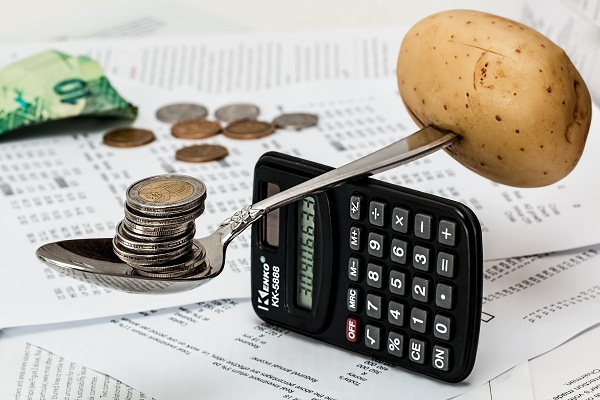
Top apparel exporters have been hit badly by ongoing inflation and unstable prices across the globe.Retail outlets are finding it tough to pay electricity bills,shipping charges and other logistics. At the same time, food prices have almost doubled leaving consumers cash-strapped in many countries and may soon trigger a global crisis that will drive millions more into extreme poverty and malnutrition.
According to US-based Trading Economics stats a global website that provides accurate information for 196 countries, by late 2022, Turkey saw extremely high inflation rates of 88.5 per cent, Sri Lanka 66per cent, Laos 36.8 per cent, Pakistan 26.6per cent, Myanmar 19.4 per cent, Sudan 103%per cent, Argentina 88per cent and Zimbabwe 269per cent. Even the economically richer countries of Europe saw double-digit inflation, although the US by comparison, was relatively lower at 7.7 percent.
Sri Lanka, Turkeysuffering mostdue to inflation
As per World Bank estimated Lebanon, Zimbabwe, Venezuela, Turkey and Sri Lanka are the five countries with highest food price inflation.Food prices are a basic concern in poorer countries, where a far larger share of per-capita income is spent on food compared to high-income countries.
Sri Lanka has been the worst affected bythe political and economic crisis, after the president declared bankruptcy last year which devalued the rupee, food inflation spiralled as high as 70per cent. Sri Lankan Apparel Exporters Association leaders say, in the apparel segment, small manufacturers have been hit the worst as they had to cut wastage at all levels.
Yohan Lawrence, president of the Joint Apparel Association Forum (JAAF) has been quoted in an interview with Women’s Wear Daily (WWD) saying, some companies have been giving food rations to their workers, adding to the amount of monthly salary andgiving employees bonuses, to help poverty-stricken workers over the last few months. It is always the small manufacturers who are affected the most while the larger companies are able to fight inflation better. In November 2022, Sri Lanka’s apparel exports for the year stood at $5.14 billion, up from $4.57 billion for the same period in 2021.
Turkey is another country greatly affected by inflation as it was rocked by major earthquakes and at least 9,210 apparel, footwear, and textile manufacturerswere affected and the country was left reeling with soaring prices and a plummeting currency. The annual inflation rate in Turkey in the end of 2022, was 85.5 per cent, according to the Turkish Statistical Institute, and prices of food and beverages increased102.6 per cent, while costs for transportation rose by 107 per cent.
The depreciation of the Turkish lira has caused inflation and cost increases with competitiveness and profitability being negatively affected. Analysts point out, over the last year, electricity prices have gone up 400per cent, gas prices areup 300 per cent, and wages rose 100 per cent, leading to fear and apprehension about what will happen this year.
Inflation expected to move north in FY ’23
Closer home, India’s Economic Survey for 2022-23 has pointed the apparel and footwear segments are among the ones most hit by inflation as prices have risen consistently over the last three years with average annual retail inflation at 9.7 per cent in FY ’23. According to their survey, the average Annual Retail Inflation (based on consumer price index) for clothing and footwear as a category stood at 1.6 per cent in FY ’20 and it touched 3.4 per cent in FY ’21 before more, then doubling to 7.2 per cent. In FY ’23, the average annual retail inflation in clothing and footwear was 9.7 per cent.
In India too, the inflation rate was the highest in April 2022 at 7.8 per cent before coming down to a moderate 5.7 per cent in December 2022 as a result of good monsoons as well as government incentives that ensured adequate food supply. The Indian apparel retail industry like its global counterpartsneeds help to tide over inflation.Well-planned budgets and lower taxes could bring in some redemption as they await the light at the end of a dark tunnel.
Minister promises to address liquidity crunch for Pakistani garment exporters
Federal Commerce Minister Syed Naveed Qamar has responded positively to the demands of Pakistani apparel exporters, promising to address the liquidity crunch caused by blockage of sales tax refunds, which is affecting the cash flow of garment exporters.
Speaking during an interactive session held in Sialkot on request of the Pakistan Readymade Garments Manufacturers and Exporters Association (PRGMEA), Qamar pledged to convene a meeting with the Federal Board of Revenue to urgently resolve the issue. He also emphasized the government's commitment to reducing the cost of doing business and providing a level playing field for export-oriented sectors, including textiles.
Qamar praised the efforts of Sialkot-based garment exporters and expressed his support for the establishment of a Sialkot Garment City, as well as the completion of the Garment Technical Training Centre. These initiatives, according to the IAF regional chief and ex-chairman of PRGMEA Ijaz Khokhar, would double the export value of Sialkot garments to $1 billion.
Khokhar also called for the implementation of the Textile and Apparel Policy 2020-25, which includes provisions for product diversification, value addition, and skill development. He suggested the restoration of the Duty Drawback on Taxes and Levies and the Drawback of Local Taxes and Levies, which would help Pakistani exporters to remain competitive in the global market.
The apparel industry in Pakistan is a major contributor to foreign exchange earnings, employment generation, and tax revenue.
Sharaf Group plans to open 17 new stores globally
Sharaf Group, a prominent retail conglomerate, is planning to open 17 new stores globally in 2023 as part of its growth plans.
The group has recently expanded its footprint in the Middle East's lifestyle market with the opening of two new Forever 21 stores in Muscat, Oman. With the opening of the new Forever 21 stores, Sharaf Retail further cements its strong presence in the Middle East, where it already has stores in Bahrain, Kuwait, Qatar, Saudi Arabia, and the UAE.
The new stores, located in popular shopping destinations Mall of Oman and Oman Avenues Mall, offer a combined shopping space of 20842.12 sq. ft., in line with the group's expansion strategy in the region.
The new stores will provide a wide range of trendy and affordable clothing, shoes, and accessories for men and women, including the latest styles and classic pieces suitable for any occasion.
UAE, Cambodia conclude talks on Comprehensive Economic Partnership Agreement
The United Arab Emirates (UAE) and Cambodia have recently finalized discussions on a Comprehensive Economic Partnership Agreement (CEPA) after three rounds of negotiations that began in December of the previous year.
The agreement, which covers trade, customs procedures, sanitation and phytosanitary, investment, digital trade, intellectual property, small and medium enterprises, dispute resolution mechanisms, and provisions for services, is expected to be signed by both parties this year.
Cambodia aims to explore the export potential of various products, including garments, footwear, and travel goods, to the UAE.
CEPA will contribute to the strengthening of bilateral relations by opening market channels more widely, providing more investment opportunities for mutual benefits, and deepening cooperation in other economic activities.
This agreement marks a significant milestone in the economic relations between the UAE and Cambodia and is expected to boost trade and investment between the two countries.
Messe Frankfurt eyes textile and consumer goods industries with new trade fair in Vietnam
Messe Frankfurt, the global trade fair organiser, has signed a memorandum of understanding (MoU) with the Vietnam Trade Promotion Agency (VIETRADE) to explore the potential for a comprehensive new trade fair in Vietnam.
The two organisations will focus initially on the textile and consumer goods industries in the country. This move marks Messe Frankfurt’s latest step in expanding its involvement in South East Asia.
The new venture aims to build on Messe Frankfurt’s 16 years of experience operating in Vietnam and create new opportunities for trade in textiles and consumer goods.
Further details about the potential new trade fair would reveal at a later date.
China's apparel exports to UAE decline in 2022 despite post-COVID recovery
China's apparel exports to the United Arab Emirates (UAE) experienced a decline in 2022, totaling $2.627 billion, compared to $2.810 billion in the previous year.
The COVID-19 pandemic had a significant impact on outbound trade in 2020, but China's exports bounced back in 2021. Despite this recovery, exports decreased again in 2022. Nevertheless, China remains a significant supplier of apparel to the UAE.
During 2017, exports to the UAE peaked at $3.251 billion before declining to $2.462 billion in 2018 and $2.445 billion in 2019. The pandemic resulted in a significant reduction in trade to $1.639 billion in 2020. However, China managed to revive its apparel trade with the UAE in 2021, with exports reaching pre-COVID levels of $2.810 billion. Unfortunately, trade eased down again in 2022 to $2.627 billion.
The impact of COVID-19 on China's quarterly apparel exports to the UAE was profound, with exports in Q2 2020 falling to just $321.948 million. However, as COVID-19 infections subsided, exports increased to $825.977 million in Q2 2021. Despite this resurgence, quarterly exports dropped to $755.704 million in Q2 2022, $755.049 million in Q3 2022, and $562.340 million in Q4 2022.
Trousers and shorts were the most dominant products in China's apparel exports, accounting for 20.92% of the total exports. Among the top five products, jackets and blazers accounted for 11.79%, jerseys for 9.81%, dresses for 8.57%, and accessories for 7.20% of the total apparel exports.
India to export $350 Bn worth of goods through e-commerce by 2030: GTRI
India should aim to export USD 350 billion worth of goods through e-commerce by 2030, according to a report by economic think tank GTRI.
Despite India's strengths in high-demand customized products, expanding seller base, and higher profit margins per unit of export, its current e-commerce export numbers remain far below their potential. Currently, e-commerce exports account for only USD 2 billion, less than 0.5 per cent of the country's total goods export basket.
To fully realize the potential of e-commerce exports, the report suggests developing the ecosystem for e-commerce exports and issuing a separate e-commerce export policy. The GTRI recommendations raising the value cap for e-commerce exports from Rs 5 lakh to Rs 25 lakh to allow exporters to choose the shipment mode as per their business requirements.
The report recommends that the government formulate a separate policy for e-commerce exports to address the pain points of the sector. Exporting through e-commerce channels can result in higher profits per unit of export, as businesses can cut out intermediaries like indenting agents, bulk buyers, and shopkeepers. The internet, technology, and secure online payments have made exporting via e-commerce simple and safe, enabling small firms from a wide range of cities and regions to participate in international trade. Over 100,000 Indian sellers are already exporting through e-commerce, and this number is set to multiply.
Brands embrace omnichannel strategies to improve customer experience, boost profitability
Fashion brands such as Zara, Nike and others are adopting omnichannel retail strategies to improve the customer experience and stay competitive in the industry.
According to IDC, omnichannel retailers experience a 15-35% increase in average transaction size, a 5-10% increase in profitability, and a 30% higher lifetime value than single-channel retailers.
Zara's strategy includes a "click and collect" service, RFID tags, and automated inventory management systems to provide real-time inventory visibility and reduce delivery times and costs. They have also expanded their distribution network and offer multiple return options.
Nike's strategy involves investing in technology, influencer marketing, and personalized customer experiences. They provide real-time inventory visibility across their stores, website, and mobile app, and offer free in-store pickup. Nike has also opened concept stores with immersive experiences to build brand loyalty.
Adopting an omnichannel strategy is crucial for retailers to meet the evolving demands of consumers and increase profitability. By investing in technology, inventory management, logistics, and marketing, retailers can create a seamless brand experience that enhances customer satisfaction and drives business growth.
India: TN's textile industry set to benefit from govt's policy initiatives and budget allocations
Tamil Nadu's textile industry, which accounts for one-third of India's textile business size, has been playing a crucial role in the country's economy as the second-largest employment provider after agriculture.
The Southern India Mills' Association (SIMA) Chairman, Ravi Sam, has praised the government's recent initiatives to enhance the competitiveness of the powerloom sector in Tamil Nadu, which will benefit 1.64 lakh powerloom weavers and increase the scale of operations and value addition.
The State Budget 2023-24 has announced the establishment of new SIPCOT industrial parks in Virudhunagar, Vellore, Kallakurichi, and Coimbatore, along with the allocation of a PM MITRA mega textile park scheme by the Union Government to Tamil Nadu. The infrastructure support provided by the government of Tamil Nadu through this budget is expected to provide infrastructure facilities for textile processing, the weakest link in the textile value chain. Furthermore, the announcement of 10 mini handloom parks and new industrial parks in the clusters of Virudhunagar, Vellore, Kallakurichi, and Coimbatore will provide employment opportunities to nearly 22,000 persons.
Ravi Sam appreciated the government's announcement of releasing a new Textile Policy with a focus on holistic development of the entire value chain, latest design development, and textile machinery manufacturing. The SIMA Chairman hoped that the budget announcements would work as a growth engine for the economy of the State.
Bangladesh apparel exporters lobby for extended duty benefits
Bangladeshi apparel exporters are lobbying major trading partners and blocs to support its efforts to extend the duty benefits the country currently enjoys for at least six more years.
The move comes as Bangladesh prepares to graduate from the group of least-developed countries to a developing country in 2026, which will likely result in the loss of its duty-free market access.
The Bangladesh Garment Manufacturers and Exporters Association (BGMEA) has called for a six-year transition period to help apparel exporters remain competitive in global markets. While the EU and the UK have already announced a three-year transition period, the BGMEA believes that a longer period is necessary due to the fallout from the Covid-19 pandemic and the war between Russia and Ukraine.
The BGMEA will meet with officials from the EU, Germany and other major trading partners to gain support for the extended transition period. The BGMEA also intends to request duty-free market access for apparel items made with US cotton and shipped to the US markets, as well as to work with the US government to address the shipment of counterfeit products from Bangladesh.











