


FW
Kenya unveils plans to revitalize cotton industry
The Kenyan government has recently announced its ambitious plans to rejuvenate the country's cotton industry and enhance the textile sector by significantly increasing cotton production.
In a collaborative effort involving the State Department for Industrialization, the Ministry of Agriculture, and Rift Valley Textile, farmers will receive complimentary chemicals and training to improve crop management techniques and maximize their yields. The government's ultimate goal is to ensure a sufficient supply of raw materials for local textile industries as well as for export purposes.
Presently, the annual cotton output stands at a meager 28,000 bales, which is a stark contrast to the required amount of 140,000 bales. Consequently, the government aims to address the issues plaguing the collapsed cotton value chain. To support this revitalization endeavor, the government has allocated a substantial amount of Sh7 billion to modernize the Rift Valley Textile mills (Rivatex) and resurrect the Luanda ginnery in Busia. Due to the broken cotton value chain, these facilities currently operate below their full capacity, compelling the industry to outsource approximately 80% of its raw materials from India, China, and other East African countries.
The government's initiatives also encompass the establishment of County Aggregated Industrial Parks (CAIPs) across the nation, with a particular focus on the 24 counties where cotton and textiles are poised to become flagship industries.
According to a survey conducted by the Kenya National Bureau of Statistics (KNBS), the decelerated growth of the cotton industry can be attributed to several factors, including high production costs, intense competition from low-cost imports, insufficient agricultural output, and the adverse effects of the COVID-19 pandemic.
Unreasonable demands from global exporters affect Bangladesh RMG makers
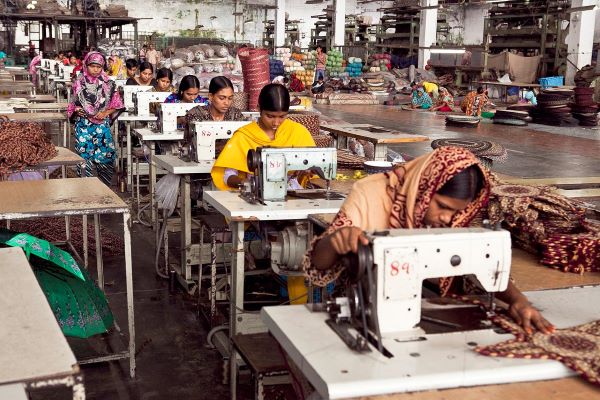
Things do get worse before they get better and the Bangladesh RMG segment is counting on that as their current profit margins sink deeper with international clothing brands demanding further discounts to place orders from their local apparel retailers. Global big and small clothing brands are now demanding up to 5 per cent more discount from Bangladesh’s apparel exporters, without caring it may be the last straw on the camel’s back in an economy already under pressure with constant natural disasters, political turmoil and a volatile global economic scenario.
During Covid years, Bangladesh had to tackle unsold inventory and face order cancellation from global brands citing logistics problems in transportation and an uncertain demand-supply in their respective countries to pay up and take delivery.
Manufacturers need profit margins over 20% to stay afloat
Just when things were finally shaping up in post-pandemic days, this jolt comes after local suppliers spent billions of dollars to strengthen workplace safety in line with the recommendations of Accord and Alliance, the two factory inspection agencies backed by global buyers and government unions to improve factory labor standards.
To highlight these issues, a recent business event was organized by The Her Net Foundation in Dhaka. Abdullah Al Mamun, VP, Bangladesh Textile Mills Association pointed out the Bangladesh apparel segment was getting one of the lowest prices globally from international buyers. This despite paying higher taxes for utility bills like gas, water and electricity, a big portion of the costs in RMG factories and spending heavily to have globally approved safe and hygienic factories.
The event called upon global retailers and brands to show more concern and ethical buying prices from local manufacturers who are already hitting poverty levels due to the lower prices and sometimes even selling below their production costs just to retain these global orders for the future. Mohammad Hatem, Executive President, Bangladesh Knitwear Manufacturers and Exporters Association points out, under the current cost of production situation, local manufacturers need a profit margin of 20 to 25 per cent instead of the current 10-15 per cent for manufacturers to pay living wages. However, profit goes slump down to 2 per cent if the gross profit stands at 10-15 per cen.
Bangladesh second only to China in apparel exports
With all this efforts, Bangladesh has managed to retain second position in apparel shipments to the EU in Jan-Feb 2023 with a 22.75 per cent share of the trade bloc's overall garment imports, after China. EUROSTAT stats show, the EU's overall apparel imports for January and February declined $322 million, or 2.03 per cent compared to the corresponding period in 2022. However, in contrast, its apparel imports from Bangladesh increased 5.47 per cent year-on-year, or $183 million, during the Jan-Feb period. Apparel imports from China had already fallen by 13.11 per cent year-on-year to $4.08 billion at this time with shipments from China having decreased 16.42 per cent or 32 million kgs.
However, the fact that Bangladesh has been performing relatively better than other global competitors in this period is not that it has suddenly become the most-preferred destination but more to do with the inflated raw material prices and subsequent hikes in the production cost as the value of goods exported rose although overall volume fell.
With global apparel trade scenario currently low-key, the cash-rich EU market has also been greatly affected. Local manufacturers in Bangladesh need to focus on alternative global markets while reducing dependence on single markets or products and ensure balanced investment plans for now and the near future to keep the country’s economy from falling further.
UK students struggle to afford sustainable sportswear amid rising cost of living
Students in UK are facing challenges in purchasing expensive activewear due to the rising cost of living. Finding sportswear that is both affordable and sustainable has become crucial but difficult.
One major hurdle is the tight budget many students face, making it challenging to find affordable and sustainable sportswear. On average, students in the UK spend £100 per year on activewear. Meanwhile, the cost of living in the country has seen a significant rise of 5.4% over the past year. With an average student debt of £1,200 and an overall increase in the cost of living by 6.2%, students are feeling the financial pressure.
However, choosing affordable activewear doesn't mean sacrificing sustainability. In fact, this approach contributes to sustainability efforts by extending the lifespan of clothing items. By opting for more budget-friendly shopping experiences, students can support brands that prioritize sustainable practices while still meeting their financial constraints.
Ultimately, striking a balance between affordability and sustainability is crucial for students struggling with the rising cost of living. With a range of brands offering reasonably priced activewear, students have the opportunity to find products that meet their needs without compromising on their financial well-being or environmental consciousness.
Indonesian textile industry sees $4.63Bn surge in investments, despite slow exports
The textile and textile products (TPT) industry in Indonesia witnessed a significant surge in investment realization during the first quarter of 2023, reaching $4.63 billion, an 89.41% increase compared to the same period last year.
Despite sluggish export orders, the rise in investment, particularly in domestic investment (PMDN), can be attributed to the growing demand for textile products within the country. Local investors, who have a better understanding of the domestic market, responded quickly to the increasing demand, resulting in the surge in investments. This trend was further supported by the ordering process of TPT equipment and machines that began last year, with the goods arriving as planned, even though export orders remained slow.
While export-oriented industries usually rely on foreign investment, the decline in export orders did not have a significant impact on the local TPT industry. Many factories took advantage of the production slowdown to conduct maintenance and replace machines and spare parts. As a result, the investments in the first quarter were primarily focused on purchasing machinery and spare parts rather than constructing new facilities.
The Investment Coordinating Board (BKPM) reported a remarkable 401.25% increase in PMDN investment, amounting to $2.95 billion in the first quarter of 2023. However, foreign direct investment (PMA) declined by 9.4% to $114.2 million.
Most of the TPT investments realized in the first quarter came from the intermediate industry sector, particularly the knitting, woven, and finishing fabrics sub-sector. These investments primarily focused on procuring weaving machines, spinning machines, and spare parts. The timing of these investments coincided with the period before the general elections, during which the demand for TPT products typically increases for campaign support equipment such as t-shirts and banners.
To address the challenges posed by global uncertainty and declining exports, the Ministry of Industry implemented a machine restructuring program in the TPT industry. This program aims to enhance competitiveness by promoting the use of modern, efficient, and environmentally friendly equipment. By upgrading machinery, the industry can increase productivity, efficiency, and product quality. In 2022, the TPT industry demonstrated positive performance, with an export value of $13.83 billion and employing approximately 3.65 million people. It contributed 1.03% to the national GDP, experiencing a 9.34% annual growth rate.
The machine/equipment restructuring program will prioritize the fabric perfecting and fabric printing industries, targeting the participation of 13 companies. The allocated budget for 2023 is $4.7 million, which will provide a discounted price reimbursement of 10% for imported machinery/equipment and 25% for domestically produced ones.
Personal luxury goods market surges amidst economic turmoil
Amidst the looming threat of a global recession, the personal luxury goods industry is defying expectations by projecting further growth in 2023. Unlike the 2008-09 financial crises, the luxury market is proving to be more resilient in the face of economic turmoil.
A combination of factors, including a larger consumer base consisting of customers who are less affected by economic downturns, customer-centric strategies, and a robust multi-touch point ecosystem, positions the luxury industry to weather economic turbulence.
According to a study by Bain & Company, the global luxury goods market experienced a remarkable 21% surge in sales in 2022, reaching a total of approx 1,554 billion USD. Sales of personal luxury goods, which include apparel, watches, and jewelry, are expected to jump by 22% with a growth rate ranging between 3% and 8% this year. This positive trajectory persists despite inflation and ongoing market challenges resulting from geopolitical upheavals.
Following a significant contraction in 2020 due to the COVID-19 pandemic, the market rebounded to approximately 1.293 trillion USD in 2021, exceeding expectations by growing between 19% and 21% in 2022. This growth primarily favored personal luxury goods, while experience-based goods showed more moderate growth. The recovery of the experiential luxury sector is expected to be gradual and contingent upon the resumption of international tourism and business travel.
The rise of sustainability concerns among millennials and Gen Z consumers is driving a significant shift in the luxury industry. Bain & Company predicts that by 2025, millennials will represent 45% of the global personal luxury goods market, while Gen Z is anticipated to contribute 40% of global luxury purchases by 2035, a considerable increase from a mere 4% in 2019.
Additionally, the market for pre-loved fashion is gaining traction as a facet of sustainable luxury. Bain & Company emphasizes that winning brands in this evolving landscape will be those that leverage their existing excellence while embracing an insurgent mindset to reimagine the future. Luxury players must boldly rewrite the rules of the game, transform their operations, and redefine their purpose to meet the evolving demands of customers, particularly younger generations who are expected to drive the majority of market growth from 2025 onwards.
India: Surat's textile industry faces severe crisis, job losses loom
Surat, the second-largest textile manufacturing hub in India, is currently grappling with a severe financial crisis that has dealt a heavy blow to its production capacity. As a result, many factory owners have been compelled to cut back work hours, operating only four or five days per week. Renowned for its diverse array of fabrics and garments, such as silk, cotton, and synthetic textiles, Surat boasts an annual turnover estimated at ₹80,000 crore and employs approximately two million laborers, a significant portion of whom are migrants hailing from various states across India.
The ramifications of this crisis extend far beyond the textile industry itself, reverberating throughout the local economy and jeopardizing the livelihoods of those dependent on it. If textile mills are forced to shutter their operations, it will undoubtedly result in substantial job losses and a marked decline in living standards for numerous families. Moreover, textile traders find themselves in a difficult predicament as they struggle to secure buyers for their products.
Previously, the demand for daily production stood at a staggering 4.5 crore meters of cloth. However, due to an excess inventory of unsold stock, this figure has plummeted to 2.5 crore meters, resulting in a reduction of one crore meters per day.
Several factors have contributed to the current crisis, with one significant element being the influx of cheaper textile imports from China. The availability of these lower-cost alternatives has presented a formidable challenge for local manufacturers, making it increasingly difficult for them to compete. Furthermore, the rising costs of raw materials have further exacerbated the situation, increasing the overall cost of production.
As the Surat textile industry grapples with this deep-seated financial crisis, it remains crucial for stakeholders to explore viable solutions to mitigate the impact on both the industry and the local economy. Effective measures and strategic interventions will be essential in reviving the sector, ensuring sustainable growth, and safeguarding the livelihoods of those dependent on this vital industry.
Burberry's Chinese reopening, wealthy customer base drive success
Luxury retailer Burberry is set to announce its full-year financial results, with expectations of strong profits and sales for the year ending in March.
Despite concerns over consumer demand and cost pressures affecting household budgets, Burberry has been shielded by its wealthy customer base and the reopening of the Chinese economy.
While the brand faced a decline in sales in mainland China due to lockdown restrictions, it experienced strong demand in Europe, the Middle East, and Africa.
The return of shoppers in Asia is expected to boost revenues in the final quarter.
Burberry's core customers are seen as having ample protection from inflationary pressures. The company is anticipated to report increased group revenues and operating profit compared to the previous year.
Burberry's success has led to a rise in its share price, attracting investors seeking profitable opportunities.
Intimate apparel market set to grow at 8.1% CAGR, driven by iincreasing demand for fashionable, comfortable lingerie
The global intimate apparel market is expected to grow at a CAGR of 8.1% during the forecast period from 2023 to 2030. The market was valued at $81 billion in 2019 and is projected to reach $99.2 billion by 2027, according to Reliable Research report. The increasing demand for fashionable and comfortable lingerie, rising awareness about the health and hygiene benefits of intimate apparel, and growing e-commerce sales are the key factors driving market growth.
The market is highly competitive, with numerous global and regional players competing on factors such as product quality, design, innovation, pricing, distribution, and marketing strategies.
Companies in the industry must navigate a complex regulatory framework and adapt to changing market conditions to succeed. Technological advancements, such as seamless technology and 3D printing, have resulted in improved design and functionality, while e-commerce platforms have made intimate apparel more accessible to consumers, enabling companies to reach a broader demographic. However, the market is also impacted by cultural shifts and societal norms, which are subject to change.
The report also highlights the need for sustainable and eco-friendly apparel in the industry, alongside recommendations for improving supply chain efficiency and strengthening brand value.
Surge in US imports of technical textiles, Mexico takes the lead
US witnessed a significant surge in the import of textile products and articles for technical uses in March 2023. The imports reached a volume of 6.6K tons, representing a remarkable 22% increase compared to the previous month, according to recent data. However, despite this surge, overall imports of technical textiles experienced a slight shrinkage during the same period.
In terms of value, the import of technical textiles reached an estimated $89 million in March 2023, as reported by IndexBox. Although imports showed a relatively flat trend pattern during the review period, the surge in volume indicates a positive market outlook for technical textiles in the United States.
The largest supplier of technical textiles to the United States in March 2023 was Mexico, accounting for an impressive 62% share of total imports. Mexico's imports of technical textiles exceeded those of China, the second-largest supplier, by a factor of six. India ranked third in terms of total imports, with a 5.3% share. Notably, the average monthly growth rate of volume from Mexico showed a slight decline of -1.5% from March 2022 to March 2023.
When considering the value of imports, Mexico also emerged as the largest supplier, constituting 32% of total imports. Canada held the second position with a 16% share, followed by Germany at 9.7%. Despite modest growth rates, Mexico remained a dominant player in terms of both volume and value, reflecting its strong presence in the U.S. technical textiles market.
Analyzing the types of technical textiles imported, textile products and articles for technical uses specified in note 7 to this chapter dominated the market, constituting 84% of total imports in March 2023. This category surpassed the second-largest type, textiles used for transmission or conveyor belts (521 tons), by more than tenfold. Textile hosepiping and similar textile tubing ranked third with a 7.1% share.
Import prices for technical textiles in March 2023 were reported at $13,479 per ton (CIF, US), representing a 2.8% increase from the previous month. Over the course of the previous twelve months, prices had grown at an average monthly rate of 1.1%. Notably, the most pronounced increase occurred in December 2022, with a 13% month-on-month growth that led to a peak import price of $13,975 per ton.
However, from January 2023 to March 2023, the average import prices failed to regain momentum.
Government investment, growing popularity driving Chinese sports industry projected to grow at 15-20%
The Chinese sports industry is expected to grow by 15-21% in 2023, according to a report by Goldman Sachs. The report cites a number of factors for this growth, including the increasing popularity of sports among Chinese consumers, the government's investment in sports infrastructure, and the growing influence of Chinese sports stars.
The report found that the Chinese sports industry is now worth $450 billion and is expected to reach $800 billion by 2025. The number of sports fans in China is also expected to grow from 300 million in 2019 to 450 million by 2025.
The government has been investing heavily in the sports industry in recent years. In 2019, the government announced plans to build 100,000 new sports facilities by 2025. The government has also been promoting the development of e-sports, which is expected to become a major source of revenue for the sports industry in the coming years. Chinese sports stars are also becoming increasingly popular.
The growth of the Chinese sports industry presents a number of opportunities for luxury brands. Luxury brands can partner with Chinese sports stars to promote their products and services. They can also invest in sports marketing and advertising campaigns to reach Chinese consumers.
The growth of the Chinese sports industry is a positive development for the global sports industry. China is now the world's second-largest economy and has a population of over 1.4 billion people. The growth of the Chinese sports industry will help to promote sports participation and fitness among Chinese consumers and will also help to grow the global sports market.











