


FW
French Fashion Targets Gulf Market
French fashion brands and lifestyle startups are setting their sights on the $12 billion Gulf market, which boasts a young and digitally-savvy population, according to industry experts. At a panel discussion during the Vision Golfe event in Paris, speakers emphasized the potential for further promoting French lifestyle products, cosmetics, and fashion brands in the Gulf Cooperation Council (GCC) region.
While acknowledging the existing popularity of French products among Gulf residents, panelists stressed the importance of targeting the region's youth and their expectations to take it to the next level.
The discussion featured top executives from luxury brands and marketing companies and was organized by Business France. The speakers highlighted the common factors of the Gulf markets and emphasized the strong demand for French luxury products, particularly in cities like Dubai.
They also noted the evolving purchasing habits, with consumers often opting for luxury boutiques in major cities or shopping malls, creating opportunities for French companies to tap into the emerging middle class in the region.
Shanes Curves goes global with Texbrasil
Shanes Curves, a prominent player in the Brazilian wholesale market for 35 years, specializes in producing fashionable plus size clothing. Offering not just a style but a lifestyle, the company caters to women who prioritize elegance, self-expression, and confidence. Renowned for their meticulous craftsmanship and high-quality fabrics, their products are a cut above the rest.
To broaden their international presence, Shanes Curves has joined Texbrasil, an initiative created through collaboration between the Brazilian Textile and Apparel Industry Association (Abit) and the Brazilian Export and Investment Promotion Agency (ApexBrasil).
Moreover, Shanes Curves continually introduces fresh elements in each collection, keeping pace with the latest fashion trends while ensuring inclusivity.
Circular Jeans: Diesel & UNIDO
Diesel, in collaboration with UNIDO, is launching an innovative circularity project. This fall, they will introduce 28,000 pairs of jeans made from a minimum of 20% recycled fibers sourced from cutting scraps in Diesel's Tunisian supply chain.
The partnership's goal is to establish a closed-loop recycling system for fabric-cutting scraps, highlighting the value of treating production waste as a valuable resource. Diesel aims to promote responsible raw material use through circular business models across the supply chain.
The project focuses on developing a local business ecosystem in Tunisia, starting with sorting and cutting scraps in garment factories. These scraps are then transformed into regenerated cotton fibers through mechanical recycling, reintegrating them into the denim production process.
So far, around 7,500 kg of textile-cutting waste from Diesel's denim production has been collected and processed into 46,000 meters of recycled fabrics for the jeans. An additional 4,200 kg of waste will be utilized in Diesel's upcoming Spring/Summer 2024 collection.
This initiative aligns with Diesel's long-term sustainability strategy, For Responsible Living, and supports UN Sustainable Development Goal 12. By adopting recycled fibers, Tunisia's textile industry can significantly reduce its environmental impact, conserving water, lowering carbon emissions, and minimizing the use of hazardous chemicals.
India Removes China from Azo Dye Exemption
India has eliminated China from the list of countries exempt from mandatory testing for the presence of azo dyes in textiles.
The Directorate General of Foreign Trade (DGFT) announced the update, which includes the addition of the UK, Canada, Australia, South Korea, and Japan to the list. This decision aims to address the potential health hazards associated with azo dyes.
However, industry representatives express concerns regarding the impact on importers, as this non-tariff barrier could increase costs and cause delays. It is anticipated that China will attempt to route its textile and product exports through its trade partners, such as Japan and South Korea, as well as countries exempt from testing under the Regional Comprehensive Economic Partnership, like Australia.
In the fiscal year 2023, India imported textiles and related items worth $925 million and apparel worth $240 million from China.
Duty-free shopping flies high in a post-pandemic retail market

When buying is all about what excites and entices you, duty-free shopping is an integral part of travel adding that extra zing to flying. Duty-free shopping always been linked to tourism flow, is finally back with a bang after post-pandemic with travel restrictions waning. Globally, duty-free markets had plunge almost 70 per cent in 2020 when pandemic was raging everywhere.
The global duty-free market for premium products has always been driven by Asian travellers, especially from China, which after reopening borders in 2023, has drastically pushed up sales in the Asia Pacific markets. China’s imposition of zero-tolerance policy with strict lockdown before 2023 impacted both regional and global duty free markets especially, luxury goods retail as there is no similar scale of spending compared to Chinese consumers.
China duty-free retail to see big growth
As per Euromonitor International, the world's leading independent provider of strategic market research, China’s outbound duty-free spending was around $11 billion market in 2019 before the pandemic which made up almost 20 per cent of global outbound duty-free expenditure sales. After a drastic fall in sales, the global duty-free market is expected to get back to 2019 levels by 2025 with a forecast of $168 billion by 2027.
The focus is now on continued growth of a high-tech retail market where no VAT or duties are imposed unlike city stores and it supports transport modes through financial contributions while encouraging global tourism by sea, air and land with shopping incentives. Middle-class travellers are the ones increasing sales the most by using digital mediums such as Paypal, Paytm and Alipay for their duty-free shopping.
However just lifting travel restrictions in China in January 2023 has not spiralled duty-free shopping like a volcano as Chinese consumers are also shopping domestically in duty-free stores in places like Hainan Island, which is the most happening luxury brand shopping destination post-pandemic. Many premium retail brands have established their presence through omnichannel, immersive, as well as in-store experiences here to appeal to high-end Chinese consumers. Domestic duty-free shopping has boosted local consumption in China and the government is focussing on setting up and diversifying the duty-free shopping channel in other places besides Hainan.
Convenience, discounts attract shoppers
Analysts say, the convenience factor of duty-free shopping is an important purchase driver for senior citizens clocking around 36 per cent and at around 23 per cent for both Gen Z shoppers and leisure travellers. Another important purchase driver in travel retail in 2021-22 was consumer loyalty to brands, which is highest for the senior age group at 30 per cent and women at 26 per cent, as they do not switch loyalties easily.
The duty-free outlets at travel points such as airports, ports, railway stations, and big hotel need to stock a more versatile product portfolio in fragrances, beauty products, bags, shoes and fashion garments to be able to compete with regular city stores. As per Allied Marketing Research, global duty-free retailing market was valued at $33.7 billion in 2021 and is projected to reach $94.2 by 2031, moving at a CAGR of 10.6 per cent in around 10 years. However, the current geopolitical situation with the Ukraine war and trade tensions between China, the US and Europe and other countries may hamper duty-free product sales in the near term.
What’s more, global travel is still not back on track post-pandemic that deters the infrastructure of airports and maritime companies as duty-free shopping makes their world go around. The apparel industry now needs to focus on a more versatile premium product portfolio with distinctive and discounted prices for travellers which will further maximise revenues and support the maritime and aviation transport infrastructure which has finally once again taken flight.
Hope for better 2024 drives retail space expansion
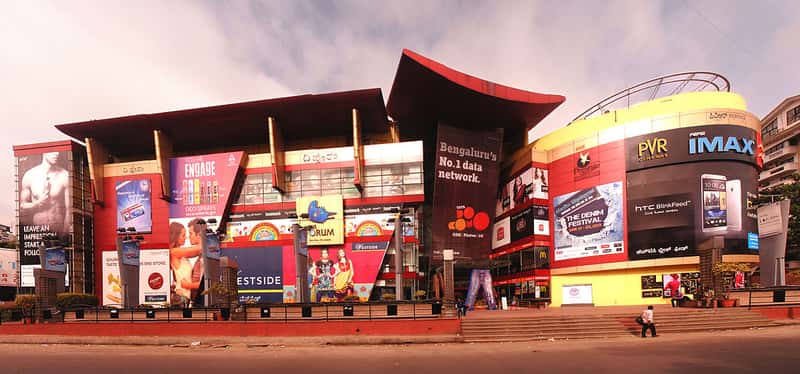
Truth be told, with all the hoopla of Indian consumers thronging retail outlets to buy, buy and buy may not be entirely true. Despite analysts and retail pundits waxing about the great return to physical retail spaces, many brands are not experiencing the kind of footfalls they were hoping for. Then, what is the reality on the ground for India’s retail spaces that continue growing?
Insightful PwC report on slowing spends
A report published by PwC in the first week of April 2023 may hold the key to why discretionary spends are not as was expected in 2023. The report revealed amongst those surveyed, 74 per cent of respondents felt non-essential spending required curtailment as their financial situation was uncertain. Ravi Kapoor, Partner and Leader-Retail & Consumer, PwC India explains: “PwC’s latest Global Consumer Insights Survey for India drives home the key message of ongoing financial stress in the lives of the consumers, where 74 per cent of them are very concerned about their financial situation. This sentiment will have a potential restraining effect on spends in highly discretionary categories of electronics and luxury.”
Promise of heightened discretionary spends
Contrary to retailers clamping down on physical expansion to stabilise against the fall in consumer spending, retail leasing is expected to touch 5.5-6 million sq. ft. in 2023, the highest level after the 2019 peak of 6.8 million sq. ft, according to a CBRE report. It is expected that primary leasing in newly-completed malls will remain the key driver of retail space demand in 2023.
Economists have been predicting a far more financially stable consumer as India’s GDP growth is unstoppable and will solidify much more by the end of 2023, thus percolating down to stability for businesses and salaried workers. Apparently, the financial ambiguity felt by many Indians will be replaced with a confident approach in 2024. Whilst this is not definitive, it certainly is pushing retailers to be prepared for the return of discretionary spending in 2024.
Attractive discounts and deals
High-street commercial spaces continue to be the ‘it’ item for investors as well as for retail businesses. At a time when leasing contracts come with attractive discounts and malls offering multiple-benefit deals, particularly Quick Serve Restaurant (QSR) and fashion brands are seeing it as an opportunity to invest and be ready for the return of big spends next year. Additionally, the new tactic of malls is to provide new developed sections that allow brands to explore and implement more creative ways to attract new custom. Of all places in India, the Delhi-NCR region seems to be the most favoured by brands for expansion.
Who’s who on the expanded ground
Aditya Birla Fashion & Retail for example are showing all signs of bullish physical retail expansion with Shopper’s Stop and Trends. Jubilant Foodworks, the Indian franchise of Domino’s Pizza and Popeye, the KFC rival, Restaurant Brand Asia the local franchise for Burger King, and McDonald’s master franchisee Westlife Foodworld are not taking a breather and holding back, despite a weak Q4 result for FY2022-23. As per ratings agency ICRA, the big five QSR brands in India will expand footprint across India with the addition of 2,300 stores between FY 2023-24 and FY2024-25 at an estimated capital expenditure of Rs. 5,800 crores.
Fashion brands are behaving in an identical manner as their unabated expansions continue. Be it apparel, accessories, footwear or kids wear, it’s all growth of stores all around. For example, Tata’s Zudio could add another 130 outlets by end of FY 2023-24. Shopper’s Stop will be adding 24 of its department store model and more beauty stores during the same period, as will Westside total 214 outlets by then.
Seamless targets 2030 for Australian fashion’s circularity

The Australian Fashion Council is perhaps playing one of the most significant roles in the country’s fashion by leading the ‘Scheme Design Report, Milestone 3.4’ for the National Clothing Stewardship Scheme which recommends a seamless way to transform fashion down under into a circular one by 2030.
Engagements across value chain
This is part of Australia’s big target for 2050-Net Zero. Seamless is the name of the initiative as National Clothing Product Stewardship would initiate engagement and act across the value chain – from designing garments to usage, re-usage and recycling. As Leila Naja Hibri, CEO, Australian Fashion Council points out, Seamless is the industry’s response to its clothing waste problem that will change the way Australians make, consume and recycle their clothes. The idea has hit off among some of the country’s leading, pioneering and progressive brands and retailers and they are uniting to do what no single business, organisation or even government can do alone.
Hibri is optimistic Seamless will guide the transition from current unsustainable linear model of take, make, dispose, to a circular economy of reduce, reuse and recycle. Seamless was created by a consortium led by the Australian Fashion Council with Charitable Recycling Australia, Queensland University of Technology, Sustainable Resource Use and WRAP Asia Pacific. The design is the result of significant research and analysis, and extensive discussions with stakeholders across the value chain including clothing brands, retailers, charities, recyclers and government agencies.
Commitment to cause
Australia’s Minister for Environment and Water Tanya Plibersek pleaded with fashion retailers to join the scheme. Speaking at the launch of Seamless, she said, “We have a choice here. This can be an industry-led approach. You collect the money, you decide how the money is best used, you invest in the research you need, you invest in the collection systems you need, you take charge… or I'll do it.” She added that “I've been really clear that this is too big an environmental problem to turn our backs on. I want to see industry leadership. I don't want to be making these decisions for you. But if I don't see enough movement in a year, then I will regulate.”
Funding Seamless to make it viable
The foundation members of the National Clothing Product Stewardship Scheme, Seamless, are BIG W, David Jones, Lorna Jane, Rip Curl, R M Williams and THE ICONIC. Each organisation has committed $100,000 to fund a 12-month transition phase while the Seamless scheme is established. The NSW Environment Protection Authority is also contributing $100,000 to the transition phase as a supporting partner. The scheme design report recommends Seamless is funded by a 4 cent per garment levy paid by clothing brands and retailers who become members of the scheme. If 60 per cent of the market by volume sign up to the scheme, a funding pool of $36 million will be raised per year to transform the industry. If industry signs up to the scheme, the activities driven by Seamless, stakeholders and citizens are projected to divert 60 per cent of end-of-life clothing from landfills by 2027.
Clearly laid out objectives
Seamless has structured a realistic and achievable goal of Australian fashion’s circularity by 2030 by defining its objectives. The first objective is to provide the fashion industry with a pathway towards clothing circularity in line with the Federal Government’s commitment to transition Australia to a circular economy by 2030. The second objective is to enable collaboration within the fashion industry value chain to achieve environmental and social improvements in line with consumer demand, as well as government policy and regulatory requirements. The third objective is to ensure economic and social well-being are preserved during the transition towards circularity. The fourth objective is to empower industry and consumers to take greater responsibility for the actions they take as they produce and consume clothing.
Streetwear strides into Indian high- fashion segment

Fun, funky and functional streetwear has been walking the streets of India far later than the Western markets but now it has permeated every segment of the fashion industry from global sportswear brands and premium fashion houses to a plethora of local brands. Streetwear as fashionable and casual clothing has social media and social influencers taking it places from a skate and surf, music and sporty athleisure outfits to entering haute fashion world of well-renowned designers. Streetwear as a category may have emerged in the 1980s in the US but it is only in the last decade that it has become a distinctive and iconic segment that is sometimes even the showstopper on European catwalks.
Local brands compete with global iconic ones
With the health and wellness overdrive, athleisure clothing is striding ahead of almost every other fashion segment with Gen Z becoming an intrinsic part of the affluent consumer segment willing and able to spend on apparels of choice. Global brands such as Adidas, Nike, Supreme, Vetements, Stüssy and Off-White are among the most recognizable streetwear iconic labels that have taken the world by storm and are now positioned well in India also. Along with them are, are some of India’s popular niche streetwear brands such as Crepdog Crew (CDC), Capsul, ADK by Avishi Dayal Kalra, Almost Gods, SIX5SIX STREET along with much-renowned fashion designers such as Masaba Gupta and Nikhil Mehra who are all a part of the streetwear segment.
In fact, CDC has been one of the fastest-growing domestic streetwear brands with almost 350 per cent year-on-year growth since its inception in 2019. It now plans to open even bigger stores in Delhi, Mumbai and other cities. As India’s one-stop shop for everything sneaker and streetwear related, the brand already logs in more than six lakh visitors every month. The company’s online platform delivers over 500 pairs of sneakers per week to customers spread across India every week and it plans to scale up its e-commerce business and community-based retail footprint.
Sneakers and bags are the best-sellers
The sneaker segment has always been one of the fastest moving sectors in India, currently growing at 12-15 per cent, and expected to catch up to the global sneaker market that stands at $6 billion. Its dominated by iconic brands like Reebok, Adidas, Nike and Puma among others. Start-ups such as Solesearch, founded in 2020 by Param Minhas, Prabal Baghla, and Rannvijay Singha are leading sneaker marketplaces that have a strong retail presence in both online and brick-and-mortar stores in Indian metros. The Mumbai store has a sneaker wall with over 75 pairs from renowned brands like Air Jordan, Yeezy, Crocs, as well as ive collaborations featuring ior, Tiffany, Off-White, Travis Scott, and more.
Innovative hybridization between Indian textiles and global streetwear influences for bags and shoes is also making a statement. Premium global brand Balenciaga showstopper is its blanket bag heavily inspired by tote bags available at local markets in India while English-born Iranian fashion designer Paria Farzaneh has used her Iranian textiles while fusing it with global streetwear silhouettes. Interesting prints and slogans on T-shirts, leggings, capris, tie-dye hoodies, oversized T-shirts, wrap skits and many other apparels make up the interesting segment.
Whether it is accessories, statement outerwear, or oversized clothing, it is all about versatility in interesting silhouettes and colour combinations that make streetwear funky in all settings. Streetwear doesn’t have to be the strangest thing you’ve ever seen in even a formal setting provided it is designed and accessorized right. And Indian designers are in a league of their own with rising roster of homegrown streetwear with a tweak that allows the wearer to reinvent their sensibilities and stand out instead of just blending in with popular fashion apparels. Being different while being comfortable is the new normal and streetwear brands are using that to maximum advantage.
Pitti Uomo Excels in Fashion and Economy, Honors Piquadro
The renowned Pitti Uomo event commenced in Florence, drawing a multitude of visitors who were reassured by the sector's robust economic performance. The opening ceremony highlighted Italy's pride in its fashion industry and the global admiration for events like Pitti Uomo 104, held in the artistic city of Florence.
Contribution of fashion sector to Italy's reputation as a hub for beautiful and well-crafted fashion was recognises. Export figures for 2022 exceeded €80 billion, indicating a positive trend expected to continue in 2023.
Menswear, showcased prominently at Pitti Uomo, experienced significant growth in international trade, with exports totaling €5.7 billion in 2022, a 22% increase from the previous year. The sector continued its positive trajectory in 2023, witnessing a 21.5% surge in the first two months alone. This success is attributed to the sector's ability to innovate rapidly, surpassing competitors.
ICE collaborated with Pitti to bolster international buyers and journalists, focusing on emerging markets such as China, Africa, Vietnam, and Indonesia.
Piquadro Group received a prestigious award during the opening ceremony for his company's remarkable achievements, including the expansion of the Group's boundaries through strategic acquisitions and a commitment to environmental sustainability and philanthropy.
UKFT leads £4M textile waste diversion
UK Fashion and Textiles (UKFT) is leading a £4 million project with partners like Marks & Spencer, Tesco, Pangaia, and New Look to divert large quantities of waste textiles from landfills.
The initiative, called Autosort for Circular Textiles Demonstrator (ACT UK), focuses on developing an automated sorting and pre-processing facility for waste textiles over a two-year period. The consortium includes recycling technologies, textile collectors/sorters, academia, manufacturers, industry associations, technologists, and renowned brands/retailers. Funding is provided by the Circular Fashion Programme, supported by Innovate UK, AHRC, and NERC under UKRI. Project partners involve IBM, Reskinned, Salvation Army, Oxfam, and others.
ACT UK aims to overcome current challenges in achieving circularity by integrating advanced technologies such as optical scanning, robotics, AI, and size reduction equipment in a single facility.
UKFT aims to create a model for large-scale sorting and preparation of non-reusable textiles, potentially preventing hundreds of thousands of tonnes of materials from reaching landfills and supplying resources to the UK textile manufacturing sector. Brands, retailers, and stakeholders are encouraged to participate.











