


FW
Birla Cellulose produces viscose from waste
Birla Cellulose has produced viscose fiber using pre-consumer cotton fabric waste. The innovation has been done through in-house R&D and uses a minimum of 20 per cent pre-consumer industrial fabric waste. Fabrics from the fiber are said to offer excellent attributes similar to virgin fiber. The business will work on further developing products made with more than 50 per cent industrial fabric waste as well as post-consumer clothing as inputs in 2020. This new line of viscose is already being adopted and is available for sale to brands and retailers.
Birla Cellulose is part of Aditya Birla. Birla Cellulose is a leader in manmade cellulose fiber. The launch of recycled viscose fiber is part of its commitment for circularity and sustainable practices. The company is also working on developing fibers using post-consumer clothing as inputs in collaboration with technology providers and brands. Birla Cellulose has been in active collaboration with brands, technology providers and textile chain actors to integrate and enhance value. Going forward, Birla Cellulose will intensify and strengthen its specialty portfolio towards value-added green textile solutions for the future. The business will work on further developing products made with more than 50 per cent industrial fabric waste as well as post-consumer clothing as inputs in 2020.
Bangladesh exports of tees down seven per cent
Bangladesh’s exports of T-shirts fell seven per cent in the first quarter. Reasons include the depreciation of the currency, low work orders and the low price offered by buyers. Buyers have lowered their purchasing price by around ten per cent during the last three months. Most orders for knit products come from Pakistan and India. High-end knit products go to Cambodia and Vietnam.
Bangladesh’s T-shirt exports increased steadily over the last three financial years. Around 80 per cent of the country’s export earnings come from the garment sector. During the last four decades, the industry has gradually become the driving force of the economy. But the basis of this driving force is mainly in five or six products. Garments are exported from Bangladesh mainly under two categories. One is knit, the other is woven. In these two categories, mainly five types of goods are exported. These are T-shirts, trousers, shirts, jackets and sweaters. The country’s readymade garment exports fell by 1.64 per cent in August 2019 because of the Id vacation. Most factories remained closed for at least seven days.
However, demand for T-shirts in Western countries remains high throughout the year. Despite the fact that China remains a key global centre for the production of T-shirts, production is gradually shifting to other countries in Asia.
APTMA seeks elimination of change in tax refund mechanism
All Pakistan Textile Mills Association (APTMA) in its letter to Razzak Dawood, Adviser to Prime Minister on Commerce, Textile, Industry & Production and Investment has sought his intervention for elimination of the new change in tax refund mechanism as consumption based refund policy is detrimental for the industry.
As per APTMA, the system cannot be accepted as it will erase the liquidity of around Rs 300 billion as it will remain stuck with the government all the time. If the new system is allowed to continue, it will destroy the industry due to the non-availability of the liquidity. The refund system has been moved to a consumption based refund policy rather than an input based monthly sales tax return on input based system. The policy will permanently transfer approximately 5-6 month value of input on materials from industry to the coffers of FBR. And the total value of sales tax collection is estimated to be Rs 600 billion annually, this means Rs 250 billion.
In addition, the fastest system is currently processing only 42 per cent of the claims made, the rest being referred to the old star system of verification. This will further delay refunds of over Rs 50 billion taking the total transfer from industry to FBR to Rs 300 billion.
The letter also suggests that a very simple way to verify claims is to request FBR to provide the sales tax collected for the first three months and the refunds made pertaining to this period only. This is necessary to include the refunds made for early periods and the irony is that the bulk of those were also made the bonds which were worthless and which position we understand FBR is correcting.
With global acceptance brands gear up to revive the ‘Made in India’ tag
"For long, products Made in India brands have been ridiculed for their low quality. There have been instances where many western retailers have refused to stock collections by Indian designers due to the reputation of these products being assembled in sweatshops and having a ‘hippie dippie’ or bohemian aesthetic."
 For long, products Made in India brands have been ridiculed for their low quality. There have been instances where many western retailers have refused to stock collections by Indian designers due to the reputation of these products being assembled in sweatshops and having a ‘hippie dippie’ or bohemian aesthetic.
Many factors like tenuous labor regulations, rampant corruption, low civic engagement, leverage afforded to foreign investors, often one-sided trade policies and a general lack of social consciousness have resulted in India being counted among low-cost manufacturing countries.
Brands reinforce their confidence in Indian products
However, now many global companies hope to mobilise industriesand communities to affect change. They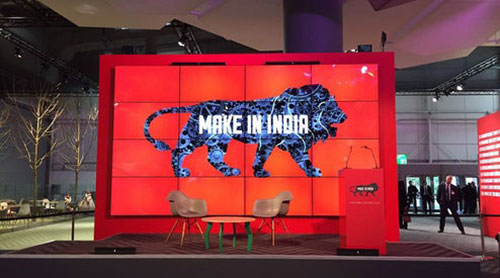 include international players such as Belgian Dries Van Noten, who believe India is capable of producing luxury pieces that can compete on a global scale without impacting their brand’s business.
Similarly, Miuccia Pradahas remained unaffected with the origin of her pieces as the brand produces on a global level. Now, ‘Made-in-India’ products are coveted and celebrated by brands and consumers alike.
Factories get humanised with more customised offerings
Though many western luxury houses depend on South Asia to embellish their runway dreams, the producers are seldom credited for their work. A case in point is brands by Indian manufacturers such as Arvind and Raymond that create elevated, tailored offerings with meticulous attention to detail.
The continent’s manufacturing hotspots are also changing with Indian factories humanising their manufacturing supply chain so that they lie under the radar. Since 2013, there has been a surge of new-age factories focusing on improving their manufacturing standards and code of conduct.
Indian products global acceptance
Meanwhile, many Asian factories are now being passed over to millennial heirs, who are questioning the operations of their factories and their interactions with local communities. Increasing consumer demand is only putting more pressure on these businesses to evolve. Therefore, dismissing India — which can produce the finest handbags, couture and ready- to-wear — is like dismissing its long cultural heritage. On the other hand, the acceptance of its manufacturing is like accepting its history of offering nimble and articulate products that need to be treated equally with other global counterparts.
AI helps transform business, insufficient knowledge hampers growth
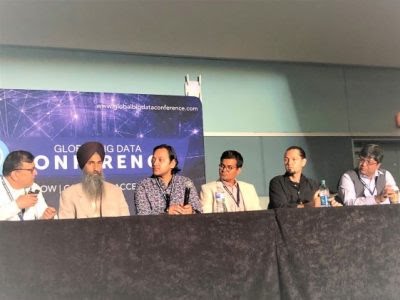 E-commerce platforms enabled with Artificial Intelligence (AI) are changing the business model of many brands. However, Sudhir Kadam, Venture Partner of FYDA Growth Partners believes there’s still a lot to achieve. While moderating the keynote panel ‘AI in Retail/E-commerce’ at the 7th Annual Big Data Conference, he stated though it is easy to adopt AI if you start from scratch; it is difficult to dismantle a legacy system for big companies.
Leveraging data to enhance consumer experience
Matthew Tovbin, Software Architect at Salesforce, believes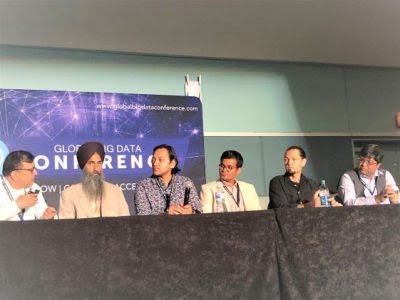 adopting AI is like transforming a company’s operations inside out. His company embraced AI a few years ago and has fully integrated the system into its operations. Similarly, GAP has been building quantitative models for over 30 years and experiments a lot on its platform to understand the behavior and interaction of its users. The brand aims to speed up its delivery process and identify the weak links in the process that are resulting in the loss of the time by understanding the relevancy of AI both from its scale perspective and its ability to add productivity to the value chain of e-commerce retail.
Use of AI is also helping companies like Levi Strauss to transform their business. Levi’s is leveraging data and algorithms on these platforms to enhance its consumer experience. It has been building applications to help its consumers shop online and has recently launched a ‘recommendation system’ which helps its customers to find relevant products.
Challenges of insufficient knowledge
However, there are many challenges brands are facing as they are working in a new domain with new technologies. Another challenge is the use of Natural Language Processing. Brands find it difficult to cope with both the language and image processing used in the NLP model. They believe the language used by the model is as stable as deep learning and the image processing quality is also weak. To counter this, they are reading high-level reviews on the technology and its applications. Through this, it they are able to isolate the problem areas for its customers.
Arijit Sengupta, CEO of Aible, believes one needs to be an expert data scientist to create AI and most people do not have data scientists. He expects AI to be most impactful technology in future. However, companies do not have the required knowledge about it.
Summing, Sridhar Muppalla, NIT Warangal brand ambassador said AI is the buzz word currently with companies investing money in it. However, his company also aims to promote startups as only if they are successful, they will hire more people.
H&M and Ikea examine chemicals in recycling
H&M and Ikea are studying the chemical content in post-consumer textile recycling. H&M is using recycled materials in its products as one of the key elements in the group’s ambition to become totally circular and renewable. But merely taking up textile recycling would be fruitless as the chemical content of collected pre-owned textiles is unknown. This project with Ikea, under way since last year, was taken up to ensure the safe reuse of materials in the circular system and to ensure good chemical management. The initial focus for the study has been post-consumer cotton, with polyester and wool-rich post-consumer textiles to be included as the study progresses.
The two Swedish retail giants have conducted over 8,000 tests on collected recyclable textiles and think they will have better possibilities to develop an action plan for the use of recycled textiles while meeting strict safety standards. They believe their results could influence the wider industry. The ambition for the study is to use the findings to encourage industry peers towards increased use of recycled textiles and to serve as a base for legislation and standardisation regarding chemicals in recycled textiles.
Recycled materials are key elements in a circular economy. However, increasing the use of recycled materials while ensuring these textiles are kept free of toxic chemicals presents a challenge for the industry.
Esprit gets closer to online players
Esprit wants to strengthen its agreements with online players like Asos, Zalora and Tmall. The Germany-based company operates with 10 of its directly-operated stores in the French market, one less than the previous year, while both in Italy and in Spain the company makes its distribution through third parties, both franchised and multi-brand stores and corners in department stores, in addition to the online channel. On a global scale, Esprit has been led by Anders Kristiansen since 2018. Kristiansen has launched a new strategic plan that goes back to betting on basics, gaining speed and making aggressive investments to grow in China, one of its target markets.
Switzerland overtook the French market as the second largest territory for the company last year, behind Benelux (Belgium, Netherlands and Luxembourg). On the other hand, sales in Spain fell nine per cent. In Italy, sales were reduced by 12 per cent.
Jesús Gil is the manager of the company in Spain, France and Italy. With a degree in economics, Gil began his career in the fashion business at L'Oréal, where he worked for five years. In his new position, Gil will continue to work from Spain, where he will oversee the work of managers in Italy and France.
Asia to dominate Kingpins Amsterdam
Kingpins Amsterdam will be held October 23 to 24, 2019. More than 50 exhibitors are expected to participate. Most of them are from Asian countries like Taiwan, Thailand, China, India, Bangladesh, Japan and Singapore.
Kingpins will mandate corporate social responsibility standards for its exhibitors. The denim industry event series will ensure all its exhibitors comply with a set of mandatory environmental and social standards by 2020. These denim mills will also be expected to meet stringent chemical management standards aligned to ZDHC (zero discharge of hazardous chemicals) criteria. The show’s goal is to become even more engaged in promoting environmental responsibility within the industry. Advise and support will be offered to exhibitors in order to help them transform their approach. Kingpins does not wish to introduce new certifications, but the organisers are keen to promote the strictest existing ones. Once they have drawn up a set of social responsibility specifications for exhibitors, they plan to share them with other textile shows, in order to promote collective change across the supply chain. For the time being, the new exhibitor admission criteria are limited to the show’s Amsterdam edition, but the goal is to eventually apply them to the New York, Hong Kong and China shows too.
Turkey textile exports down five per cent
Turkey’s textile exports decreased 5.5 per cent in the first three quarters of 2019. The share of textiles and raw materials in Turkey’s total exports for the first nine months of the year stood at 5.6 per cent. In September, exports to 28 countries in the EU region decreased by 9.5 per cent.
In the first three quarters of 2019, Turkey’s textile exports to Italy declined by 7.4 per cent. In September alone, exports to Italy declined by 9.5 per cent. Exports to the US market increased by 12.7 per cent.. However, in the first nine months of the year, Turkey’s exports to this country decreased by 2.1 per cent.
Turkish exports of woven fabrics in the January-September period of 2019 decreased by 7.6 per cent. Yarn exports decreased by 4.6 per cent. Home textile exports decreased by 2.9 per cent. During this period, fiber exports decreased 11.1 per cent. In fiber products group, synthetic and artificial fibers have a share of 62.6 per cent and cotton fibers have a share of 33.8 per cent. In the January-September period of 2019, exports of technical textiles increased by 8.8 per cent. Nonwoven export increased three per cent. Ready-to-wear and apparel export increased by 0.4 per cent. In September, this figure was up by 3.2 per cent.
Taiwan sets textile standards
Taiwan’s textile industry is a major provider of functional fabrics for outdoor and sportswear brands. Taiwan accounts for 70 per cent of the world’s output of functional fabrics. As the world’s largest producer of functional fabric, the country’s textile industry is home to cutting-edge techniques, new technologies and the development of groundbreaking industry standards. With the strong development and integration abilities for functional artificial fibers, as well as the ability to provide a wide variety of customized fabrics in small quantities, Taiwan continues to develop competitive advantages in functional, environmental-friendly and smart fabrics. The textile industry also features low pollution and low energy consumption with production process, innovative technologies in its semiconductor and biomedical industries, electronic components, and cross industrial integration.
Today, nearly 50 per cent of all fabric is made from recycled materials and Taiwan is leading this big change throughout the global textile industry. Recycled yarns—used for apparel, industrial and sport accessories—are growing in importance and are a core part of the Taiwan textile industry, reducing the negative impact to the environment. As a leader in recycled polymer and polymer blends, the country is constantly introducing new sustainable textile developments, which combine high-tech, ecology, function and life aesthetics, such as the latest recycled nylon from ocean waste and water-free dyeing.











