


FW
Italian Trade Agency, ACIMIT to organise a service centre at Irantex
Italian Trade Agency and ACIMIT, the Association of Italian textile machinery manufacturers, will organise Punto Italia, a service centre at the next Irantex, the main Iranian textiles and textile machinery trade show, to be held in Tehran, from December 9 to12, 2019.
Punto Italia will be used for meetings between Italian textile machinery builders and their Iranian customers. In the service centre, local companies will be able to get for information on the Italian technological offer. In the first half of 2019 the value of the Italian direct export to Iran was equal to EUR 2 million, compared to EUR 15 million in the same period 2018. The two sides are interested in developing bilateral relations. Italian firms are keen to be active in the Iranian market and are present at most of the exhibitions held at the Tehran International Permanent Fairground.
An Italian trade delegation travelled to Iran recently to negotiate with some Iranian companies which demonstrate Italy's interest in maintaining and developing relations with Iran, he noted. The embassy tries to help Italian and Iranian companies gain a better and deeper understanding of the two countries' markets and find areas of cooperation, he mentioned.
ACIMIT represents an industrial sector that comprises roughly 300 manufacturers, which produce machinery for an overall worth of around EUR 2.5 billion, of which 84 per cent are exported.
Karl Mayer’s new machine reduces time-to-market
Karl Mayer’s new RSJ 4/1 ON raschel machine reduces the time-to-market and brings a touch of individuality to the mass market. The machine exploits all the advantages of integrated software solutions and electronic guide bar control when producing patterns.
It makes use of the high-tech connectivity of the k.ey and k.innovation systems in Karl Mayer’s KM.ON digital brand. The RSJ 4/1 ON is the first machine to integrate the extensive k.innovation systems to optimise the virtual development of textiles. Thanks to its collaborative features, k.innovation is designed to deliver more than just patterning software and focuses on a new type of product development.
The RSJ 4/1 ON is also designed to deliver maximum productivity. With a 50% wider working width, this new machine is said to offer a 37% better cost:benefit ratio than its predecessor for the same speed. Like other state-of-the-art products produced by the Karl Mayer Group, the machine can be networked to other intelligent KM.ON systems via k.ey to increase production efficiency. The machine is available with a working width of 195" and a gauge of E 28. The first machines will be available at the beginning of 2020.
The k.innovation systems include a web-based design tool, so that customers can produce the jacquard patterns themselves or else modify them according to their own ideas. Global collaboration with creative internal and external partners is, therefore, efficient and secure.
Guess revenue up one per cent
For the three month period Guess’ net revenues were up 1.7 per cent. By region, America’s retail revenue decreased 4.9 per cent in dollars and 4.5 per cent in constant currency, while retail comp sales including e-commerce decreased three per cent in dollars. Domestic wholesale revenues increased seven per cent in dollars and 8.1 per cent in constant currency. Europe revenues increased 9.1 per cent in dollars (13.2 per cent in constant currency) while Asia revenues decreased eight per cent in dollars (4.6 per cent in constant currency). Licensing revenues decreased 0.3 per cent in dollars.
Overall, the strength of the company’s businesses in Europe, Americas wholesale and licensing, combined with a disciplined and effective approach to manage costs, has enabled it to more than offset softness in its Americas retail and Asia businesses in the quarter.
For the full year, Guess is maintaining the high-end of its guidance and raising low-end. This speaks to the strength of its global brand and the power of its diversified business model which provides it with multiple levers to continue to increase revenues and improve profitability. Guess expects net revenues to increase between 2.7 per cent and three per cent for the full-year.
Synthetics hold promise for India
Synthetic fabrics and performance garments are going to be the two most promising segments in the Indian textile industry. The industry accounts for five per cent of India’s GDP and 13 per cent of the country’s export earnings and employs about 50 million people. It proved to be highly productive and globally competitive across the value chain – from farm to fiber. Its future however depends on sustainable manufacturing practices, transparency, and its readiness to transform itself into a circular economy.
The Indian textile industry is highly fragmented and facing unprecedented challenges. One is the global recession. Another threat is the import of yarns, fabrics, and garments from Bangladesh. The industry needs help in the areas of export promotion, access to working capital, and loan restructuring. Indian textile units have asked for liquidity support and a one or two year moratorium. Other issues are pending claims under the various rebate schemes; release of TUFS subsidy; reducing the margin money for working capital from 25 per cent to ten per cent and the debt-equity ratio norm from 1:1.33 for the entire textile and clothing industry; extending the five per cent interest subvention for all textile and clothing export products; slotting recycled PSF under the five per cent GST rate; and enhanced EPF benefits.
China’s exports to the US up seven per cent
Last year, China’s exports of textiles and clothing to the US increased 7.9 per cent. Clothing accounts for 73 per cent of those exports, and textiles make up the other 27 per cent. China is still at the top of sourcing for American brands. This is because in comparison to China other manufacturing countries are not able to provide quicker service.
For some products with complex procedures, the delivery time in Southeast Asia is at least one month slower than in China. If the quantity of zippers and all the buttons is miscalculated before production, it can be solved in China in only two hours, while in Southeast Asia, the production line would need to be shut down for two days to wait for the right accessory to be replaced. So brands with fast-fashion items that need to be replenished quickly prefer to stay with China. Compared with emerging textile and garment manufacturing countries such as Southeast Asia and Africa, China’s supply chain is still in a favorable position for fast orders. China still holds a 31.5 per cent market share of textiles and apparel in the US.
Chinese and American companies have not stopped trying to seek opportunities for cooperation.
US-China trade war, sustainability top of the mind for dominate global makers
"Two topics currently dominate denim manufacturers list of priorities as of now: the US-China trade war and sustainability. Denim manufacturers are not only adapting their operations in reaction to the US-China tariff war but also maintaining a razor-sharp focus on sustainability. They are developing new strategies to incorporate eco-friendly materials and process besides reconfiguring their production processes to avoid excess tariffs from China. Several mills among the Kingpins New York exhibitors recently echoed these developments as driving their businesses."
 Two topics currently dominate denim manufacturers list of priorities as of now: the US-China trade war and sustainability. Denim manufacturers are not only adapting their operations in reaction to the US-China tariff war but also maintaining a razor-sharp focus on sustainability. They are developing new strategies to incorporate eco-friendly materials and process besides reconfiguring their production processes to avoid excess tariffs from China. Several mills among the Kingpins New York exhibitors recently echoed these developments as driving their businesses.
Increased use of eco-friendly fabrics and finishes
Many denim brands now concentrate on sustainability aspect of a fabric rather than its technical aspect. This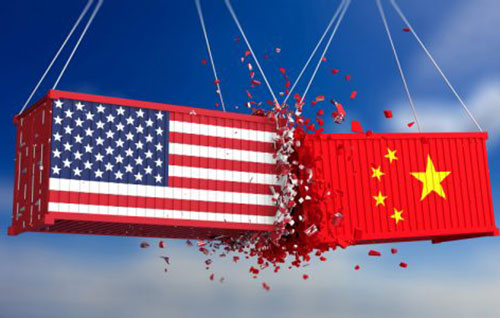 compels manufacturers to use more eco-friendly fabrics and finishes. Premier denim brand Twin Dragon Denim Mills incorporates eco-finishes in all its fabrics. The brand plans to incorporate Indigo Zero a waterless dye into its processes by the end of this year. Another of its plan includes switching to biodegradable fabrics by the year-end. The company’s wash house in Los Angeles also plans to switch to laser finishing as it more eco-friendly.
Sustainability has changed the way denim mills manufacture their products. Brands are now opting for eco-friendly raw materials. They are also overhauling their production processes to ensure a more sustainable production.
In terms of styles, denim brands are focusing on vintage looks that also incorporate modern techniques and materials. These include: recycled fibers such as Repreve and laser finishes that reduce chemical and water usage. And as per Monica Betancur, South American commercial director at Kaltex America also reveals companies are being cautious, especially about China as business is tough right now.
The statistics on denim imports to the US reflects, jeans imports from China dropped 17.02 per cent to $564 million in the first nine months of the year. For the 12 months through September, the country’s imports from China declined 11.67 percent to 21.22 percent. On the other hand, its denim apparel imports from Mexico rose by 5.56 percent to $625.84 million; it’s also market share increased by 6.73 per cent to 21.98 per cent. The company believes in maintaining a collaborative relationship with its brand and provides product support and customer services.
Emergence of new growth centers
As companies are seeking a tariff-free sourcing alternative with a low learning curve, Pakistani mill Artistic Milliners is seeing a strong pickup in business. The company’s exports to the US increased by 8.97 percent to $194.95 million in the year through September. Besides the US, it is also seeing a growth in business from Canadian and European firms. It customises fabrics and jeans with a range of finishes and styling, besides re-engineering its washing and dyeing processes to improve its ecological footprint.
Mexican companies like Global Denim are also registering business from new companies that source in China to avoid tariff costs. These companies are relying on the duty-free benefits offered by North American Free Trade Agreement under USMCA. They hope the bill to be passed in the Congress before this year’s end. Overall, though times are tough for the denim industry, these are not expected to last forever. This slowdown is cyclical in nature. In the first nine months of this year, US denim imports increased by just 0.43 per cent. However, their demand soon picked up to grow by 2.81 per cent to $3.87 billion for the 12 months through September.
The opening of the Vidalia Mills in Lousiana has also provided a fillip to the Made in America denim production. The mill plans to use Lenzing’ Tencel fiber to make its denims as it is derived from wood pulp and produced in a closed loop manufacturing structure. Denim manufacturers are also aligning their operations to the ongoing U.S.-China tariff war as well as brands and consumers’ focus on sustainability.
Freudenberg to acquire Filc
Freudenberg, the global technology group has signed a final agreement to acquire 100 percent of the shares of Filc. Filc is a producer of needle punch nonwoven textiles and laminated materials with a focus on the automotive and construction industry. Privately-owned Filc is headquartered in ŠkofjaLoka, Slovenia, and operates two more production sites in Mengeš and Lendava, Slovenia, as well as a sales office in Dayton, OH, USA. Filc has roughly 360 employees. The transaction is subject to approval by the antitrust authorities.
“With the acquisition, we would like to further strengthen our performance materials business, and expand our portfolio and technological footprint in Europe,” says Dr. Mohsen Sohi, Freudenberg Group CEO.
The further expansion of its Needle Punch Business “Filc has great needle punch know-how which we will benefit from, especially in terms of composites. Filc´s exceptionally good adhesive coating abilities will allow us to offer customer solutions in adjacent segments in the construction business,” explains Dr. Frank Heislitz, Freudenberg Performance Materials CEO. “Besides, we will expand our technical expertise in acoustics, both in construction and automotive, and provide customers a broad technology portfolio with lamination, printing, and coating” says Heislitz.
“Being part of a globally active company offers an opportunity for regional and global expansion of our business. Besides, sharing our expertise in technology will be crucial to scaling up our growth,” adds AnžeManfreda, CEO of Filc. The company was founded in 1937 and has been in the nonwovens business since 1963.
Freudenberg has a long history in global presence and the broadest technology platform in the nonwovens industry and is thus an assertive partner for Filc. Values and Customer Focus in common as a privately-owned company, Filc has very similar values and guiding principles to Freudenberg. Both companies have a strong focus on customers and innovation, as well as on people for finding the right solutions.
India’s apparel, textiles exports to Vietnam on the rise
Indian apparel and textile exports to Vietnam have grown 48 per cent from 2016-2017 to 2018-2019. However, India’s share in Vietnam’s manmade fiber textile imports is just 3.34 per cent. And India’s share in Vietnam’s total textile imports is just 2.29 per cent. But the textile trade between both countries has been on the rise in the last two years. In the first ten months of 2018, bilateral trade was up 47 per cent over the same period in 2017, bringing the countries closer to the target of 15 billion dollars in two-way trade in 2020.
The free trade agreement with Vietnam can enable India to make use of the market access. Indian firms have been invited to invest in Vietnam’s yarn, fabric and dyeing industries. For Vietnam, most types of yarns, woven and knit fabrics can be imported duty-free from India. Vietnamese companies have been invited to participate in a buyer seller meet to be organised in Coimbatore, March 17 to 29, 2020. Visitors from 40 countries are expected to participate in the event for sourcing varieties of yarns, fabrics, made-ups, home textiles and technical textiles from India. Buyers from Vietnam will be eligible for full hospitality, including complementary return airfare, accommodation and transport.
Coats acquires yarn maker Pharr HP
Coats has bought over Pharr HP. Coats is an industrial thread company that offers more than 20 products in ten sizes of thread. But in terms of color it supplies the market more than a hundred thousand colors. It has launched many ranges of new innovative threads. One of these is the waterproof AS thread, which is used in footwear and down jackets.
Pharr HP, based in the US manufactures high-performance engineered yarns and specialises in providing technical yarn solutions to the industrial thermal protection, defense and fire service industries. The acquisition of Pharr’s manufacturing capabilities and customer base will provide further expertise and scale to Coats’ business. Pharr wanted to find the right buyer and found it in Coats, a global leader with a long, proven track record, which understands Pharr along with its commitment to its associates and communities.
Coats in turn can enhance Pharr’s performance by leveraging its extensive textile experience, strong industry connections, existing operational footprint in North America, and strong brand to deliver high performance solutions for its customers. With Pharr, Coats hopes to acquire a deep expertise in technical yarn solutions and create ever lighter, stronger and more comfortable yarns for the most extreme environments. Coats and Pharr hope to collaborate by building on synergies to develop innovative products.
Oerlikon’s Wings Fdy available for polyamide 6
Oerlikon’s Wings Fdy is now available for the polyamide 6 process. With this development, the tried and-tested Wings technology – so far known for Fdy yarns from polyester manufacturing – is now available for the challenging polyamide 6 process. This new 24-end winding concept makes the efficient production of Fdy PA6 yarns a reality. Wings Fdy pays yarn producers dividends, particularly in terms of investment expenditure and operating expenditure: significant savings with regards to energy footprint due to its more ergonomic design. The enclosed draw unit ensures low spin finish emissions, offering a safe working environment.
Oerlikon develops modern materials, systems and surface technologies and provides specialised services aimed at securing high-performance products and systems with long life spans for customers. Oerlikon is the world market leader for manmade fiber filament spinning systems, texturing machines, BCF systems, staple fiber systems, solutions for the production of nonwovens and as a service provider offers engineering solutions for the entire textile value added chain.
The Eafk Evo generation of machines promises superior speeds, greater productivity and consistently high product quality, along with lower energy consumption and simpler operation vis-à-vis comparable market solutions. The BCF S8 production plant promises carpet yarn manufacturers greater punching power.











