


FW
Eco-friendly fashion reaches new levels with materials, distribution methods
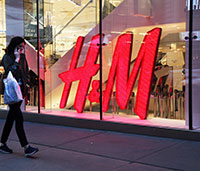 Fast fashion is increasingly becoming disposable fashion as consumers are discarding their clothes after only one use. In the UK alone, consumers throw away over 300,000 tons of clothing every year. And part of the problem is over-production of clothing that is never sold. A power plant in Sweden recently switched to H&M clothing instead of coal to generate energy. In 2017, the power plant incinerated 15 tons of H&M products. Contrast this with luxe brand Burberry which burned around $37 million in clothing sometime ago to avoid selling it at a discount.
Use of organic fibers on the rise
Taking eco-friendly revolution to a new level, brands are using non GMO soy clothing, organic linen fiber, and Lyocell fiber to make clothes. Rising demand for such clothes is also fuelling the rise of new startups. A recent example is Alternative Apparel acquired by major clothing maker Hanes in 2017. The label ensures sustainability through the use of organic cotton, recycled polyester and plastic bottles for the creation of eco-fabrics, non-toxic, gentle dyes and water-conserving washes. It also uses organic packaging, which saves 2,100 trees, 860,000 gallons of water, 120 tons of carbon dioxide and 400 cubic yards of landfill every year.
New apps for reinventing distribution
Along with manufacturing, distribution of clothes is also being reinvented with new modes emerging. For instance, Stitch Fix introduced a new data-driven app that enables consumers to buy clothes and keep them for about a week before returning them. Banking on American demand to remain fashionable with minimum waste, the startup is trying to create a sustainable niche for itself in the market. Besides its own, it is also pushing over 1,000 other brands and earned over $366 million in the first quarter of 2019.
With upcycling becoming the new buzzword, demand for digital second-hand stores with a twist is also increasing. A well-curated thrift store, thredUP sells everything from dresses and coats to handbags and other accessories on the simple premise of waste-not, want-not.
Pure London ends on a successful note - overcomes weather hurdles
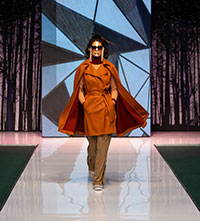 Festival of Fashion, Pure London ended after a successful three days of business and inspiration welcoming visitors from over 80 countries. Despite hurricane Ciara, buyers from stores including Selfridges, Debenhams, Next, Galeries Lafayette, Pamela Shiffer, Sunday Best, Asos, New Look, The Dressing Room, and Jules B flocked to Olympia for the AW20/21 presentation of over 1,300 inspirational and trend-led collections along with a three-day programme of insightful, challenging and stimulating content. While sourcing and manufacturing show Pure Origin attracted sourcing managers from brands including Prada, Burberry, Ann Summers, Gibbons, Next, Karen Millen, Maniere De Voir, Long Tall Sally, James Lakeland, Lipsy, Radley & Co, Monsoon, The Sourcing Team, YMC, Gloverall, Centro Sourcing, Amazon and TK Maxx.
Martin Arnold, Fashion Portfolio Director of Hyve Group plc said: “Buyers really made the effort this season highlighting the importance and relevance that Pure London has in the buying calendar. Even with trains and flights cancelled due to the weather they showed the true grit of UK fashion to keep it business as usual, demonstrating the resilience of the market.” The show maintained a high level of visitors throughout the three days, with exhibitors commenting on the quality of the buyers and a continued interest in buying ahead for the new season.
The AW20/21 catwalk shows and Unique Style Platform trend presentations were a big success, whilst talks on the Nomad and Origin Stages were delivered to packed audiences. Over 2500 people digested topics focused on sustainability, authenticity, visual merchandising, textile production and fabric life-cycles, garment marking, sourcing advice, industry standards, fashion-tech innovation, forecasting, inclusivity and empowerment, as well as a daily morning briefing outlining the unexpected benefits of Brexit and a workshop session on building business strategy to be Brexit resilient.
Trend partner Unique Style Platform outlined the macro trends for the AW20/21 season, highlighting a younger generational divide of Greta Thunberg vs Love Island groups – those fighting fast fashion opposed to those over-consuming it. Jane Kellock, Founder and Creative Director of USP said; “We are entering an era of extremes and conflict in society. AW20/21 is about finding balance.” The four key trends, Hibernate, Attune, Opulence and Nu-Tech were brought to life on the catwalk with a showcase of exhibiting brand collections. The next show takes place on the 19th – 21st July 2020 at Olympia London.
Challenge Textile Challenges a Challenge
Yesterday, Wu Qing, vice mayor of Shanghai, together with a group of officials from the industry and public health departments in the city, toured Shanghai Challenge Textile Company Limited which is seated in Tinglin town in Jinshan District, outskirt in the southwest of Shanghai, for inspecting protective gear production to solve problems that might crop up at the time when the existing machines are running in full capacity and the new lines are put on stream because the populous metropolitan itself has to challenge the shortage of protective textiles with increasingly incoming workers who return after Chinese Lunar New Year holidays.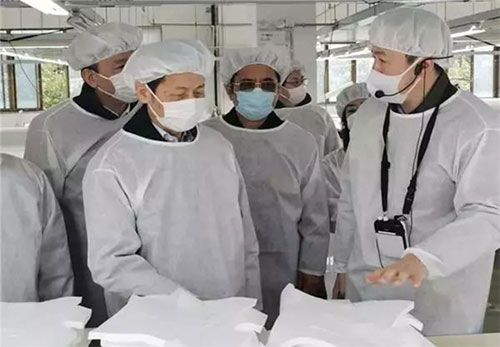
Robert Yang (1st on the right), ex-president of China Knitting Industry Association (2005-2015), incumbently, president of Shanghai Challenge Textile Co. Limited, reported that the company was called to produce protective garments on a short notice, and mobilized in a quick-responsive system to get the first batch of raw materials on February 3 to turn out 500 units of quarantine-purposed protective clothing the next day. The trial production was a success on daily account because the company has, for twenty years, been specialized in high-end fine wool fleece knit fabric and garment, including outdoor sports wear rather than this category of medical and health protective wear. As of February 9, the daily output is rated at 5000 units in capacity and expected to reach 10,000 in five days after remodeling the process flow and management improvement. Robert Yang pledged to expand the production capacity for the one-off isolation apparel to arrive at 20,000 units a day as driven by the pressing demand of the grave situation for the epidemic disease prevention and control and the actual needs from the government and the market.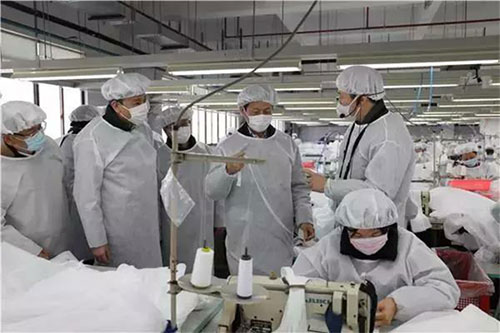
Robert Yang’s outlook to the market demand is right as the source from the Ministry of Industry and Information Technology (MIIT) shows that as of February 2, the whole country was accessible only to 20,000 units of medical and health protective wear in daily output, a marginal increase from that of January 28, still leaving much room to be fulfilled, far from cry, as thousands and thousands of doctors and nurses dispatched across the country to Wuhan, the coronavirus-ridden city, need to be well-equipped against any trace of possible contagion on the battle front, people from all walks of life from villages to cities in the country also need preventative measures to protect themselves against risk in daily life.
As a years-long business partner for famous international brands, such as Adidas, Uniqlo, Milliken, Polartec, Icebreaker, VF Corporation etc., Shanghai Challenge Textile Co. Limited is trustworthy of being a reliant, efficient, corporate-compliant quality supplier for medical-care protective wear and gear.
Contributed by Mr. ZHAO Hong
He is working for CHINA TEXTILE magazine as Editor-in-Chief in addition to being involved in a plethora of activities for the textile industry. He has worked for the Engineering Institute of Ministry of Textile Industry, and for China National Textile Council and continues to serve the industry in the capacity of Deputy Director of China Textile International Exchange Centre, V. President of China Knitting Industry Association, V. President of China Textile Magazine and its Editor-in-Chief for the English Version, Deputy Director of News Centre of China National Textile and Apparel Council (CNTAC), Deputy Director of International Trade Office, CNTAC, Deputy Director of China Textile Economic Research Centre. He was also elected once ACT Chair of Private Sector Consulting Committee of International Textile and Clothing Bureau (ITCB)
Coats acquires Pharr High Performance Yarns
Coats, an industrial thread company that offers more than 20 products in ten sizes of thread has bought Pharr High Performance Yarns.
The acquisition of Pharr’s manufacturing capabilities and customer base will provide further expertise and scale to Coats’ existing personal protection business. Pharr wanted to find the right buyer and found it in Coats, a global leader with a long, proven track record, which understands Pharr along with its commitment to its associates and communities. Coats can enhance Pharr’s performance by leveraging its extensive textile experience, strong industry connections, existing operational footprint in North America, and strong brand to deliver high performance solutions for its customers. With Pharr, Coats hopes to acquire a deep expertise in technical yarn solutions and create ever lighter, stronger and more comfortable yarns for the most extreme environments. Coats and Pharr hope to collaborate by building on synergies to develop innovative products.
Coats supplies the market more than a hundred thousand colors in the market. It has launched many ranges of new innovative threads. One of these is the waterproof AS thread, which is used in footwear and down jackets. Pharr, based in the US, is a manufacturer of high-performance engineered yarns and specialises in providing technical yarn solutions to the industrial thermal protection, defense and fire service industries.
Bangladesh can show the way in global supply chain
Bangladesh can become an example of a protective global supply chain, providing a model that can be adopted by countries around the world. It has been almost seven years since the Rana Plaza factory disaster, killing more than 1,100 workers, mostly young women, and injuring 2,500 others.
More broadly, there is a need for fresh approaches to address labor rights in Bangladesh and elsewhere. Buyers need to acknowledge how their own business models – which put a premium on lowest cost and fastest turnaround – often exacerbate pressures on local factory owners and harm workers. These global brands must also move away from the punitive policing model that currently places blame on local suppliers whenever factory auditors spot a problem. Instead, there is a need for a more collaborative model, one that emphasizes greater communications and cooperation between buyers and suppliers, and shares responsibility for the well-being of workers.
Bangladesh’s readymade garment industry is the second largest in the world and a major supplier to Europe. Since 2008, Bangladesh apparel exports have more than tripled, garment sector exports account for 82 per cent of all exports from the country. This tremendous growth has helped fuel the country’s economic development and cut the level of extreme poverty to half since 2000.
EU helps Myanmar emerge from poverty
In Myanmar, the EU’s preferential trade tariffs have helped lift thousands out of poverty and reduce inequalities. Since 2015, Myanmar’s exports to the EU have grown by over 230 per cent. The EU’s enhanced engagement with Myanmar focuses more broadly on compliance with human rights conventions and labor rights. Partly thanks to GSP, countries like Myanmar are making constructive efforts to improve on labor rights, child rights and adherence to universal values. However, there are a number of areas where the EU will continue to encourage Myanmar to make urgent efforts, like democratic reforms, freedom of expression, cooperation with the UN and the rights of the Rohingya. The EU imports twice as much from least developed countries like Myanmar as the rest of the world does. Myanmar has shown a constructive attitude and engagement on the issues of concern raised by the EU.
The European Union will continue to engage with countries, including Myanmar, that fall under its Everything But Arms (EBA) trade initiative. EBA is an initiative under which all imports to the EU from least developed countries are duty-free and quota-free, with the exception of armaments. The initiative is part of the EU Generalised System of Preferences (GSP) aimed at encouraging development of the world’s poorest countries.
Premiere Vision to host Fashion Source in Shenzhen this November
Fashion Source will be held in China from November 27 to 29, 2020. This is a leading textile and fashion trade shows in Asia and takes place twice a year organized by Premiere Vision. The upcoming event will bring together a creative range of materials – yarns, fabrics, accessories, leathers, textile designs – from a broad selection of Asian and European producers. Founded in 2001, Fashion Source brings together the entire Chinese fashion industry. The leading apparel sourcing trade fair in the South of China, welcomes in each editions (May and November) more than 1,500 exhibitors and 50,000 visitors from around 20 Asian, European and American countries. The location in the heart of Shenzhen has contributed to its rapid expansion, driven by the long history of the region’s textile and fashion industry, technological developments, and its proximity to Hong Kong and Canton.
China - looking beyond the current health situation - is expected to become the world’s largest market for clothing and luxury goods as of 2025. Première Vision’s intention is to help companies develop their activity in this major fashion market, which is rapidly growing more sophisticated and upscale, particularly in southern China, which is seeing an extremely rapid development of industry players.
US jeans imports fall three per cent in 2019
In 2019, US jeans imports declined 3.16 per cent. The balance of power in denim manufacturing took a dramatic turn in 2019, leading to a decline in volume and value for the top three suppliers–China, Mexico and Bangladesh–and strong upswings for the next three–Vietnam, Pakistan and Egypt.
US denim imports from China plummeted 25.87 per cent in volume in 2019. The fall in value was 25.68 per cent. Mexico’s denim shipments to the US fell 1.84 per cent in value in 2019. The fall in volume was 6.78 per cent. Denim shipments from Bangladesh posted a 3.5 per cent increase in value in the year, but saw volumes fall 2.49 per cent. Jeans imports from Vietnam jumped 25.6 per cent in value in 2019. In volume, the country shipped 28.62 per cent more merchandise for the year. Denim imports from Pakistan rose 8.69 per cent in volume while increasing 5.13 per cent in value. Imports from Egypt rose 12.7 per cent in value and increased 8.96 per cent in volume. Denim imports from Nicaragua were up 16.91 per cent in value terms while volume was down 3.73 per cent. And denim imports from Cambodia increased 11.8 per cent in value as volume decreased 0.49 per cent in the year.
Eurovet shuffles shows across three continents
Eurovet has made changes for 2020 events. This will include all three continents where the show organiser is active. In the US, Curve until now held in Las Vegas will be moving further West, to Los Angeles. Eurovet has brought forward the dates of Unique by Mode City show, to link up with the Paris Fashion Week, and has also set up a parallel event called Culture Swim. In spring, Eurovet will be making changes to its Asian program with a new event, Interfilière Shenzhen.
This too has a strategic change involving a relocation, as the Interfilière supply chain event from Hong Kong to China. The move is part of a new partnership with the China Brands Innovation Design Week (CKIW) show, a major knitwear trade event set up in the spring, after a split between its organisers. The first edition of Interfilière Shenzhen is scheduled from April 9 to 11, 2020. At the next edition of Interfilière Shanghai, on September 24 to 25, 2020, Eurovet will in fact try a new format, opening the event to consumer brands and not just textile manufacturers. Initially, the focus will be on a selection of Chinese brands, picked by Eurovet to complete the industry picture.
Coronavirus: Not just China, global textiles and apparels sector feels the heat
"The impact of Coronavirus can be felt across the globe. The apparel and textile industry across the world is facing numerous challenges from sourcing to retail. And this uncertainty is affecting business"
 While the US-China trade war has negatively affected Chinese textile and apparel industry, the latest Coronavirus threat is sparking even more uncertainty in supply chains. The unpredictability surrounding the extent to which this virus is likely to spread, coupled with government-mandated production delays in select provinces and cities, is leading to an uncertainty over how it is likely to impact global manufacturing across sectors. It is likely to put export growth on hold, prolonging uncertainty regarding how motivating the phase one may be for US cotton exports.
Demand for textile fibers to fall
As data from the firm Wood Mackenzie reveals, one impact of the virus outbreak is likely to be the weakening demand for textile fibers like polyester as business activities may stall. Due to weak demand, producers, spinners and weavers are likely to return to their hometowns, which could lead to further faltering of the polyester chain. Besides polyester, other related industries like paraxylene industry are also likely to suffer.
Global cotton consumption is likely to dip by least 500,000 bales, thus increasing world carryover and reducing US exports. This could increase US cotton inventory by over a million bales over the past year to 5.9-6.0 million bales. Following prolonged decline in the US cotton exports, China recently made its strongest purchases of cotton in nearly two years. The country has been a key engine of economic growth for the past several decades.
Brands closing stores to prevent losses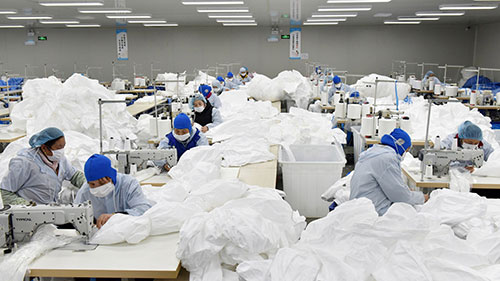
Besides textile players, many brands and fashion houses in China are also reeling under the impact of coronavirus on their businesses. Some brands that have shut stores are: Nike, Adidas,and Capri Holdings, which owns Versace, Jimmy Choo and Michael Kors. These brands have warned investors of sales taking a hit if the virus continues to spread across China. To prevent this from happening, Capri has closed around 150 of its stores in mainland China while Nike has down shutters on about half of the stores. Adidas too has shut a significant number of shops alongwith Ralph Lauren Corp and Tiffany & Co.
As a result of this epidemic, Levi Strauss & Co, which has shut about half of its stores in China due to Coronavirus, has taken a near-term financial hit. The virus outbreak is also impacting the assessment of world’s leading luxury groups. For instance, LVMH and Kering have lost their shares by around 5 per cent and 6 per cent. The epidemic has also put expenditures worth $149 billion at risk. As global newswires have revealed, Chinese stock markets have plunged by around 8 per cent since the outbreak of the virus.
Fashion events, fairs across the world being deferred
As the epidemic intensifies, the National Chamber of Italian Fashion has declared its solidarity with China. At the Milan Fashion Week, the chamber will introduce a twofold campaign, with a special event and multiple video conferences. In its 2020/21 season, it will organise 56 runways dedicated to ready-to-wear for fall-winter. The opening of the fashion week will take place on February 18, with the Chinese solidarity campaign. The opening of the Fashion Hub Market, a space dedicated to emerging creators, will serve as the backdrop for the event. Some Chinese designers based in Italy and Europe who typically show at Milan Fashion Week, will not participate this time around due to late shipments from China.
Meanwhile American Events suspended the NE Materials Show, scheduled for February 5 and 6 in Boston, as well as the NW Materials Show, scheduled for February 12 and 13 in Portland, OR. Organisers from Hong Kong-based Asia Pacific Leather Fair said they were considering postponing their event, set for the end of March. Major technology shows in Bangladesh, namely Dhaka International & Garment Machinery (DTG), has also been postponed.
The Première Vision Sports Show, Portland will be held as planned on February 12 and 13 but will not host attendees and partners from China.
Sourcing delays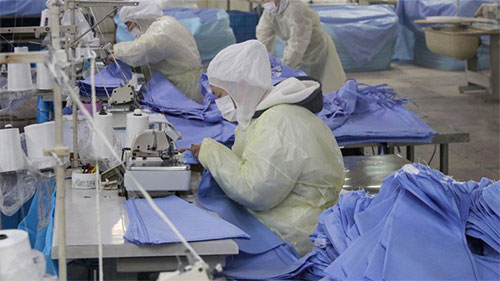
With long business closures and manufacturers in Hubei – the epicentre of the virus –closed until February 13. Many companies have informed their stakeholders about the delay in deliveries, while some are planning to shift their orders. As the disease continues to spread, there are concerns about sourcing from China. While factories in China are scheduled to reopen, numerous big cities in the country have been locked down, making it impossible for workers to return to their job. Further, it is hard to predict how long such an unprecedented large-scale lockdown will last.
Global fashion companies are at the moment following a ‘wait and watch’ policy. However, some delays in orders are unavoidable. At the same time, shifting orders to other countries is not a quick solution at this point either because, China remains the single largest textile and apparel supplier with no alternatives; other apparel exporting countries (especially those in Asia) rely heavily on textile raw material, such as yarns and fabrics from China; in many apparel factories in Asia and Africa, the management team is from China. And, many countries around the world have imposed travel restrictions on Chinese travelers at the moment. Indeed, the present situation could push more companies to look for new sourcing destinations. Moreover, for global fashion brands and retailers sourcing cost could rise as it requires more resources to move products around and build new supply chains











